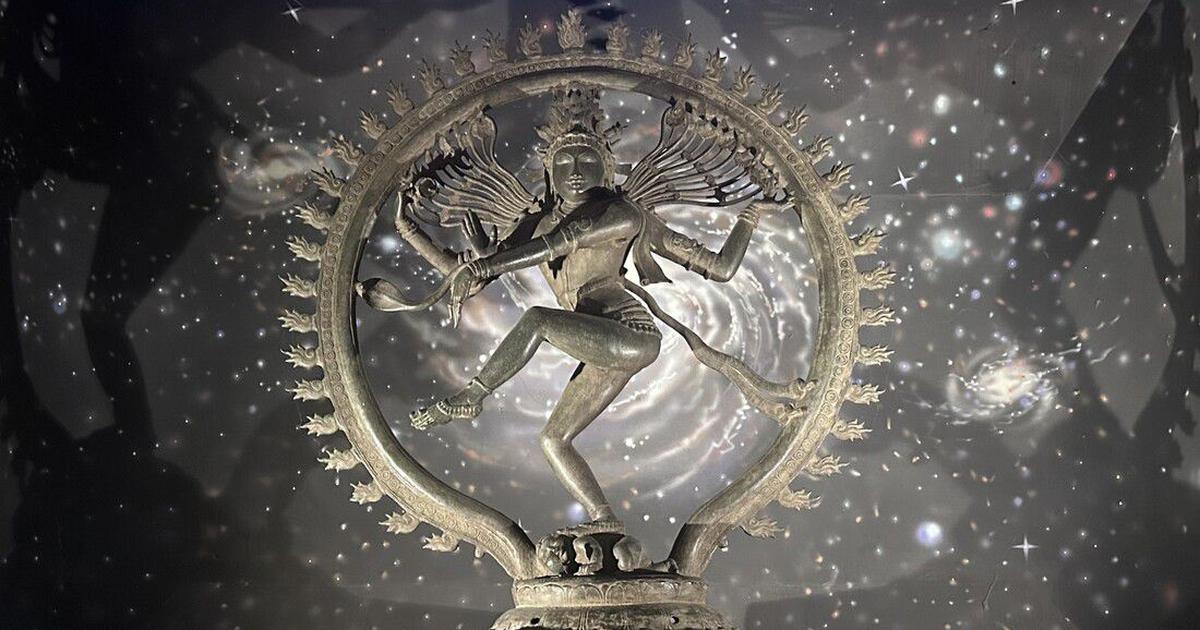
The presence of a six-and-a-half-foot bronze statue of Nataraja, the Hindu deity representing Lord Shiva, at CERN, has sparked curiosity and intrigue, prompting many to wonder about its symbolic significance in a European scientific hub. For those unfamiliar, the question arises: why does the European Organisation for Nuclear Research, a leading scientific institution, showcase this iconic figure?
The answer lies in a profound metaphorical connection. According to CERN, the Indian government chose the Nataraja as a symbol because it encapsulates the concept of cosmic dance—a parallel to the intricate movements of subatomic particles studied in physics today. This statue, which has been a part of the CERN landscape since 2004, represents more than just artistic expression; it embodies a philosophical bridge between ancient Indian culture and contemporary scientific inquiry.
The Nataraja has long been celebrated as an emblem of India’s rich heritage and civilizational depth, a sentiment that emerged prominently in the early 20th century. Scholars argue that this cultural pride was amplified during the colonial period, particularly through the writings of Ananda Coomaraswamy, a prominent art historian. His influential 1912 essay, ‘The Dance of Siva’, played a pivotal role in shaping the Nataraja into a nationalist symbol that highlighted India’s artistic and philosophical sophistication.
Furthering its global recognition, the figure gained a prominent place in popular science literature, notably in physicist Fritjof Capra’s acclaimed book, ‘The Tao of Physics’. The text draws parallels between Eastern philosophy, represented by Nataraja, and Western scientific thought, showcasing how ancient wisdom resonates with modern understanding of the universe. This connection has been recognized in CERN’s FAQ responses and is also noted on the plaque accompanying the statue, emphasizing the enduring relevance of Nataraja’s dance.
Visually, the Nataraja captivates the viewer with its dynamic iconography: one leg is bent while the other is raised and crossed, creating an impression of movement that evokes the cosmic ballet. This artistic representation goes beyond mere aesthetics; it symbolizes the eternal cycle of creation and destruction, a theme that resonates deeply within both Indian philosophy and the scientific exploration of the universe.
In this light, the Nataraja at CERN transcends cultural boundaries, affirming that the quest for knowledge is a universal endeavor. It serves as a reminder that art and science, though often perceived as distinct domains, can converge and enrich one another. As the statue stands amidst the cutting-edge research facilities at CERN, it invites scientists and visitors alike to ponder the deeper connections between the cosmos and the cultural heritage that informs our understanding of it.
Thus, Nataraja’s dance is not merely a historical or artistic curiosity; it embodies a profound narrative about the relationship between ancient wisdom and modern science, urging us to reflect on the continued dialogue between these two worlds.