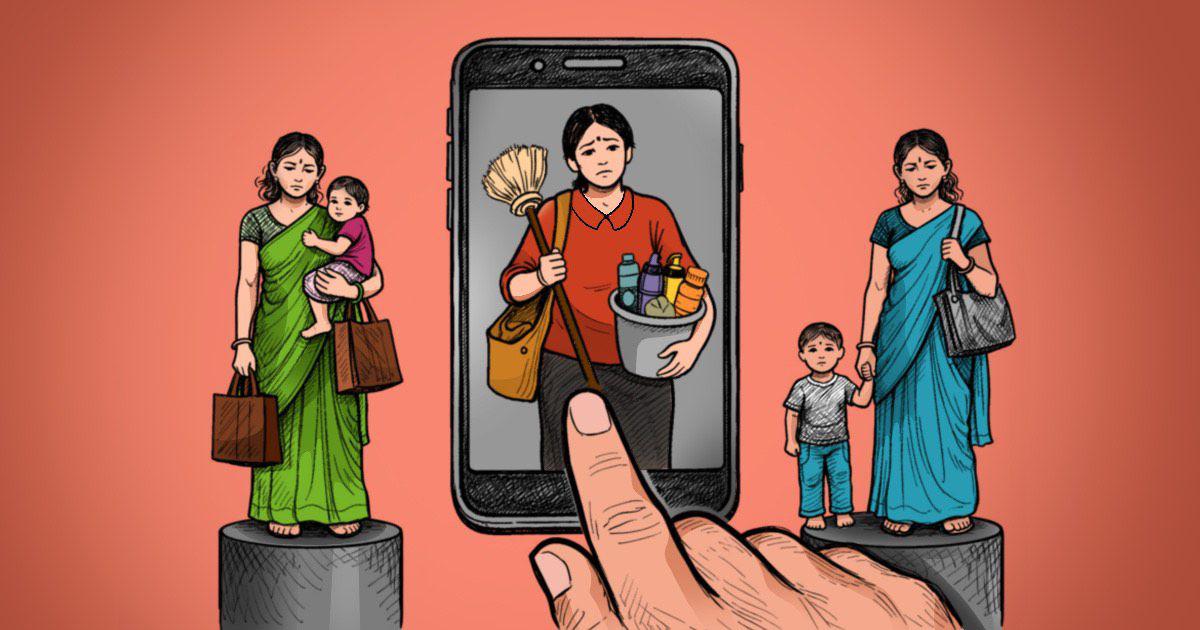
In a recent viral video shared by filmmaker Farah Khan on her YouTube channel, a glimpse into the realities of domestic workers in India has sparked widespread discussion. With over 150,000 likes, the video showcases Khan’s frustration with her domestic worker, Pushpa, who has left her kitchen unclean as she departs for a family visit. In response, her cook, Dilip, suggests utilizing Snabbit, a new app that promises to deliver domestic services within ten minutes. The arrival of a ‘Snabbit expert’ soon transforms the chaotic kitchen into a pristine space, resulting in Khan’s decision to inform Pushpa not to return, as she has found a more efficient alternative.
This scenario is emblematic of a growing trend in urban India, where gig economy platforms like Snabbit are revolutionizing domestic services. As these apps proliferate, they attract workers who don colorful uniforms and equip themselves with mobile devices to await job notifications. However, beneath the surface of this seemingly beneficial arrangement lies a discontent that many domestic gig workers experience, despite the promise of better pay and flexible work hours.
In cities like Mumbai, parks have become informal workplaces for these individuals, primarily women, who are part of the gig economy. Rather than engaging in physical activity, they are often seen sitting on benches, frequently checking their phones in anticipation of job offers. This scene starkly contrasts the vibrant energy of joggers and walkers in the same spaces, highlighting the unique challenges faced by domestic gig workers.
Although platforms like Snabbit offer higher wages compared to traditional domestic work, the conditions and nature of gig employment can be precarious. Workers often lack job security, benefits, and consistent income, leaving them vulnerable to financial instability. Moreover, the reliance on technology can alienate these workers, many of whom may not possess the digital literacy needed to navigate the applications effectively. Consequently, while they may earn more per task, the constant uncertainty about job availability and income creates a sense of dissatisfaction.
Another layer to this complexity is the societal perception of domestic workers. Despite the increasing demand for gig workers, societal attitudes often remain entrenched, leading to stigmatization and a lack of respect for the profession. Many domestic workers report feeling undervalued and overworked, with little recognition for their contributions to households. This dichotomy between improved wages and persistent social challenges contributes to their overall unhappiness.
As India’s economy continues to evolve, the gig economy will play an increasingly significant role. However, for it to be sustainable and beneficial in the long term, stakeholders must address the concerns of domestic workers. This includes providing them with better access to training, job security, and a supportive work environment. Only by acknowledging and rectifying these systemic issues can the domestic gig workforce find true satisfaction alongside improved financial stability.