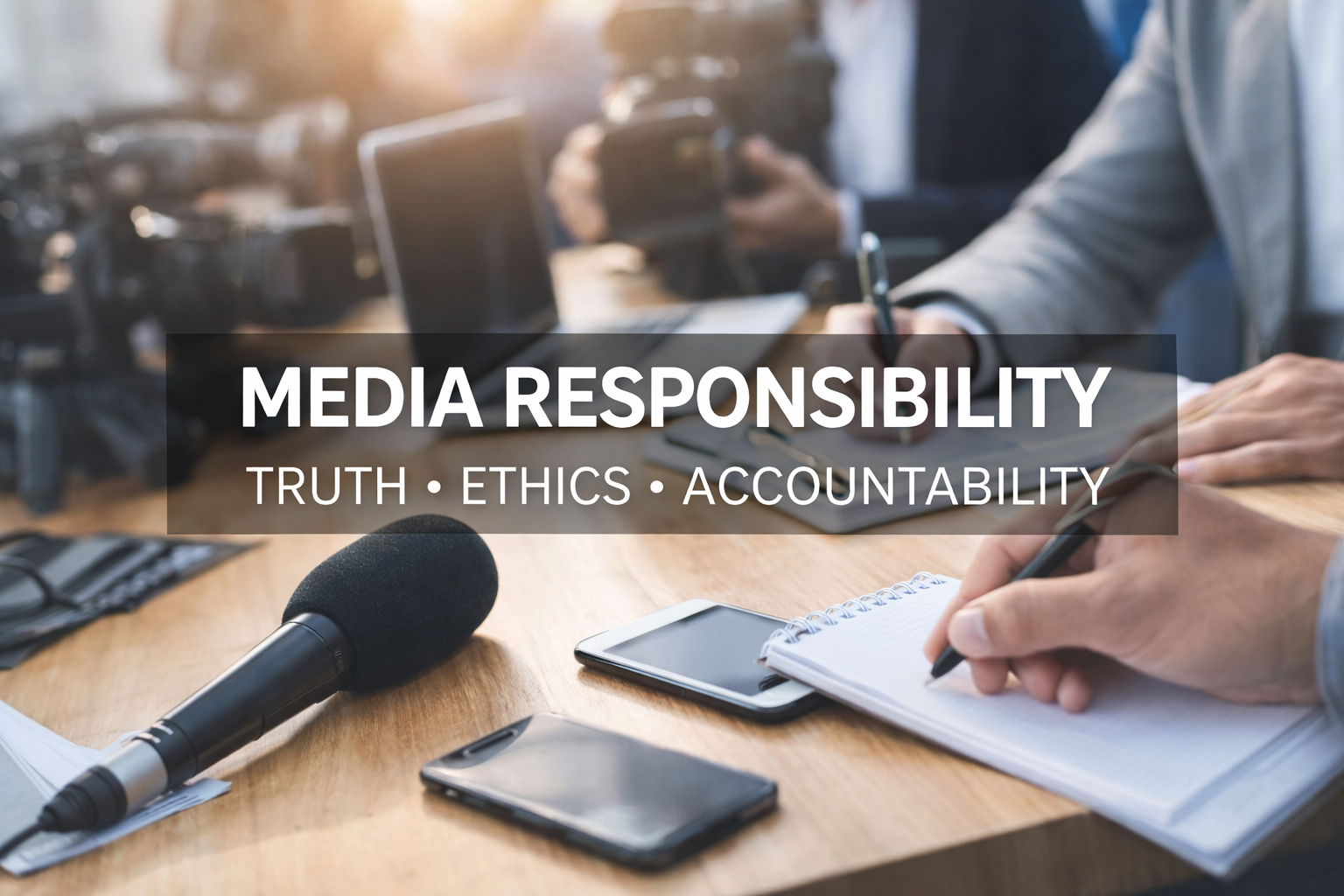
In today’s fast-moving digital world, information travels faster than ever before. News breaks within seconds, opinions spread instantly, and public conversations evolve rapidly across multiple platforms. In such an environment, the role of responsible journalism and media organizations becomes even more important.
Media has always been more than just a channel for delivering news. It acts as a bridge between society and truth. Journalists carry the responsibility of presenting information accurately, objectively, and with integrity. When media functions responsibly, it strengthens public trust and contributes positively to democratic dialogue.
However, the rapid rise of social media and instant news consumption has also created new challenges. Misinformation, unverified reports, and sensational content often travel faster than carefully researched journalism. This makes it essential for media professionals and associations to emphasize ethical reporting, fact verification, and responsible storytelling.
Media associations play a crucial role in guiding journalists and media institutions toward maintaining professional standards. By encouraging ethical journalism, supporting training initiatives, and promoting collaboration among media professionals, these associations help strengthen the credibility of the industry.
At its core, journalism is about serving the public interest. The objective is not merely to report events but to provide context, encourage informed discussions, and give voice to diverse perspectives within society.
As media continues to evolve with technology, the commitment to truth, transparency, and accountability must remain constant. A strong and responsible media ecosystem ensures that citizens remain informed, engaged, and empowered to participate meaningfully in society.