The Role of Indian Cartoonists in Capturing the Spirit of Bangladesh’s 1971 Liberation War
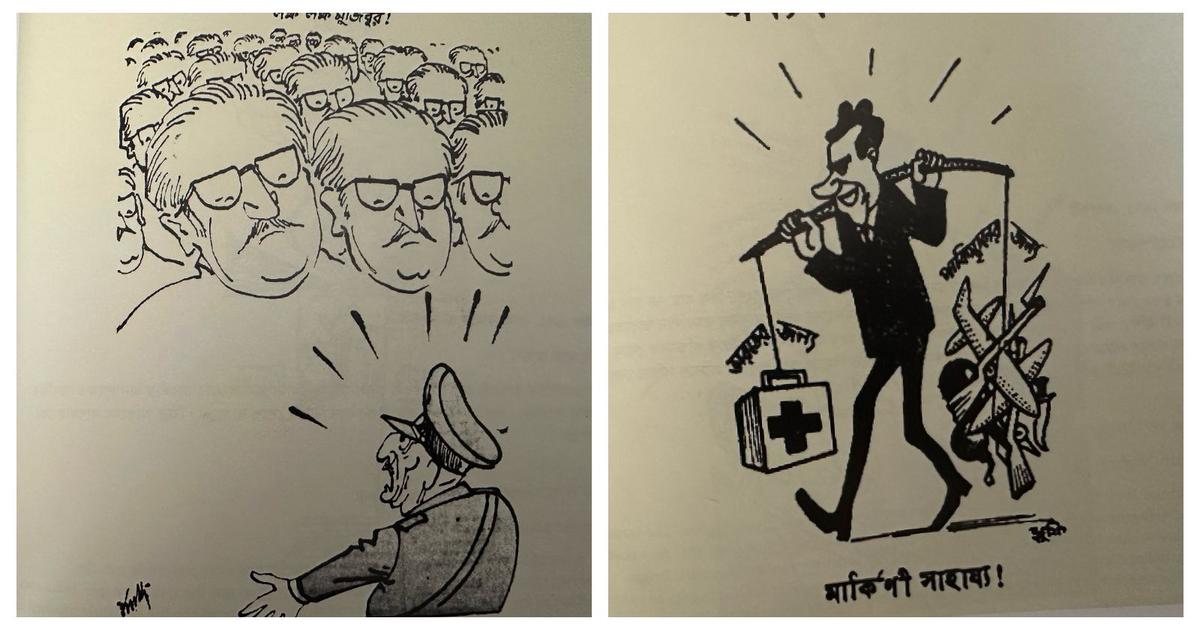
The Bangladesh Liberation War of 1971 stands as a landmark event in South Asian history, altering political landscapes and shaping national identities. Amidst the chaos of war and the struggle for independence, Indian cartoonists emerged as powerful commentators, using their art to reflect the sentiments and narratives surrounding this pivotal conflict.
Political cartoons, often regarded as succinct journalism, have the unique ability to distill complex issues into engaging visuals infused with wit and irony. During the tumultuous year of 1971, various Indian newspapers, including Anandabazar Patrika, Jugantar, Desh, Darpan, Amritabazar Patrika, The Statesman, and Hindustan Standard, consistently featured cartoons that provided a sharp critique and interpretation of the unfolding events in Bangladesh. These illustrations formed a vital part of the media landscape, presenting an alternative narrative alongside traditional news coverage.
A diverse group of artists played a significant role in this visual discourse, with notable figures like Amal Chakraborty, Chandi Lahiri, Sufi (Naren Roy), Kutty (PKS Kutty), Sudhir Dar, Rebati Bhushan, Abu, and Lakshan contributing their talents to the cause. Their work appeared in both Bengali and English publications, broadening their audience and influence across India and beyond. Through their cartoons, these artists not only depicted the war’s harsh realities but also captured the evolving sentiments of the Indian populace regarding the conflict next door.
As the war progressed, the tone of the cartoons shifted, mirroring the changing dynamics of the situation. Initially marked by urgency and a call for action, the illustrations gradually transitioned to reflect a deeper understanding of the complexities involved in the liberation struggle. The use of exaggeration and satire allowed these artists to comment on the political maneuverings, humanitarian crises, and the quest for justice that characterized the war. Their ability to condense profound moral questions into single frames made their work both impactful and memorable.
In retrospect, the contributions of Indian cartoonists during the 1971 Bangladesh Liberation War serve as a testament to the power of art in times of crisis. By employing humor and insight, these artists provided a unique lens through which the public could engage with the unfolding historical narrative. Their work not only illustrated the events of the time but also fostered a sense of solidarity and empathy among the people of India, reminding us of the shared struggles and aspirations that define the subcontinent.