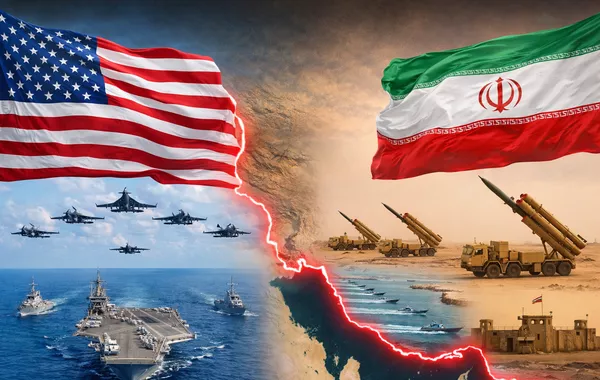
The Silent Envoy: Why Pakistan’s Mediation Failed to Avert the U.S.-Iran Escalation
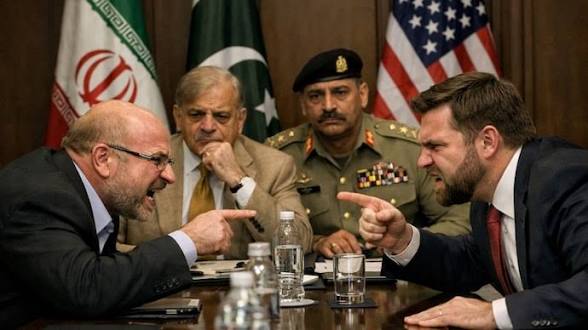
The Silent Envoy: Why Pakistan’s Mediation Failed to Avert the U.S.-Iran Escalation
In the volatile theater of Middle Eastern geopolitics, Pakistan has long attempted to play the role of the “bridge builder.” Positioned geographically between a revolutionary Iran and strategically aligned with a demanding United States, Islamabad’s diplomatic tightrope act reached a breaking point during the recent hostilities. Despite high-level shuttling and desperate appeals for restraint, the mediation efforts ultimately faltered, leaving the region on the brink of a wider conflagration.
The Ambition of the “Middle Ground”
Pakistan’s foray into mediation was driven by a mix of existential dread and diplomatic opportunism. For Islamabad, a full-scale war between Washington and Tehran is a nightmare scenario:
Economic Collapse: A surge in global oil prices and the disruption of regional trade routes would devastate Pakistan’s fragile economy.
Sectarian Friction: With a significant Shia population, domestic stability in Pakistan is often tethered to the temperature of Iran’s foreign relations.
Border Insecurity: A destabilized Iran would lead to a refugee crisis and an uncontrollable 900km border.
The Fault Lines of Failure
While the intent was sincere, the mediation was undermined by three structural realities that Islamabad could not overcome:
1. The Trust Deficit
Washington increasingly views Pakistan through the lens of its relationship with China and its historical baggage in Afghanistan. Conversely, Tehran remains deeply suspicious of Pakistan’s close military and financial ties to Saudi Arabia. This left Islamabad without the “neutral” credentials required to broker a grand bargain.
2. Asymmetric Objectives
The core issue was a fundamental misalignment of goals:
The U.S. demanded a total overhaul of Iran’s regional influence and missile program—non-starters for Tehran.
Iran demanded the immediate lifting of “maximum pressure” sanctions and a full U.S. withdrawal from the Middle East—non-starters for Washington.
Pakistan lacked the economic or military leverage to force either side to blink.
3. The “Proxy” Perception
During the height of the crisis, neither superpower viewed Pakistan as a primary actor. The U.S. preferred direct signaling or backchannels via Qatar and Oman, which possess greater financial “carrots” to offer. Pakistan’s mediation was often perceived as a performance for domestic audiences rather than a viable diplomatic path.
The Regional Fallout
The failure of these talks has left Pakistan in a precarious position. By attempting to please both sides, it has inadvertently signaled its own limitations.
Stakeholder Pakistan’s Goal Outcome
United States Secure a “stable” Western border. Perceived as unable to influence Tehran.
Iran Gain a regional advocate against sanctions. Viewed Pakistan as too constrained by Western aid.
Domestic Maintain sectarian harmony. Increased
Conclusion: The End of the Bridge?
The collapse of Pakistan’s mediation efforts serves as a grim reminder that in the realm of “Great Power” friction, sincerity is no substitute for leverage. As the U.S. and Iran move toward a more direct and dangerous confrontation, Islamabad finds itself no longer the mediator, but a spectator to a storm it cannot stop.
The lesson is clear: A bridge can only hold if both banks are willing to meet in the middle. For now, those banks remain miles apart.