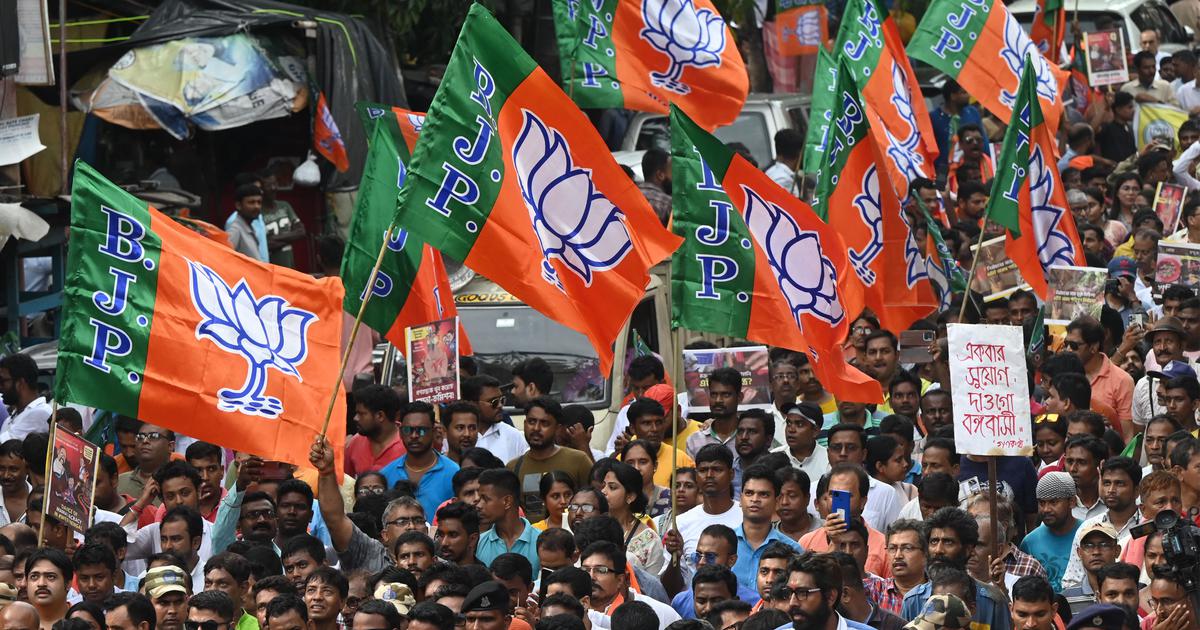
The political landscape of West Bengal has been a battleground of ideologies and alliances, particularly between the ruling Trinamool Congress (TMC) led by Mamata Banerjee and the Bharatiya Janata Party (BJP). As the BJP attempts to make inroads into the state, several factors have emerged that could influence its chances of success in future elections.
One crucial aspect of BJP’s strategy has been the ongoing struggle to consolidate Hindu votes. Former BJP West Bengal president Rahul Sinha expressed concerns over Banerjee’s initiatives, like the construction of a Jagannath temple in Digha, which he believes could fragment the Hindu voter base. Sinha’s perspective highlights the BJP’s challenge in overcoming a significant electoral gap; in the 2021 Assembly elections, the TMC garnered a commanding 48% of the vote, leaving the BJP trailing by approximately 10 percentage points.
For the BJP to turn the tide in its favor, Sinha pointed to the necessity of attracting a larger share of the electorate. He emphasized the need to get at least a 5% swing of voters from Banerjee’s camp to BJP’s side, primarily focusing on the Hindu demographic. With historical voting patterns revealing a reluctance among Muslim voters to support the BJP, this task presents a formidable challenge. However, Sinha hinted at a potential strategy: a tailored approach to voter engagement and mobilization, particularly through intensive voter roll revisions.
The BJP’s focus on grassroots outreach and community engagement is another significant factor. By actively participating in local events and addressing community issues, the party aims to resonate with the electorate on a personal level, thereby fostering a sense of loyalty. This method not only aims at winning new converts but also seeks to solidify the existing support base among Hindus.
In addition to community engagement, leveraging social media and digital platforms has become essential for the BJP in shaping public sentiment and countering opposition narratives. The party’s adeptness at utilizing these platforms allows it to reach a broader audience, making its message more accessible and relatable to the younger demographic, which is increasingly influential in electoral politics.
Ultimately, the BJP’s ambitions in West Bengal depend on a multi-faceted strategy that combines traditional campaigning with innovative approaches. The party appears determined to transform the electoral landscape in the state, but whether these efforts will bear fruit in the upcoming elections remains to be seen. As the political climate evolves, voters will have the final say in determining the future of West Bengal.