




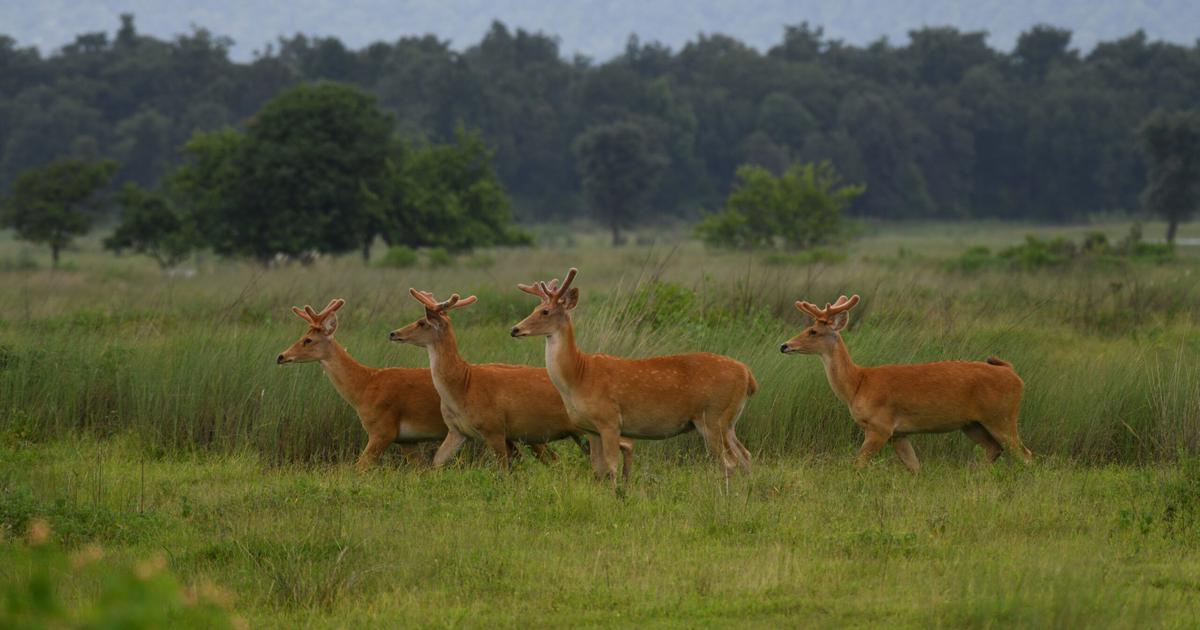
In a significant stride towards wildlife conservation, a population of hard-ground swamp deer has shown promising growth after being relocated from the Kanha Tiger Reserve to the Satpura Tiger Reserve in Madhya Pradesh. This translocation initiative is highlighted in a recent study, which reveals that these majestic deer are not only adapting to their new environment but are also breeding successfully.
Once abundant across central India, the hard-ground swamp deer (Rucervus duvaucelii branderi) now finds itself confined to a single habitat, primarily in Kanha, where roughly 1,100 individuals live today. This alarming decline has prompted conservationists to take action, as the species is classified as vulnerable in the IUCN Red List and is protected under Schedule I of the Indian Wildlife (Protection) Act, 1972. Historical factors like habitat destruction, grassland fragmentation, and hunting have drastically reduced their numbers, placing the species at a greater risk of extinction.
Neha Awasthi, a key author of the study and member of the International Union for Conservation of Nature’s Species Survival Commission’s Deer Specialist Group, explains the critical situation. “Confining the entire subspecies to Kanha effectively created a single point of failure,” she states. The challenges faced by small populations like this one include potential disease outbreaks, genetic issues from inbreeding, and environmental disturbances, all of which could threaten their survival.
The successful establishment of a second, stable population in Satpura is crucial not only for the hard-ground swamp deer but also for ecological balance. This initiative addresses the pressing need for genetic diversity and resilience against threats that could wipe out the remaining population. As scientists and conservationists observe the progress in Satpura, they remain hopeful that this model can be replicated for other endangered species across India.
Moreover, the efforts in Madhya Pradesh highlight the importance of community involvement in conservation. Local residents, who are often the first line of defense against poaching and habitat destruction, have been engaged in the process. Their support is vital for ensuring the long-term success of these conservation endeavors. As the population of hard-ground swamp deer continues to rise, it stands as a testament to the possibilities that arise when nature, science, and community come together in a concerted effort to protect India’s rich biodiversity.

