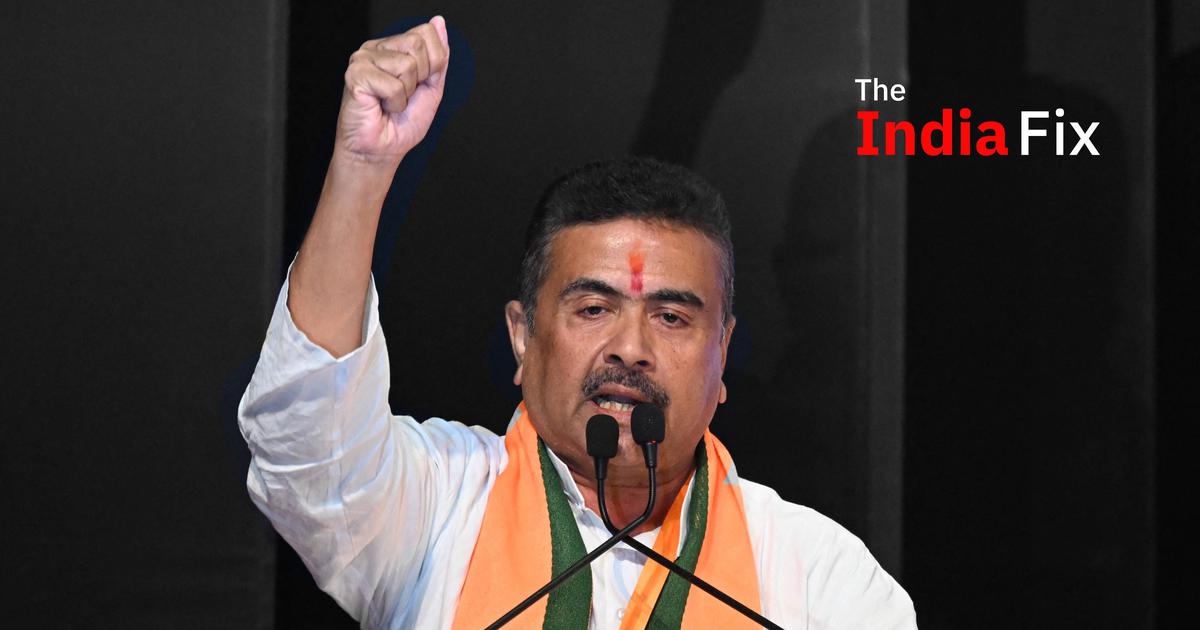
The echoes of history resonate powerfully in contemporary Indian politics, particularly as sentiments surrounding the partition of Bengal resurface. A recent article penned by Swapan Dasgupta, a minister from West Bengal, has stirred the pot by endorsing the two-nation theory—a concept originally articulated by Muhammad Ali Jinnah in 1940. This endorsement is particularly striking when considering the violent legacy of the 1947 partition, which fragmented communities and left scars that continue to affect South Asian society today.
In his piece, Dasgupta dismisses the notion of a unified Bengali identity that transcends religious divides, labeling it a mere ‘myth.’ He argues that the idea of a composite cultural community, one that brings together Hindus and Muslims under a shared identity, is nothing more than an illusion. This assertion raises eyebrows, especially in a state that itself was carved out of the tumultuous waves of partition, a division that saw millions displaced and countless lives uprooted.
The BJP’s apparent celebration of this historical fracture seems to reflect a broader narrative that seeks to highlight religious identities over communal harmony, suggesting that the party aims to solidify its base by appealing to sectarian sentiments. By resurrecting the two-nation theory, the BJP not only invokes a divisive historical perspective but also positions itself as a guardian of Hindu nationalism, a cornerstone of its political ethos. This tactic could be seen as a strategic maneuver to galvanize support among its core constituents, particularly in a state where the party faces stiff competition from the Trinamool Congress.
Looking back at the partition of 1947, which resulted in widespread violence and displacement, one cannot overlook the emotional and social repercussions that continue to linger. The violent separation gave rise to mistrust and animosity between communities, and today’s political rhetoric risks reigniting these age-old wounds. The ongoing discourse around identity politics in West Bengal not only reflects the state’s complex history but also underscores the BJP’s navigational challenges in a region traditionally dominated by other political narratives.
As we move towards 2026, the significance of Dasgupta’s remarks cannot be understated. They represent an ideological battle that goes beyond mere politics; they touch the very fabric of Bengali society, invoking questions about identity, unity, and the legacy of partition. With elections looming, the BJP’s engagement with this contentious history may serve to rally its supporters but also risks alienating those who yearn for a more harmonious, inclusive national narrative. The coming months will be crucial as parties maneuver through the intricate landscape of Bengal’s historical and cultural identity, all while navigating the political ambitions that hang in the balance.