




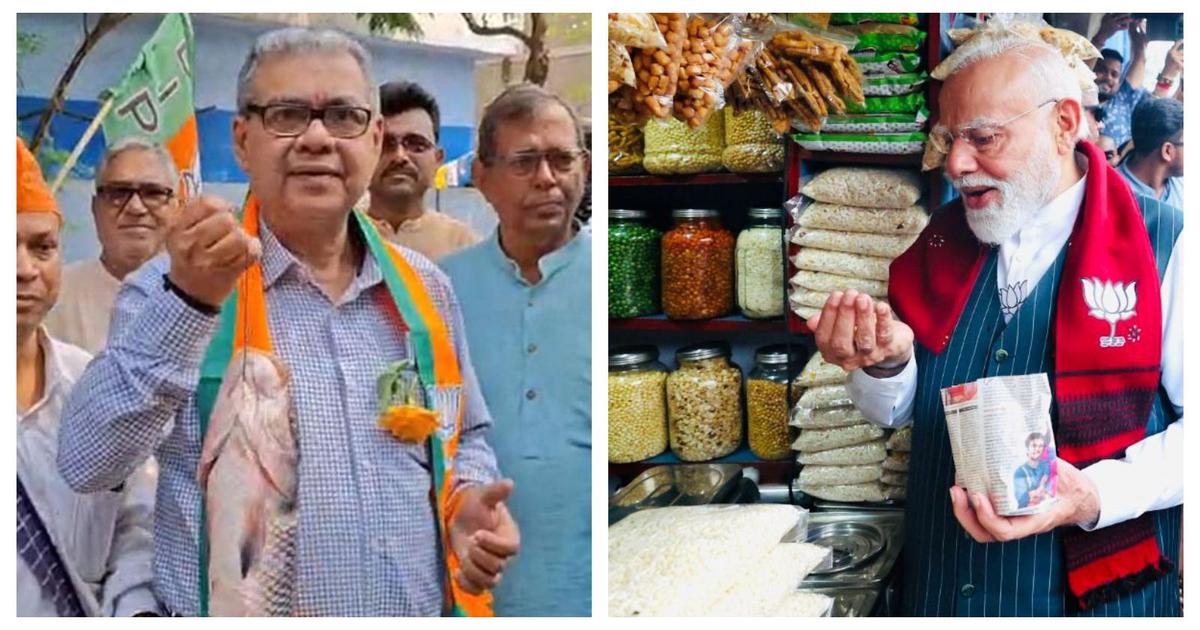
In an intriguing turn of events in West Bengal’s political landscape, the Bharatiya Janata Party (BJP) is making concerted efforts to shed its outsider image and connect with local voters in a way that resonates with their cultural identity. A recent campaign initiative saw Sharadwat Mukhopadhyay, the BJP candidate contesting from Kolkata’s Bidhannagar constituency, parading through neighborhoods with a large catla fish in tow. While some may question the absurdity of the gesture, Mukhopadhyay argues that this symbolic move holds significant political meaning.
Addressing concerns over his unconventional campaign strategy, Mukhopadhyay stated, “It is not ridiculous; everything has meaning in politics.” His approach is a direct response to Chief Minister Mamata Banerjee’s claims that the BJP intends to impose a ban on fish if they come to power. By proudly showcasing the catla, a fish beloved by Bengalis, Mukhopadhyay aims to dispel such fears and affirm that the BJP respects local dietary customs.
This unique campaigning tactic has not only garnered attention but also set a trend within the party. Following Mukhopadhyay’s lead, numerous BJP leaders have been spotted engaging in similar acts—whether it’s carrying fish during public appearances or discussing their culinary preferences in television interviews. This strategy illustrates the BJP’s desire to forge a deeper connection with the voters, particularly in a state where fish remains a staple in the local diet.
However, this initiative has not gone uncontested. The rival Trinamool Congress (TMC) has amplified its accusations against the BJP, alleging that the party’s governance could potentially lead to restrictions similar to those seen in other BJP-ruled states like Bihar, where the sale of certain meats, particularly beef, is curtailed. TMC leaders have seized on this point to bolster their narrative, asserting that the BJP’s outreach efforts are mere superficial attempts to mask a more restrictive underlying agenda.
Amidst this political fray, the BJP is also ramping up its presence in Bengal with high-profile visits from party stalwarts. Union Home Minister Amit Shah’s announcement to spend 15 days in the state further underscores the BJP’s commitment to engage deeply with the electorate. As Shah embarks on his tour, he is expected to meet various groups and stakeholders, enhancing the party’s visibility and reinforcing its message of inclusivity.
As the election season heats up, it remains to be seen whether these strategies will resonate with the voters or if they will view them as mere gimmicks. What is clear is that the BJP is determined to redefine its narrative in Bengal and establish itself as a formidable player in the local political arena, one fish at a time.

