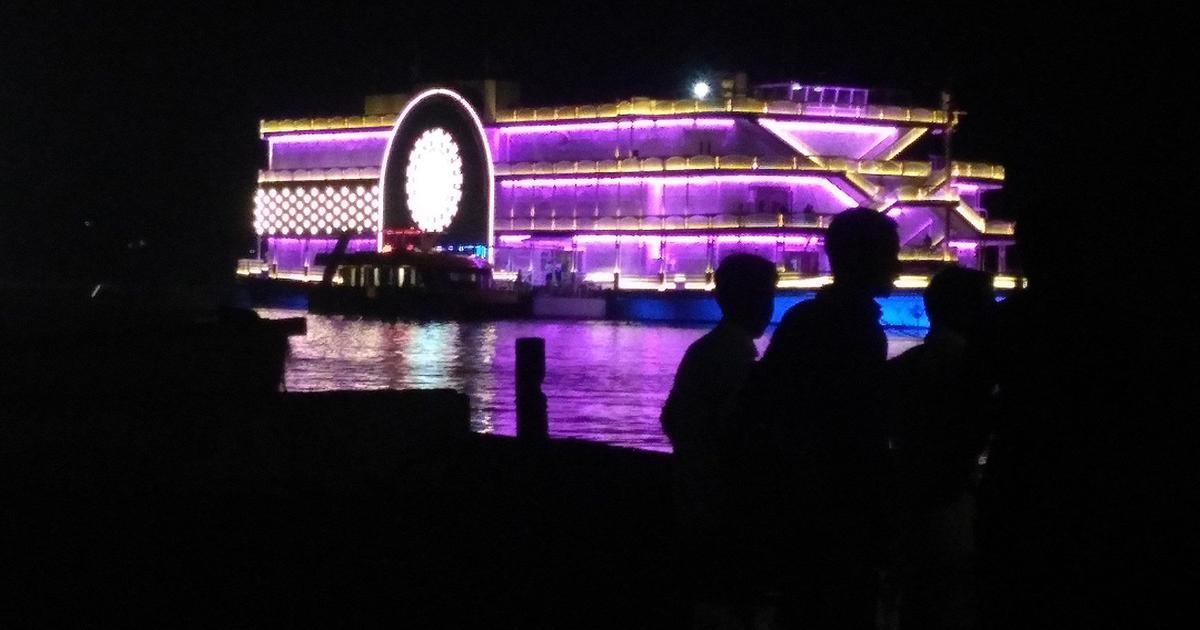
The Bombay High Court’s Goa bench made a significant ruling on Wednesday, halting the entry of a casino ship into the Mandovi river. The vessel, which is designed to accommodate up to 2,000 passengers, was barred from docking in Panaji due to the absence of essential certifications. This decision comes in response to a public interest litigation initiated by a citizens’ group named Enough is Enough, alongside other concerned locals, who challenged the approvals granted to Delta Pleasure Cruise Company Private Limited.
The court’s bench, consisting of Justices Amit S. Jamsandekar and Valmiki Menezes, pointed out that the vessel, MV Deltin Royale, lacks both a survey certificate and documentation under the Merchant Shipping Act. These certificates are crucial as they affirm the ship’s specifications, including its tonnage and structural details. Without these crucial documents, the court emphasized that the ship cannot proceed to the Panjim Port, underscoring the importance of regulatory compliance in maritime operations.
In its ruling, the court stated that even if the necessary certifications were obtained subsequently, the vessel would still require prior approval from the court before entering the port. This strict measure underscores the judiciary’s commitment to ensuring that operations on the Mandovi river adhere to legal and safety standards. The bench also noted the assurance given by the state home secretary that the government would ensure compliance with regulations and safeguard the public interest.
The issue of casino ships in Goa is not new; the state has long been a popular destination for both tourism and gaming. However, the rising concerns among residents about the environmental and social impact of these floating casinos have resulted in a push for stricter regulations. The public interest litigation filed by Enough is Enough is a testament to the growing awareness and activism among citizens regarding such issues.
As Goa continues to grapple with balancing its tourism economy and the well-being of its residents, this ruling serves as a reminder of the importance of legal oversight in operations that can significantly affect local communities. The outcome of this case could set a precedent for how similar enterprises operate in the region, potentially reshaping the future of the casino industry in Goa.