




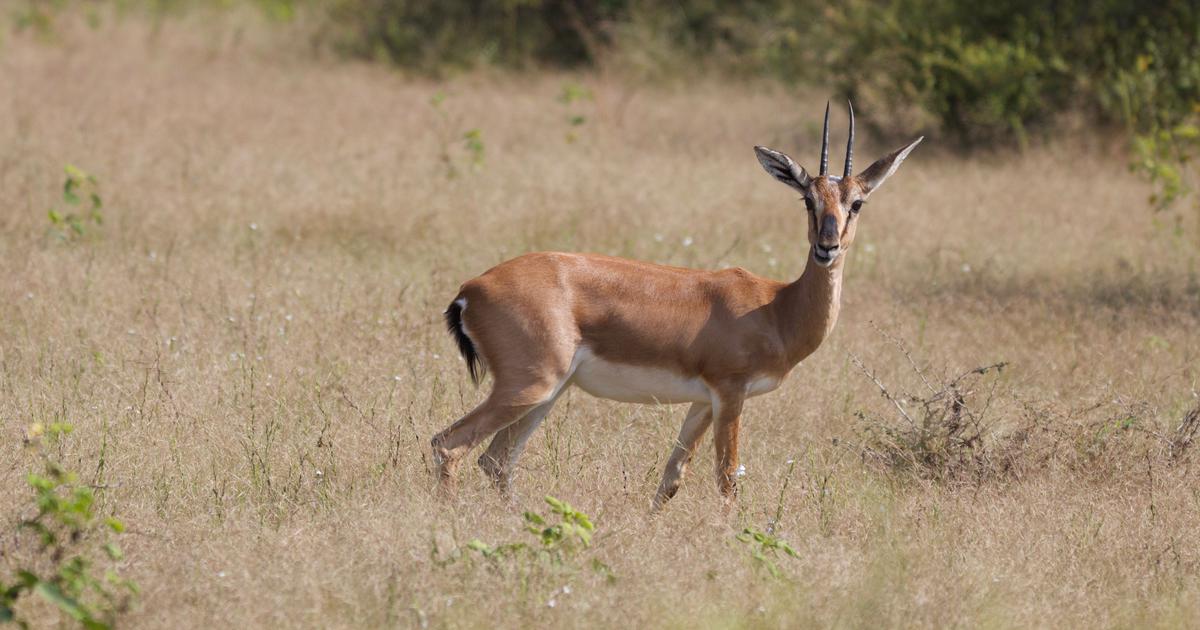
The Indian gazelle, commonly referred to as chinkara, roams the arid landscapes of the Indian subcontinent with an air of tranquility. While it enjoys protection under Schedule I of India’s Wildlife Protection Act and is classified as of ‘least concern’ by the International Union for Conservation of Nature (IUCN), a recent study warns that this sense of security may be dangerously misplaced.
Conducted by researchers from the Zoological Survey of India and published in the Journal of Wildlife Management, the study examines the alarming implications of climate change on the future of chinkara populations. The findings indicate that if emissions continue on the worst-case trajectory, known as RCP 8.5, the chinkara could see a staggering loss of nearly 89% of its suitable habitat by the year 2070. When considering climate factors alone, that figure could rise to as much as 96.5% of its habitat.
Lead author Amar Paul Singh emphasizes the severity of this situation, stating, “A loss of 89%-96% of habitat within roughly 50 years represents a biodiversity emergency for this species in India.” This study is particularly groundbreaking as it represents one of the first comprehensive analyses of climate change risks for chinkaras at a national level, highlighting the urgent need for conservation efforts.
The researchers meticulously gathered over 200 verified records of chinkara sightings from various sources, including field surveys, published studies, and biodiversity databases between 2000 and 2022. By layering these records, they were able to create a clearer picture of the habitat the chinkara currently occupies and the potential impacts of climate change on its future.
As temperatures rise and extreme weather events become more frequent, the delicate ecosystems that sustain the chinkara are at risk of being irrevocably altered. This poses not only a threat to the chinkara but also to the broader biodiversity of India’s drylands, which are home to many unique species.
While the study also examined the outcomes under more optimistic scenarios, such as the RCP 2.6 emissions pathway—which aligns with the Paris Agreement’s target of limiting global warming to 2°C—the results remain concerning. Even in this scenario, habitat losses were significant, underscoring the urgent need for concerted climate action to mitigate further risk.
The plight of the chinkara serves as a critical reminder of the broader implications of climate change on wildlife. As an iconic species of the Indian subcontinent, its survival is intertwined with the health of the ecosystems it inhabits. Conservationists, policymakers, and the general public must rally together to implement effective strategies aimed at preserving not only the chinkara but also the rich biodiversity of India.

