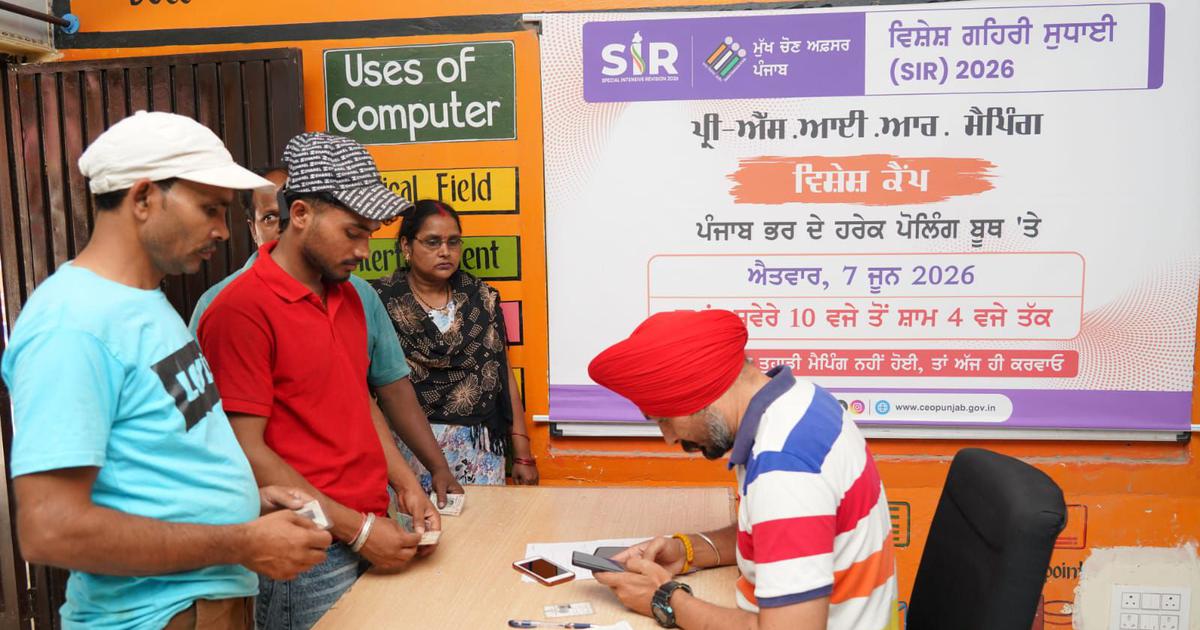
A 33-year-old resident of Patiala, who has lived at the same address his entire life, is facing an unexpected hurdle in the voting process. Despite his mother’s long-standing voter registration at their family home, he has been asked by a Booth Level Officer to provide proof of his father’s voter registration from 2002, raising questions about the Election Commission’s guidelines and the demands placed on voters.
The controversy stems from the legacy linkage policy outlined by the Election Commission, which permits voters to connect their registration to qualifying relatives such as parents or grandparents. However, there seems to be a misunderstanding among some Booth Level Officers who insist that only the father’s voter registration is relevant. In this case, the son’s father, a retired senior government official and ex-serviceman, was registered at various addresses during his service, which complicates the situation.
Throughout his life, the son has participated in multiple elections without any issues. His mother’s voter registration at their family home has been consistent and uncontested. Moreover, she qualifies as a relative under the Election Commission’s criteria, yet the son finds himself in a perplexing position where his voting rights are being questioned solely due to his father’s military service and previous addresses.
This fixation on the father’s posting address has raised eyebrows, especially since the son has voted successfully for over 15 years. The requirement for legacy documents is meant to ensure valid voter identification, but in this case, it appears to hinder an eligible voter from exercising his rights. The current situation highlights the need for better training and understanding among Booth Level Officers regarding the guidelines set forth by the Election Commission.
As election season approaches, it is crucial for authorities to clarify the rules surrounding voter registration and legacy documents to avoid unnecessary confusion and ensure that deserving citizens can vote without facing unreasonable barriers. The case of this young man in Patiala serves as a reminder of the complexities surrounding voting rights in India, particularly when it comes to military personnel and their families.