Congress Slams Amit Shah’s Visit to Ladakh Amid Calls for Statehood and Constitutional Protections
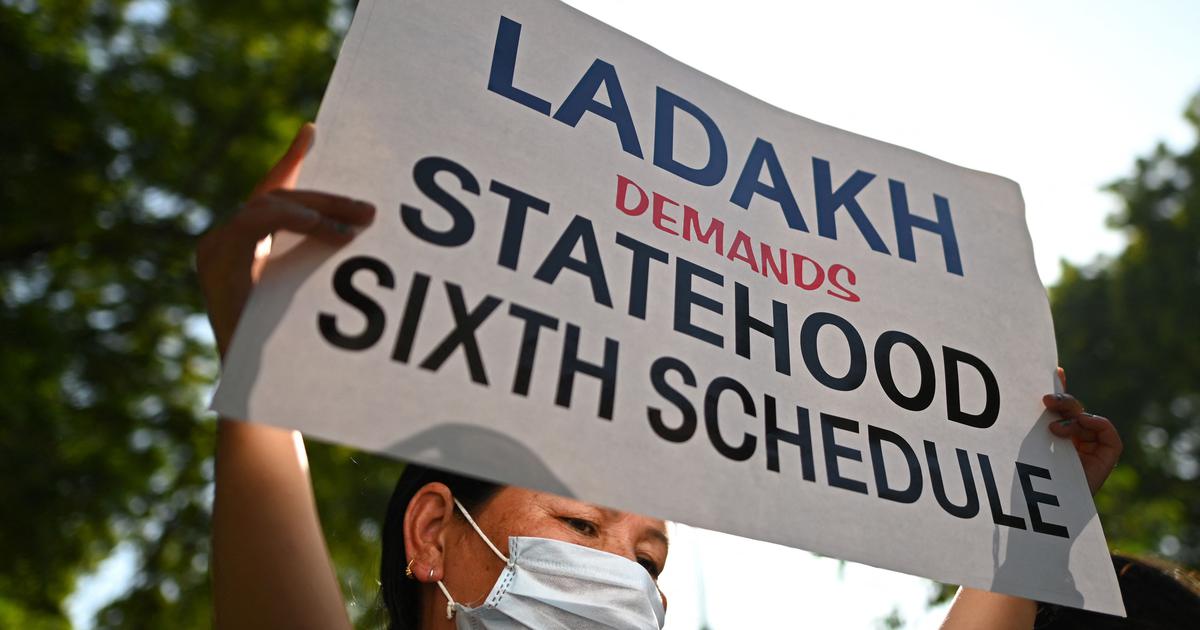
The political atmosphere in Ladakh has heated up as Congress party leaders criticized Union Home Minister Amit Shah during his recent visit to the region. Shah arrived in Ladakh on Thursday for a two-day trip primarily aimed at viewing the sacred relics of Lord Buddha, coinciding with the auspicious occasion of Buddh Purnima. However, his arrival has been overshadowed by growing unrest among the local populace, who are voicing their demands for statehood and inclusion in the Sixth Schedule of the Constitution.
Congress leader Jairam Ramesh didn’t hold back in his critique, pointing out that Shah’s visit seemed to neglect the pressing issues faced by the residents of Ladakh. He accused the Home Minister of showing a conspicuous silence on vital demands concerning statehood, protection of land rights, and employment opportunities for the locals. Ramesh’s remarks highlight a broader sentiment among Ladakhis who feel their voices are being ignored by the central government.
Shah’s visit marks his first trip to the Union Territory since the protests that erupted in September 2022, which tragically resulted in the deaths of four demonstrators during a police confrontation. This backdrop of unrest underscores the urgency of the residents’ pleas for a legislative body that would empower them to have a say in local governance and protect their cultural identity. The Congress party has seized upon these sentiments to rally support, emphasizing that the aspiration for statehood is not just a political issue but a matter of dignity for the people of Ladakh.
In August 2019, the Bharatiya Janata Party (BJP)-led central government took a significant decision to abrogate the special status of Jammu and Kashmir under Article 370 of the Constitution, subsequently splitting the region into two Union Territories: Jammu and Kashmir, and Ladakh. Since this bifurcation, Ladakh has been left without a legislature, raising alarms among the local populace about the preservation of their land, resources, and livelihoods.
Moreover, the demand for inclusion in the Sixth Schedule of the Constitution— which provides for greater autonomy and protection of tribal areas—has gained traction among Ladakhis. The fear of losing their cultural identity in the wake of rapid changes imposed by external governance has fueled local unrest and highlighted the need for a legislative framework that respects the unique socio-cultural fabric of the region. As the exposition of the holy relics commences, the tension between cultural celebration and political demands remains palpable, casting a shadow over the festivities.