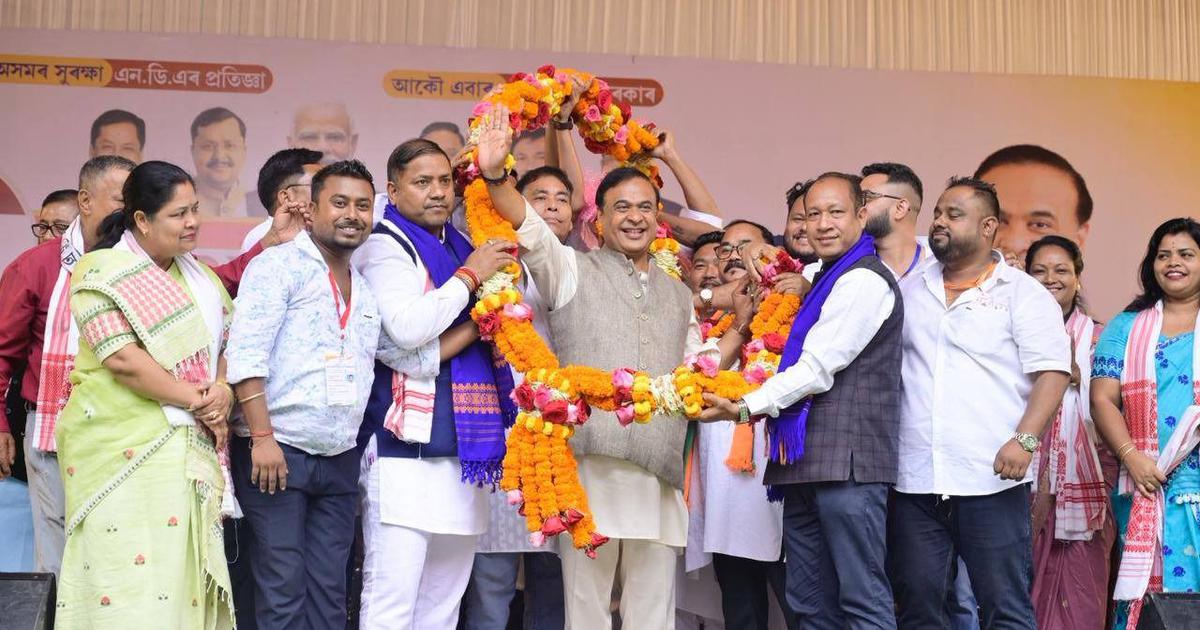
The recent assembly elections in Assam witnessed a remarkable triumph for the Bharatiya Janata Party (BJP) and its allies, a development that Chief Minister Himanta Biswa Sarma attributed primarily to the delimitation exercise undertaken in 2023. This initiative, while framed as a means to safeguard the political rights of indigenous communities, has significantly altered the electoral dynamics in the state, particularly affecting the representation of Muslim voters.
In an insightful commentary following the election results, Sarma noted that the delimitation process ensured that Muslim voters would have a significant impact in only 23 out of Assam’s 126 constituencies. This strategic shift allowed the BJP to confidently project that they could secure between 102 to 103 seats in the assembly. The results validated this assertion as the BJP emerged victorious in 82 seats, while coalition partners, the Bodo Peoples Front and the Asom Gana Parishad, each clinched ten seats. Together, they amassed a total of 102 seats, marking a significant increase from the BJP’s previous peak of 60 seats in the last two assembly elections.
Delimitation, the process of redrawing constituency boundaries, is typically aimed at ensuring fair and equitable representation based on demographic changes. However, the specific implementation in Assam has raised eyebrows, particularly regarding its impact on Muslim representation. The reconfiguration of constituency borders has led to a decrease in areas where Muslim voters hold substantial influence. As highlighted by various analyses, the BJP coalition gained considerable advantage in 19 seats as a result of this exercise, which included five new seats designated in tribal regions and two seats that were previously majority-held by Muslim voters.
This strategic electoral shift showcases how regional demographics and political maneuvers intertwine to shape election outcomes. The BJP’s calculated approach to leverage delimitation has not only solidified its position in Assam but also sparked discussions about the implications of such exercises on the overall political fabric of the state. Critics argue that while delimitation is essential for aligning representation with population changes, when executed without transparency, it can lead to significant disparities in political power.
The success of the BJP in this election cycle encapsulates a broader narrative in Indian politics, where demographic changes and electoral strategies play a crucial role. As the party continues to enhance its foothold in Assam, it raises important questions about the future of political representation for minority communities and the need for inclusive governance. The outcome of these elections not only reflects the party’s growing strength in the northeastern region but also sets a precedent for how electoral processes can be influenced by administrative decisions.