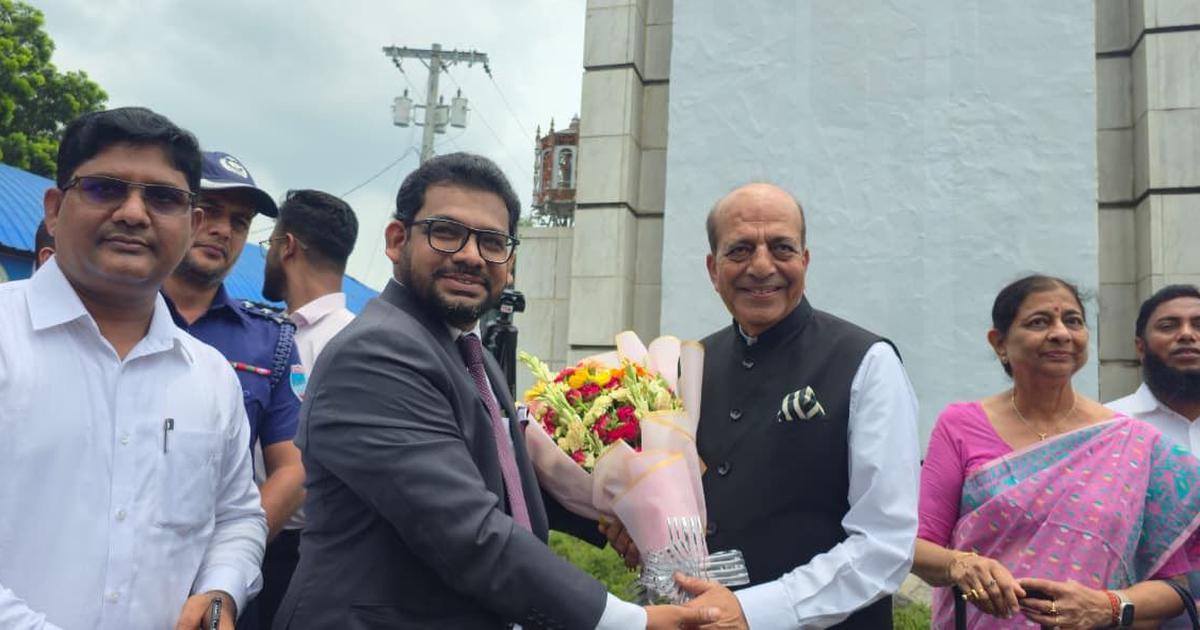
The recent visit of India’s newly appointed High Commissioner to Bangladesh, Dinesh Trivedi, has sparked significant diplomatic discourse in Dhaka. Trivedi, who crossed into Bangladesh through the Benapole-Petrapole land border, intended to showcase a message of warmth and accessibility. However, within hours of his arrival, his remarks ignited a wave of controversy that is resonating across diplomatic circles.
Dinesh Trivedi, a seasoned politician from the Bharatiya Janata Party and former Union Railway Minister, holds the distinction of being the first politician appointed as India’s High Commissioner to Bangladesh in the 55-year-long history of their diplomatic relations. This decision marks a notable shift from the tradition of appointing professional diplomats from the Indian Foreign Service to the role, indicating a new approach in India-Bangladesh relations.
During a media interaction with Bangladeshi journalists at the border, Trivedi touched upon various aspects of bilateral cooperation, including sports, health, education, and technology. Yet, it was his statement regarding the shared experiences of both nations that drew criticism. He remarked, “India and Bangladesh share the same sky, the same air, the same pain,” emphasizing a deep connection between the two countries. He further expressed a belief that whatever benefits India’s 1.4 billion citizens would also positively impact Bangladesh’s population of over 200 million.
While Trivedi’s intention may have been to convey solidarity, the phrasing of his comment raised eyebrows among many in Bangladesh, leading to accusations of paternalism. Critics argue that such statements can undermine Bangladesh’s sovereignty and the unique identity of its people. The remarks have prompted discussions in local media and among political analysts, highlighting the delicate balance of relations between the neighboring nations.
Trivedi, who took office in April, succeeded Pranay Verma, who has now moved on to serve as India’s Ambassador to Belgium and the European Union. His appointment is seen as a strategic move to foster a more collaborative relationship with Bangladesh amidst growing regional geopolitical tensions.
This incident underscores the complexity of India-Bangladesh relations. While both nations share historical, cultural, and economic ties, navigating diplomatic conversations requires sensitivity to both countries’ sentiments. As the situation unfolds, it remains to be seen how Trivedi’s comments will influence the trajectory of diplomatic engagement between India and Bangladesh in the coming months.