NCERT Reinstates Iconic ‘Dancing Girl’ Sculpture in Class 9 Textbook Following Controversy
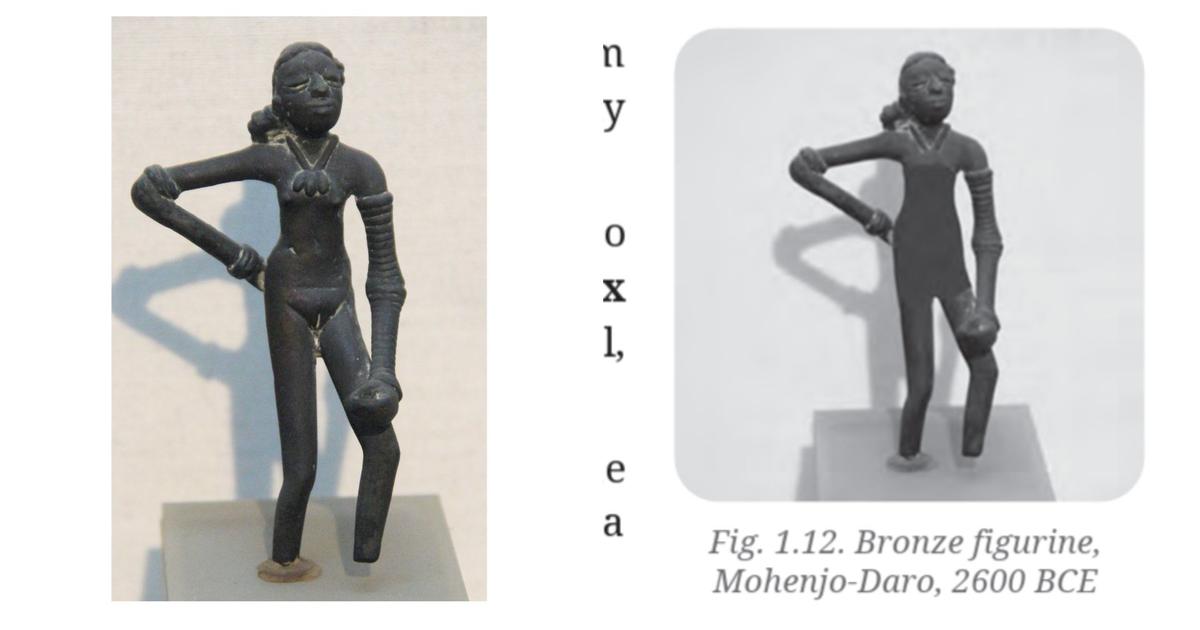
The National Council of Educational Research and Training (NCERT) has announced the reinstatement of the original photograph of the renowned ‘Dancing Girl’ sculpture in its updated arts textbook for Class 9. This decision comes after a significant uproar regarding the initial changes made to the image, which had altered the statue’s appearance by obscuring its bare torso.
The ‘Dancing Girl,’ an exquisite bronze sculpture believed to have originated from the Indus Valley Civilization, is a quintessential artifact dating back to between 2300 BC and 1750 BC. Discovered in Mohenjo-daro, now part of modern-day Pakistan, this artwork captures the grace and poise of a young woman adorned with intricate jewelry and styled hair. Presently, the statue is housed in the National Museum in Delhi, where it continues to fascinate visitors and scholars alike.
Initially, the updated textbook featured an altered version of the sculpture, where the torso of the figure was shaded to obscure anatomical details, sparking a heated debate among educators, historians, and the public. Critics argued that this modification misrepresented the historical significance of the artwork and undermined its value as a cultural icon. The debate intensified as some members of the council expressed concerns that the original portrayal could be seen as inappropriate, leading to the controversial edits.
In response to the backlash, NCERT’s Director Dinesh Saklani stated that the organization was compelled to reevaluate the situation. Following consultations with various experts in art history and education, the council decided to revert to the original image, reaffirming its commitment to accurately depict India’s rich cultural heritage. This decision reflects an understanding of the importance of preserving historical authenticity in educational materials, especially when dealing with artifacts of significant cultural and historical relevance.
The controversy surrounding the ‘Dancing Girl’ sculpture underscores a broader dialogue about how educational institutions approach art, history, and cultural sensitivity. As Indian society grapples with evolving norms and values, preserving the integrity of historical artifacts in educational contexts becomes paramount. By returning to the original depiction, NCERT hopes to foster a richer understanding of the nation’s heritage and encourage students to engage thoughtfully with India’s past.