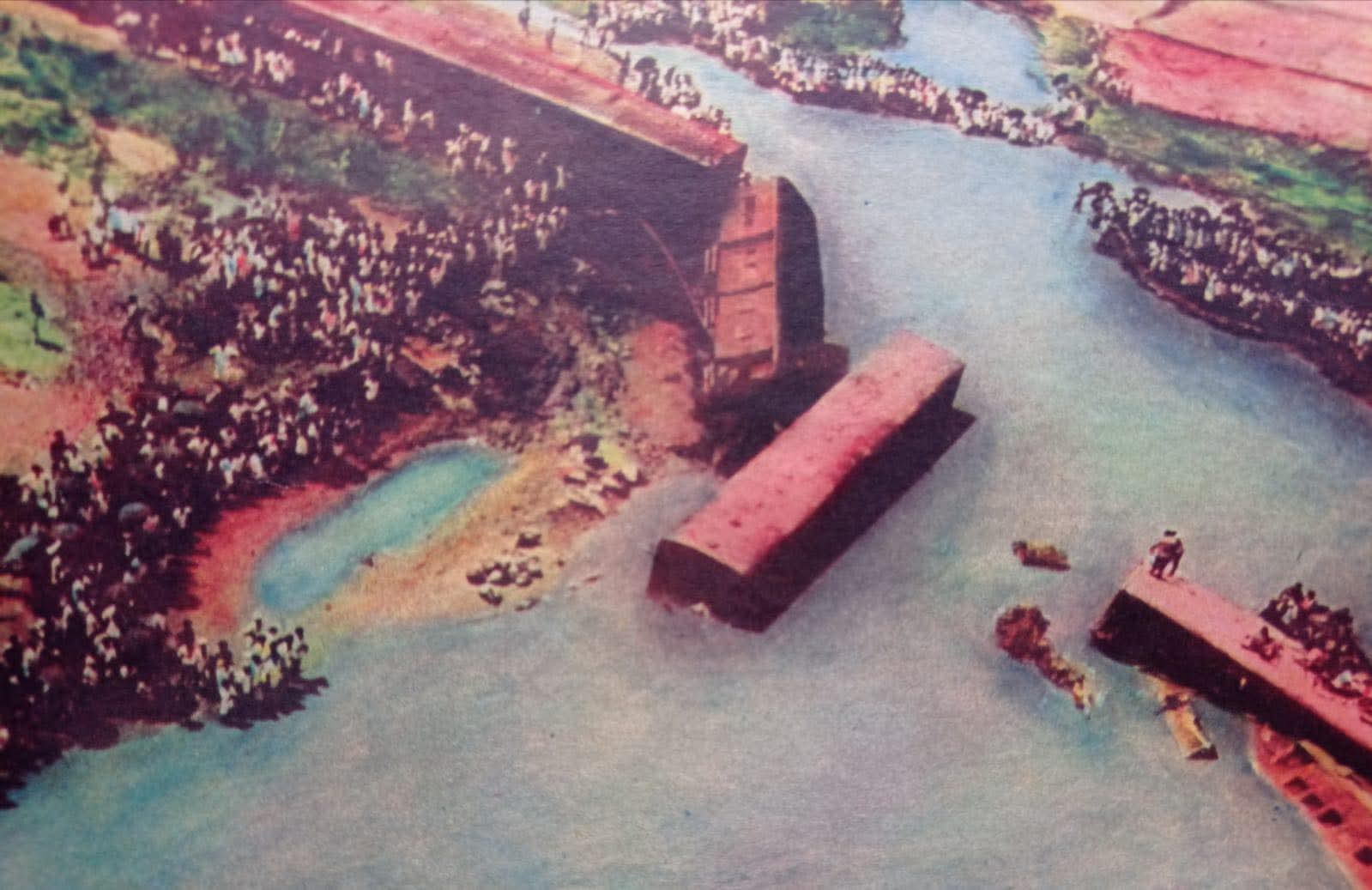
The train accident that occurred in the early hours of 30 May 1977 over the Golandi River in present-day Udalguri district of Assam (then part of Darrang district) is regarded as one of the most serious railway disasters in Northeast India.
According to official records, at around 1:25 a.m., the 13 Up Tezpur Express met with an accident while crossing Railway Bridge No. 141 between Udalguri and Rowta Bagan railway stations.
A sudden flash flood reportedly caused severe erosion around the bridge, washing away an abutment and the adjoining embankment. As a result, the locomotive and the first four coaches fell into the river, while a fifth coach was left hanging from the damaged bridge.
Official records state that 85 bodies were recovered, and many passengers sustained injuries. Some local accounts and media reports at the time suggested that the actual number of fatalities may have been higher because floodwaters allegedly swept away additional victims. However, there is no official confirmation of these higher estimates.
The rescue operation involved personnel from the Indian Army, railway authorities, and local residents.
Investigation Findings
The preliminary inquiry conducted by the Railway Commissioner of Safety concluded that:
- The accident was primarily caused by an exceptional flash flood that undermined the bridge’s foundation.
- No railway employee was held responsible for negligence.
- The incident was classified as an “Act of God”, indicating that it resulted from an unforeseeable natural disaster.
- The tragedy highlighted the need for stronger inspection and monitoring of railway bridges and tracks in flood-prone areas across the Northeast Frontier Railway network.