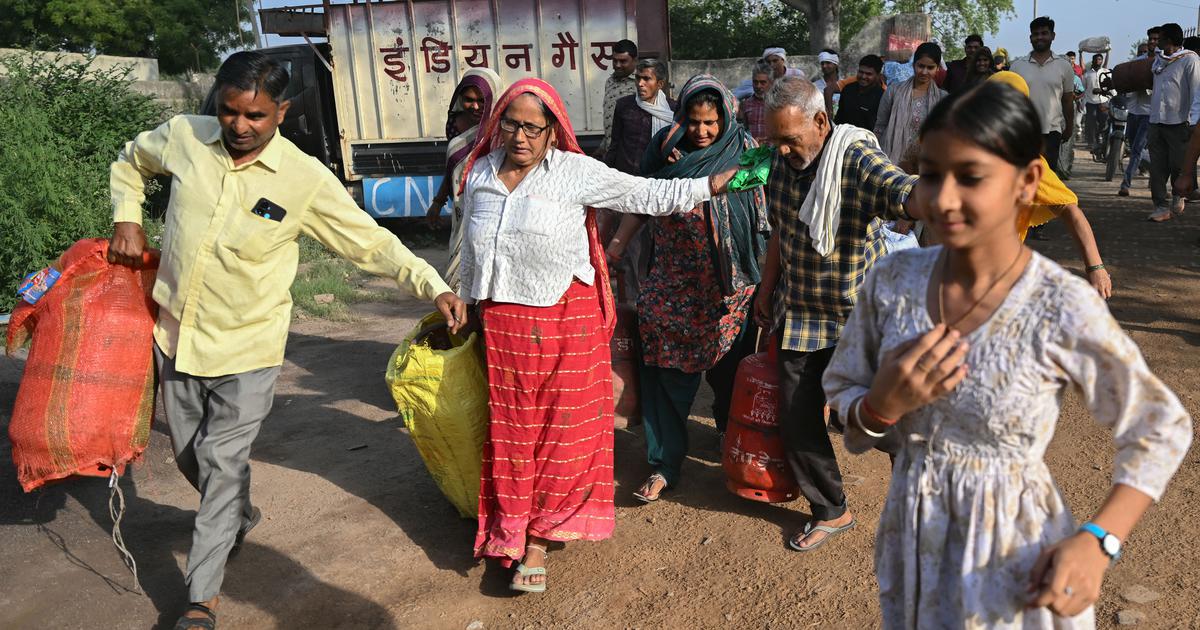
Earlier this month, unexpected rainfall wreaked havoc on agricultural lands across various regions in India. Conversations with farmers, such as Charanpreet Singh from Rajasthan, revealed the harsh realities they face. Despite experiencing significant crop damage, Singh remains hopeful for a successful kharif season, yet he is burdened with concerns about securing essential fertilizers. His worries stem from the geopolitical tensions surrounding the Iran conflict, particularly the impact of dwindled liquefied natural gas (LNG) supplies from West Asia.
The closure of the Strait of Hormuz by Iran in March, following military confrontations with the United States and Israel, has sent ripples through the global energy markets. This strategic waterway is vital for oil and gas shipments, and its blockage has led to a steep decline in LNG availability, a key component in the production of fertilizers like urea and diammonium phosphate. As domestic fertilizer production relies heavily on this crucial raw material, farmers like Singh are left questioning whether they will receive the necessary supplies in time for planting season.
The intersection of the Iran war and the agricultural sector is a stark reminder of how global conflicts can have far-reaching effects on local livelihoods. While media narratives often focus on the immediate consequences of such wars, the prolonged impact on economies and everyday lives is frequently overlooked. Singh’s experience illustrates that the repercussions of international disputes can filter down to the local level, affecting food production and, by extension, food security in India.
Moreover, as India grapples with the dual challenges of climate change and geopolitical instability, the vulnerability of farmers has become increasingly apparent. The recent weather anomalies, coupled with the energy crisis triggered by conflicts abroad, create a perfect storm for agriculture, which is already battling the effects of erratic monsoons and shifting climate patterns. Farmers are left navigating these unpredictable terrains, where both natural and human-made phenomena dictate their fates.
As the situation unfolds, it becomes essential for policymakers to consider these multifaceted challenges. Addressing agricultural viability must include not only climate resilience strategies but also contingency plans for energy supplies impacted by global conflicts. A holistic approach is crucial to ensure that farmers like Singh can continue to cultivate their lands without the looming threat of resource scarcity. The story of Singh reflects a larger narrative—one where the consequences of wars and geopolitical tensions extend far beyond borders, affecting the very backbone of the Indian economy: its farmers.