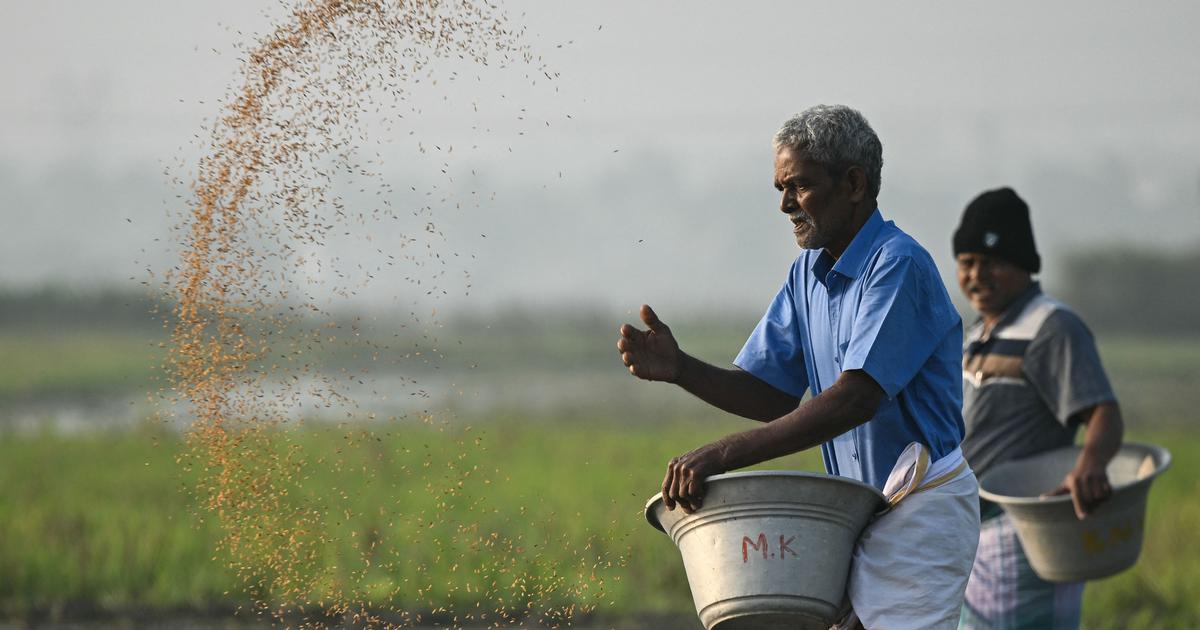
India’s monsoon season has taken a concerning turn, with the country experiencing a significant 43% deficit in rainfall thus far. This alarming trend has raised serious fears regarding the impact on kharif crops, which are vital for the agricultural economy. Union Agriculture Minister Shivraj Singh Chouhan addressed these concerns during a recent meeting on Tuesday, urging immediate action to mitigate potential damage.
The kharif season, which spans from June to October, is critical for farmers as it is during this time that crops are sown at the commencement of the monsoon and harvested by its conclusion. However, the current lack of adequate rainfall poses a dire threat to this cycle. Chouhan revealed that approximately 315 districts across India are likely to be adversely affected by the insufficient monsoon rains. This wide-ranging impact necessitates urgent attention and strategic interventions.
Among the affected districts, a classification system has been established based on irrigation coverage. The Union government has categorized 111 districts with irrigation facilities below 25% as high priority, while 76 districts with coverage between 25% and 50% have been marked as medium priority. The remaining 128 districts, which boast better irrigation infrastructure, fall under the low priority category. This systematic approach is designed to ensure that resources and support can be directed where they are needed most.
The Minister highlighted that the majority of the districts facing low rainfall are located in 12 states, including Andhra Pradesh, Bihar, Gujarat, Jharkhand, Karnataka, Madhya Pradesh, Maharashtra, Odisha, Rajasthan, Tamil Nadu, Telangana, and Uttar Pradesh. Each of these regions has its unique agricultural challenges, and the Union government is keenly aware of the potential ramifications of this rainfall deficiency.
Furthermore, Chouhan pointed out that the prevailing El Niño weather phenomenon could be exacerbating the situation, contributing to the weakened monsoon conditions. The government has already activated contingency plans for vulnerable districts and has ramped up the monitoring of both monsoon progression and crop health. This proactive approach aims to shield farmers from the severe repercussions of climate variability.
As the situation develops, it remains crucial for farmers, agricultural agencies, and government bodies to work in unison. With kharif crops being a staple for many rural communities, the stakes are high. Strategies such as diversifying crop choices, improving irrigation techniques, and utilizing drought-resistant seeds may play essential roles in safeguarding India’s agricultural backbone as challenges from weather patterns persist.