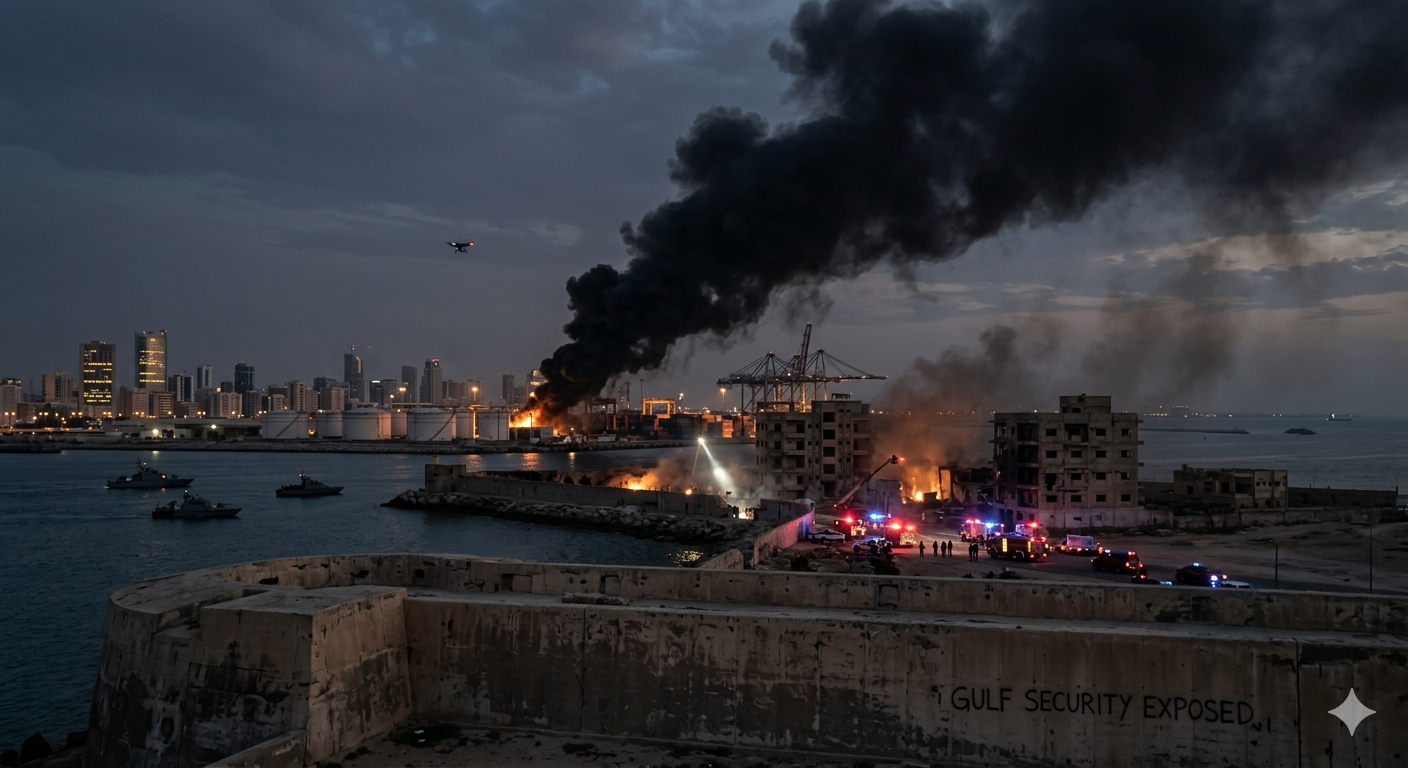
The recent retaliatory strikes launched by Iran have sent shockwaves across the Gulf region, once again underscoring the fragile security architecture that underpins one of the world’s most strategically vital corridors. What began as a calculated response to perceived provocations has now evolved into a stark reminder that beneath the Gulf’s economic prosperity lies a volatile and vulnerable geopolitical landscape.
*A Region on Edge*
The Gulf has long been a theater of power projection, with rivalries simmering between regional and global actors. Iran’s latest strikes, reportedly targeting strategic and energy-linked infrastructure, were not merely symbolic—they were precise, disruptive, and deeply unsettling for neighboring states. Oil installations, shipping routes, and military facilities suddenly appeared far less secure than previously assumed.
For decades, Gulf nations have invested heavily in defense systems, many sourced from Western allies, believing that advanced surveillance and missile interception technologies would deter or neutralize threats. Yet, these recent attacks reveal uncomfortable truths: even the most sophisticated systems can be bypassed, and asymmetric warfare continues to outpace conventional defense planning.
*The Illusion of Deterrence*
At the heart of this crisis lies the erosion of deterrence. Iran’s actions demonstrate a willingness to absorb diplomatic fallout in pursuit of strategic signaling. By striking beyond its borders, Tehran has conveyed both capability and intent—two factors that redefine regional equations.
This also raises questions about the effectiveness of existing security alliances. Despite the presence of powerful actors like the United States in the Gulf, gaps remain—whether in intelligence coordination, rapid response mechanisms, or political consensus. The attacks highlight that deterrence is not merely about military hardware, but about credible, unified responses—something the region has struggled to maintain.
*Economic Shockwaves*
The Gulf’s stability is inseparable from global economic health. Any disruption to oil production or maritime trade routes, particularly through choke points like the Strait of Hormuz, carries worldwide consequences. Markets reacted nervously to the strikes, with oil prices showing volatility amid fears of escalation.
For Gulf economies attempting diversification beyond hydrocarbons, such instability is a setback. Investor confidence—already sensitive to geopolitical tensions—may waver, impacting long-term development visions such as Saudi Arabia’s Vision 2030 or the UAE’s innovation-driven growth strategies.
*A New Security Paradigm?*
The attacks may serve as a turning point. Gulf nations are likely to reassess their defense doctrines, shifting from reliance on external security guarantees to more integrated regional frameworks. Enhanced intelligence sharing, indigenous defense capabilities, and diplomatic recalibration with adversaries could become priorities.
At the same time, the crisis underscores the urgent need for de-escalation. Without diplomatic engagement, cycles of retaliation risk spiraling into broader conflict—one that could engulf not just the Gulf, but draw in global powers with far-reaching consequences.
*Conclusion*
Iran’s retaliatory strikes have done more than inflict physical damage—they have exposed systemic vulnerabilities in the Gulf’s security fabric. The message is clear: technological superiority alone cannot ensure safety in an era of evolving threats. What is required is a balanced approach—combining defense preparedness with diplomatic foresight.
As the dust settles, the Gulf stands at a crossroads. Whether it moves toward greater cooperation or deeper confrontation will shape not only regional stability, but the trajectory of global peace and economic security in the years ahead.