Iran’s Team Touches Down in U.S. for First Time, Draws New Zealand 2-2 in World Cup Opener Shadowed by War and Protest
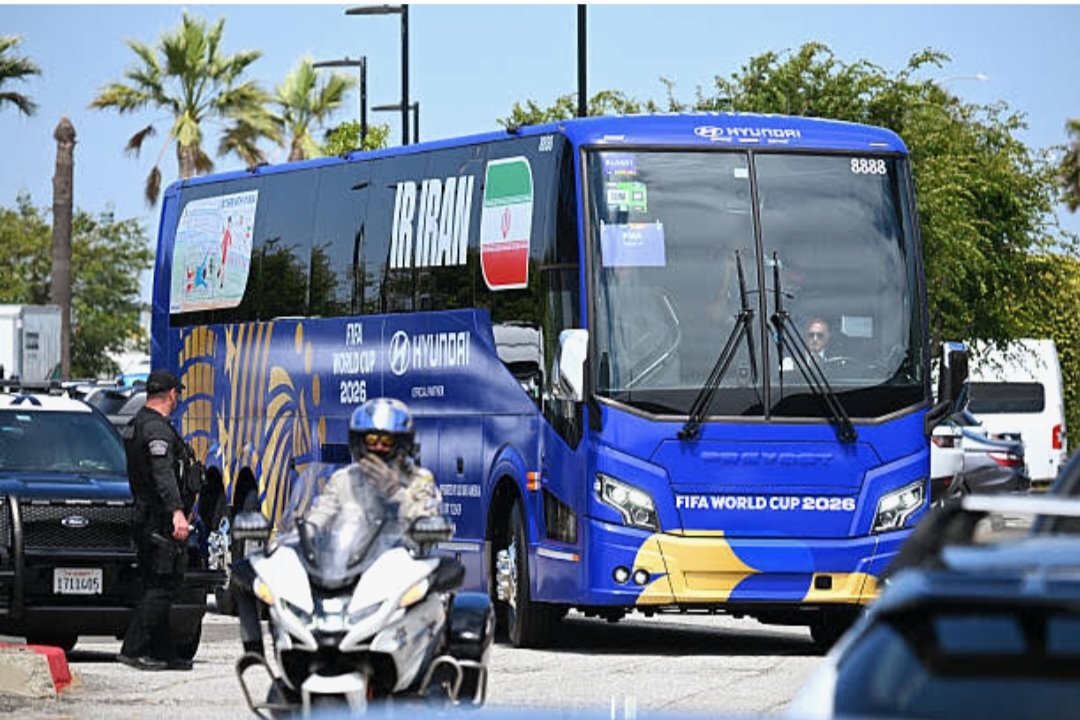
INGLEWOOD, Calif. — Iran’s national football team set foot on American soil for the first time at the 2026 World Cup on Sunday, landing in Los Angeles after weeks of uncertainty over whether the squad would compete in the United States at all. A day later, Team Melli opened its tournament against New Zealand at Los Angeles Stadium, settling for a 2-2 draw in a Group G match played against an extraordinary political backdrop.
The arrival capped an unusual buildup. Citing security concerns tied to the broader conflict between the United States, Israel, and Iran, the squad had relocated its training base across the border to Tijuana, Mexico, before flying north for the opener. Hours after the team touched down, President Donald Trump announced that the United States and Iran had reached a framework agreement to end their war and reopen the Strait of Hormuz, with a formal signing planned in the days ahead.
That conflict began on February 28, when U.S. and Israeli forces struck Iranian military and government sites, killing Iran’s Supreme Leader at the time, Ayatollah Ali Khamenei. His son, Mojtaba Khamenei, was installed as his successor in early March. Iran’s participation in the World Cup had been in doubt for much of the spring, with the country’s sports minister at one point suggesting the team might be withdrawn from the tournament altogether.
Logistics remained fraught into the tournament’s opening days. Several members of Iran’s football federation reportedly had visa applications denied, and the team’s stadium ticket allotment was pulled and had to be resolved before kickoff. At a pre-match press conference, head coach Amir Ghalenoei told reporters the squad and staff saw themselves as athletes rather than political actors, there to represent both Iranians at home and the diaspora abroad.
On the field, Mehdi Mohebi’s header pulled Iran level in a back-and-forth contest that finished 2-2, leaving Team Melli still searching for its first-ever World Cup group-stage win. Star forward Mehdi Taremi started up front, with goalkeeper Alireza Beiranvand anchoring a defense that included Hossein Kanaani-era veterans alongside newer additions to the squad.
Outside the stadium, the match drew one of the most politically charged scenes of this World Cup. Hundreds of demonstrators gathered, many waving Iran’s pre-1979 “Lion and Sun” flag — a symbol now associated with the Iranian opposition and banned inside the country — alongside others carrying Israeli and American flags. Tensions flared at points between protesters and arriving Iran supporters. A California nonprofit’s legal challenge to restrictions on protest materials inside the venue was rejected by a judge, who ruled that the stadium does not constitute a public forum.
For many in Southern California, home to the largest Iranian diaspora outside Iran itself, the match forced a complicated reckoning between pride in the national team and opposition to the government in Tehran. Several fans interviewed outside the stadium said they hoped the moment would draw renewed international attention to Iran’s domestic political situation, beyond statements of condemnation from foreign governments.
Iran next faces ninth-ranked Belgium at Los Angeles Stadium on June 21, a result likely to go a long way toward deciding Group G. The team closes out group play against Egypt in Seattle on June 26. New Zealand, playing in its first World Cup since 2010 and still seeking the program’s first-ever win at the tournament, is based in San Diego for the remainder of the group stage.