




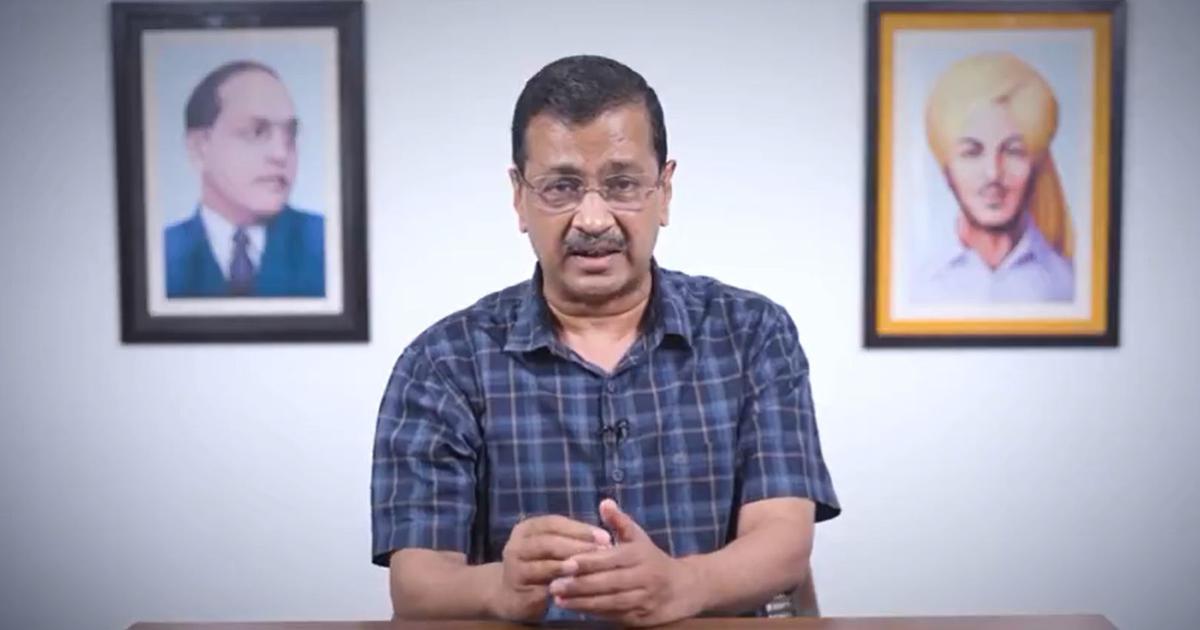
In a significant development in the ongoing Delhi liquor policy case, Arvind Kejriwal, the chief of the Aam Aadmi Party (AAP), announced on Monday that he will not be appearing in person or through legal representation before the Delhi High Court. This decision comes as the court, presided over by Justice Swarana Kanta Sharma, is currently hearing the Central Bureau of Investigation’s (CBI) appeal against a prior ruling that discharged Kejriwal and several others from the case.
Kejriwal has formally communicated his decision to the judge in writing, emphasizing his intention to reserve the right to challenge any unfavorable ruling from the High Court in the Supreme Court. This move is poised to escalate the legal battle surrounding the controversial liquor policy, which has drawn significant attention and political debate in the national capital.
The former Delhi Chief Minister’s stance follows a recent setback when Justice Sharma denied his request to recuse herself from the case. Kejriwal had raised concerns regarding the judge’s alleged bias, citing her attendance at an event organized by a group associated with the Rashtriya Swayamsevak Sangh (RSS), which is known to be the ideological parent of the ruling Bharatiya Janata Party (BJP). He argued that her connections could compromise the impartiality expected from a judicial authority in a matter of such magnitude.
In addition to this, Kejriwal had pointed to what he described as a pattern of judicial decisions favoring the CBI and the Enforcement Directorate (ED) throughout the proceedings related to the liquor policy. His apprehensions were further underscored when he submitted a new affidavit seeking Justice Sharma’s recusal, alleging that her children had been appointed as counsels by the Union government.
The political stakes in this case are notably high, as it not only impacts the AAP, which governs Delhi, but also reflects broader tensions in Indian politics, particularly between state governments led by opposition parties and the central government under the BJP. Kejriwal’s refusal to participate in the hearings could be viewed as a strategic move, aiming to draw attention to what he perceives as an unjust legal process influenced by political motivations.
As the case unfolds, it remains to be seen how this decision will affect both Kejriwal’s political future and the dynamics of the ongoing legal battle. With the Supreme Court looming as a potential next venue for appeals, the situation is likely to remain fluid, drawing in more public interest and scrutiny in the days to come.

