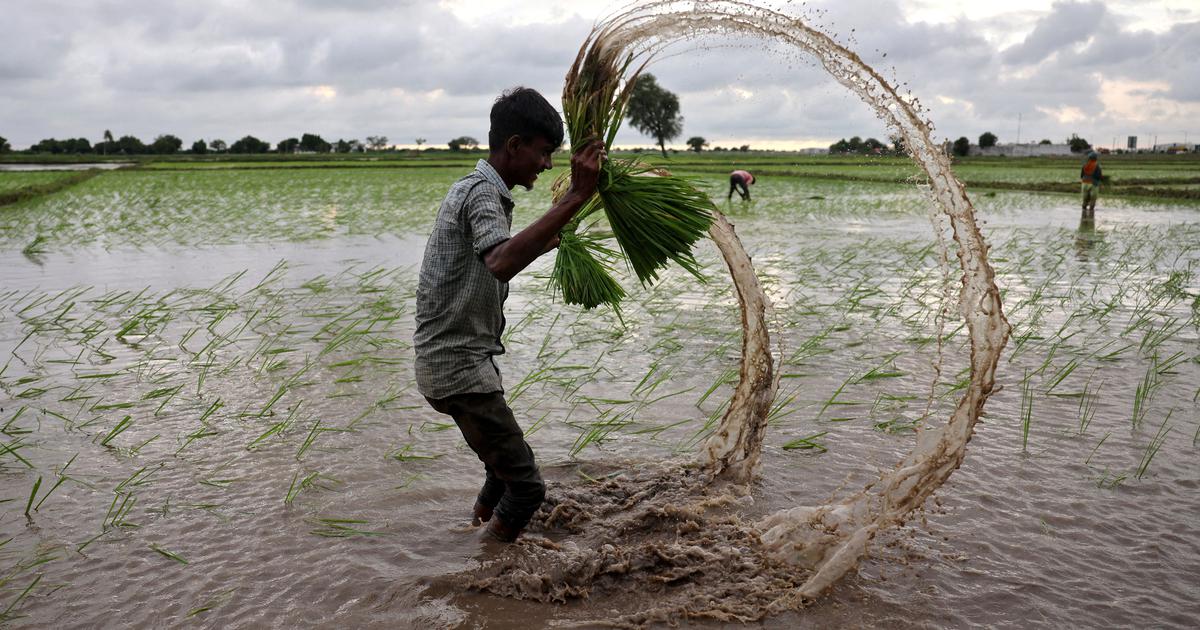
The sowing of Kharif crops in India has witnessed a significant decline of 22.7% compared to the previous year, primarily attributed to the delayed arrival of the southwest monsoon. As per the latest data released by the Union government, as of Thursday, the area under Kharif cultivation stood at 182.7 lakh hectares, a sharp decrease from 236.4 lakh hectares in 2022, according to the Ministry of Agriculture and Farmers Welfare.
The Kharif season, which spans from June to October, is crucial for farmers as it marks the onset of monsoon-driven agriculture. Crops planted during this time are harvested at the season’s end, making timely planting essential for optimal yield. However, the erratic weather patterns this year have significantly disrupted planting schedules across various states.
The most alarming drop has been observed in the oilseeds sector, with a staggering 53.3% reduction in acreage, falling to just 16.9 lakh hectares from 36.4 lakh hectares last year. Among oilseeds, soybean sowing has encountered the most substantial decline, followed closely by groundnut. This shortfall is particularly worrying for the Indian economy, which relies heavily on these crops for edible oil production.
In addition, cotton cultivation has experienced a downturn of 34.6%, now covering 29.6 lakh hectares, while paddy acreage has decreased by 25.2%, totaling 25.7 lakh hectares. Pulses have not been spared either, with a decline of 30.5% to 14.9 lakh hectares, driven by reduced sowing of arhar, urad, and moong varieties. The combined impact of these declines spells trouble for the agricultural landscape of India, which is already grappling with food security issues.
According to the India Meteorological Department (IMD), the seasonal rainfall this year is projected to be around 90% of the long-period average. Moreover, the emergence of El Niño conditions is anticipated to further complicate the monsoon pattern during the critical June-September period. El Niño is a climate phenomenon characterized by the warming of sea surface temperatures in the eastern and central Pacific, often leading to drier weather and reduced rainfall in key agricultural regions of India.
The implications of these developments extend beyond just agricultural output, impacting food prices, farmer incomes, and ultimately, the broader economy. As farmers face the dual challenges of delayed monsoon and reduced acreage, there is an urgent need for intervention and support from the government to mitigate the adverse effects and ensure food security for the nation. The coming weeks will be critical as farmers adapt to the changing conditions and strive to make the most of the remaining monsoon season.