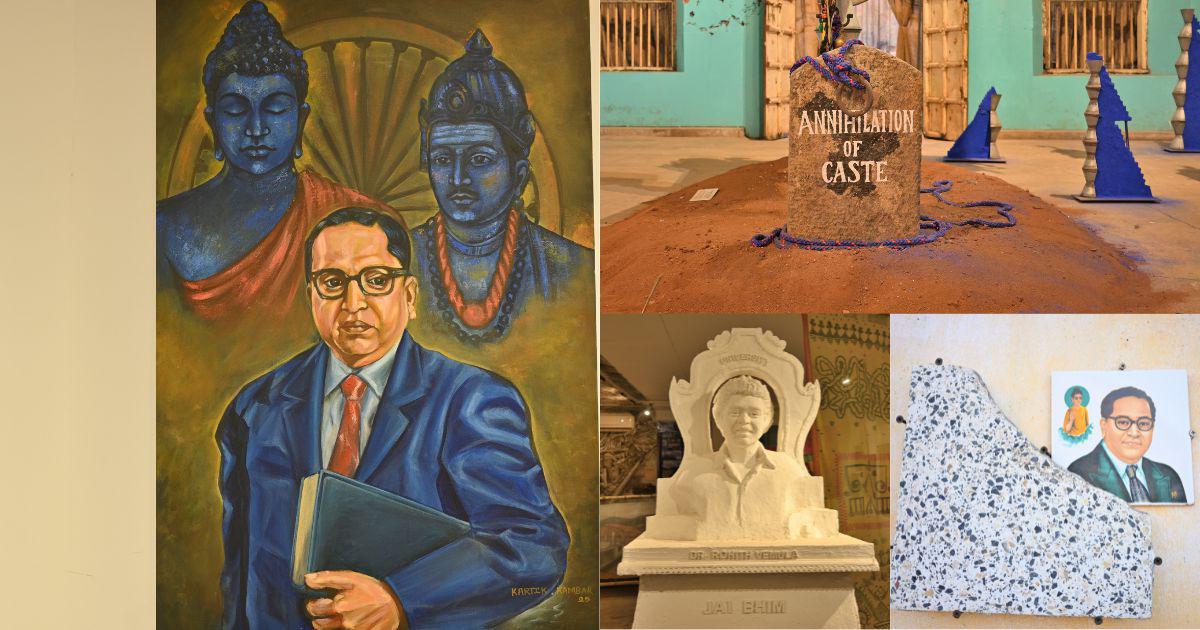
The Kochi-Muziris Biennale, a celebrated platform for contemporary art, recently concluded on March 31, showcasing a myriad of thought-provoking installations that reflect India’s social struggles. Among these, a particularly striking sculpture by artist Kailash Khanjode stands out, encapsulating the poignant legacy of Dr. B.R. Ambedkar and the ongoing fight against caste discrimination in India.
At the heart of Khanjode’s artwork is a hand-sculpted pedestal featuring two busts, each turned away from the other. One bust is inscribed with the name ‘Dr. Rohith Vemula,’ a tragic reminder of the young scholar whose life was cut short in January 2016, after he faced relentless caste-based discrimination at Hyderabad Central University. His story resonates deeply with many, symbolizing the struggles faced by Dalits in India today.
The opposite bust bears the name ‘Pochiram Kamble,’ a Dalit activist who was brutally killed in 1978 amid violent opposition from upper-caste groups. This was a pivotal year, as the Maharashtra legislature passed a resolution to rename Marathwada University after Ambedkar—a move that ignited fierce backlash and violent riots targeting Dalit communities. The inscription above Kamble’s bust, which reads ‘Dr. Babasaheb Ambedkar University,’ serves as a chilling reminder of the ongoing caste violence.
What makes Khanjode’s sculpture an exceptional piece is the way it bridges the past and present, reflecting the unchanging nature of caste prejudice in India. The circular movement from Kamble back to Vemula within the installation suggests a continuous narrative of struggle, resilience, and the unyielding quest for justice among marginalized communities.
This artwork is part of a broader project titled ‘Ginning Justice,’ created by the duo Rohit Athavale and Sachin Banne. Their work meticulously documents Mumbai’s segregated neighborhoods, showcasing how caste and religion have historically shaped housing and labor in the textile mills established in Kolhapur. Through this project, the artists aim to highlight the socio-economic disparities that persist in urban India, urging viewers to reflect on the lasting impact of caste divisions.
The Kochi Biennale serves as an important platform for dialogue around these issues, providing artists with the opportunity to challenge societal norms and provoke critical discussions. In a country where caste still plays a significant role in shaping identity and access to opportunities, such artistic expressions are crucial in raising awareness and advocating for change.