




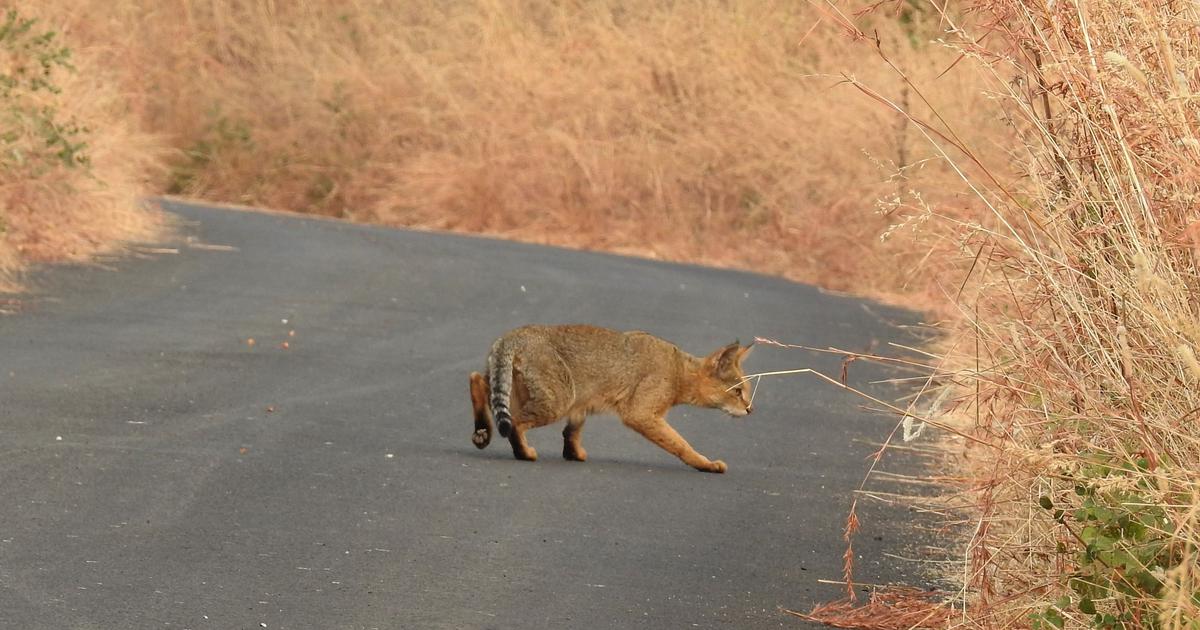
A groundbreaking study has shed light on the distribution and potential population size of jungle cats in India, revealing that the nation could support more than 300,000 of these elusive felines. The research, spearheaded by Kathan Bandyopadhyay, emphasizes the significant lack of knowledge about the habitat preferences, population dynamics, and ecological roles of jungle cats (Felis chaus) in India. This study, published in the esteemed journal Scientific Reports, utilized over 6,000 verified sightings to map the suitable habitats for these cats throughout the country.
The findings indicate that jungle cats thrive in warm, semi-arid areas that feature moderate rainfall and some level of human activity. The research identified approximately 545,000 square kilometers of suitable habitat across India, with promising populations likely to be found in states including Madhya Pradesh, Rajasthan, Odisha, Chhattisgarh, Maharashtra, and Gujarat. This extensive mapping effort not only highlights the adaptability of jungle cats but also their critical role in India’s diverse ecosystems.
Shomita Mukherjee, a senior principal scientist at the Salim Ali Centre for Ornithology and Natural History, remarked on the study’s significance, stating that the in-depth effort dedicated to understanding this relatively common species is noteworthy, especially in the context of conservation challenges faced by more prominent wildlife. The jungle cat, often overshadowed by larger predators like tigers and leopards, plays a vital role in maintaining the balance of the ecosystems it inhabits.
Unlike their larger counterparts, jungle cats prefer open landscapes such as grasslands, wetlands, and scrublands, steering clear of dense forests and urban settings. Their long legs and slender physiques are well adapted for navigating through tall grasses, allowing them to hunt effectively in their natural habitats. This adaptability underscores the importance of preserving diverse ecosystems that support not just jungle cats but a multitude of other species.
The study’s revelations serve as a wake-up call for conservationists and policymakers to consider the ecological significance of jungle cats and the habitats they rely on. As urbanization and agricultural expansion continue to encroach upon natural landscapes, it becomes increasingly vital to protect these environments. Understanding the intricate dynamics between jungle cats, their prey, and other wildlife is essential for fostering a biodiverse and balanced ecosystem.

