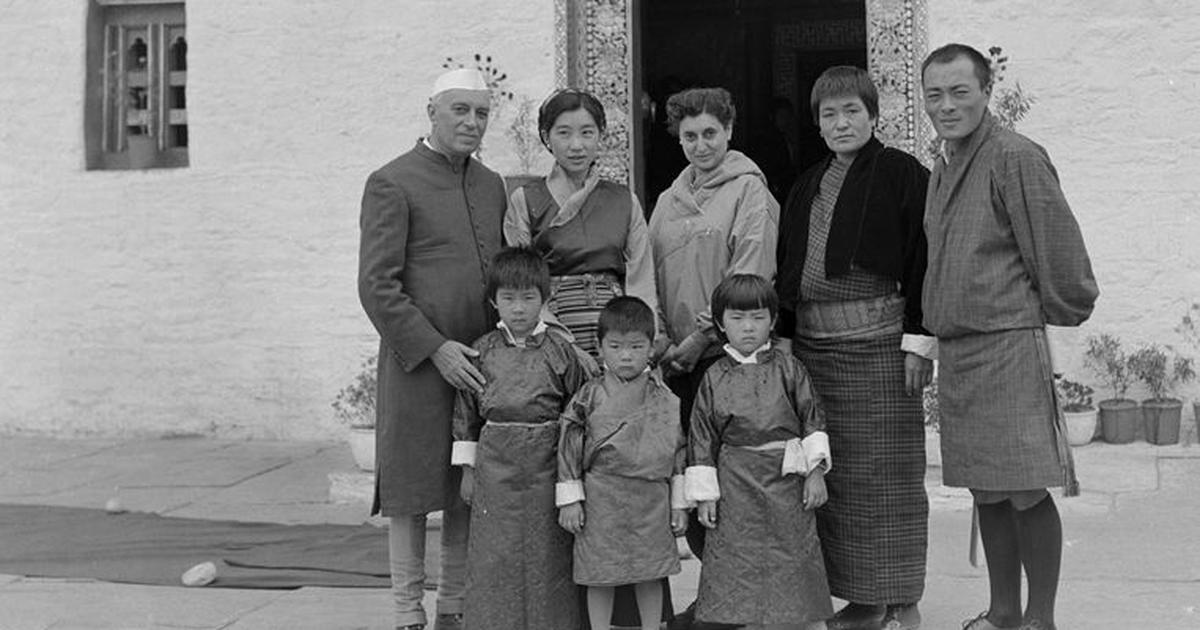
In the autumn of 1958, India found itself at a crossroads with its neighbor to the north, as the relationship with China began to fray amidst growing tensions. This geopolitical unrest forced Jawaharlal Nehru, India’s first Prime Minister, to abandon a highly anticipated visit to Lhasa, the capital of Tibet. However, Nehru was undeterred in his quest to foster goodwill in the region and turned his diplomatic focus towards Bhutan, a small kingdom nestled in the Himalayas that was pivotal to India’s strategic interests.
The journey to Bhutan was not straightforward. The geographical layout of the region required Nehru to traverse a complex route that included crossing the Nathu La Pass in Sikkim, navigating through Yatung in the Chumbi Valley, and finally entering Bhutan. The political climate of the time added layers of complexity; even as India and China were experiencing rising animosity, Nehru required permission from the Chinese authorities to pass through Tibetan territory. Despite the deteriorating relations, it was crucial for Nehru to maintain a facade of cooperation with China.
In October 1958, journalist Bert Clemens highlighted the peculiar position of the Chinese government in the Brooklyn Daily. They had extended an invitation to Nehru, emphasizing the historical ties between China and India as “staunch friends and allies.” However, the invitation came with caveats, as the Chinese government described the situation in Tibet as “dangerous” for any diplomatic visit, thus placing Nehru in a diplomatically precarious situation. Ultimately, the Chinese consented to his transit through Tibet, albeit without the warmth that one would expect from a friendly neighbor.
This diplomatic mission was not merely a journey; it was a hallmark of Nehru’s vision for India’s foreign policy, which aimed to strengthen bonds with neighboring countries while countering Chinese influence in the region. Bhutan, with its strategic location and unique cultural heritage, represented an essential partner in Nehru’s broader vision for a stable and prosperous South Asia. His endeavor to reach this Himalayan kingdom signified not just a quest for diplomacy but a deeper understanding of the significance of regional relationships in a post-colonial context.
Nehru’s trek through the Himalayas remains a vital chapter in Indian history, illustrating the delicate balance of diplomacy and the importance of fostering relationships in a region fraught with challenges. Today, as India continues to navigate its relationships with neighboring countries, the lessons from Nehru’s Himalayan journey resonate, reminding us of the ongoing need for dialogue, cooperation, and mutual respect on the subcontinent.