A World at a Crossroads: Can the United Nations Address Today's Global Challenges?
As world leaders gather in New York, conflicts, climate change, economic inequality and artificial intelligence place international cooperation under renewed scrutiny.
By Fernand Louis
A Defining Moment for Global Cooperation
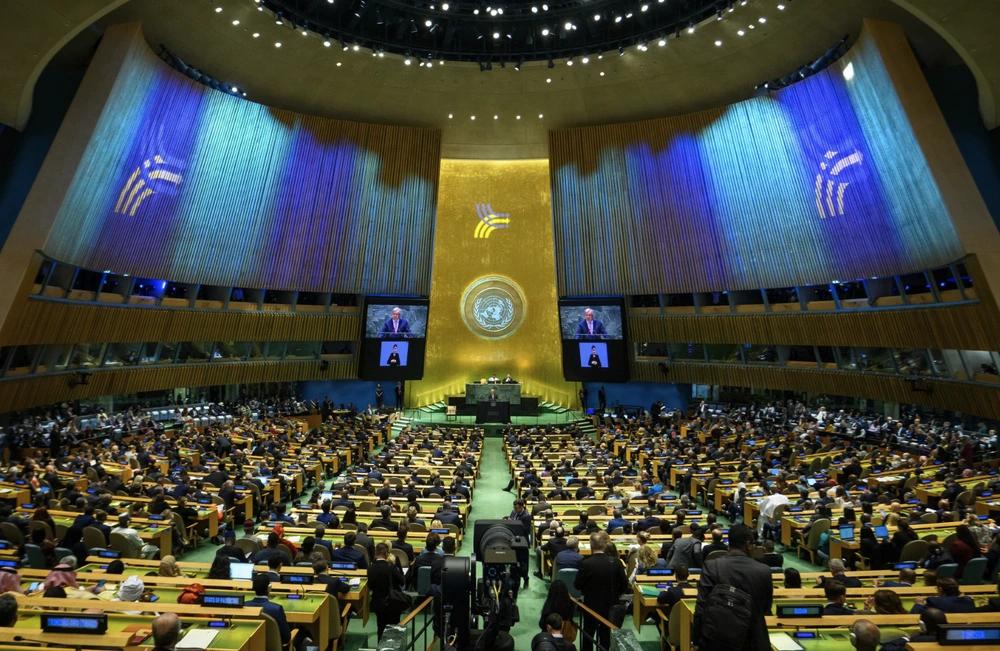
The United Nations entered a critical period on September 22, 2026, as world leaders gathered in New York for the General Debate of the 81st session of the UN General Assembly.
The gathering comes amid continuing armed conflicts, humanitarian emergencies, climate-related disasters and growing concerns about the governance of emerging technologies.
Opening the debate, UN Secretary-General António Guterres identified four major challenges confronting humanity: war and peace, inequality, climate change and artificial intelligence. He warned that geopolitical divisions and weakening international trust were making collective action increasingly difficult.
United Nations
+1
The central question facing the international community is whether the United Nations can translate diplomatic commitments into meaningful action.
Global Conflicts Test International Diplomacy
Armed conflicts remain among the most urgent challenges facing the UN.
The continuing wars and humanitarian crises affecting Ukraine, Gaza, Sudan and other regions have exposed the difficulties of securing lasting ceasefires, protecting civilians and delivering humanitarian assistance.
In his September 22 address, Guterres called for greater respect for international law and stronger international cooperation to address armed conflicts.
DPRK UN
+1
The UN Security Council carries primary responsibility for maintaining international peace and security. However, disagreements among its permanent members can prevent collective action on major international disputes.
The General Assembly provides a broader forum for diplomatic discussion and political resolutions, although its recommendations generally do not carry the same binding authority as Security Council decisions.
These institutional differences highlight the continuing debate over the UN's effectiveness in responding to international crises.
Climate Change and Economic Inequality
Climate change represents another challenge that cannot be addressed by individual nations acting alone.
Extreme weather, rising temperatures, environmental degradation and pressure on food and water supplies create risks that extend beyond national borders.
At the same time, developing countries face difficulties financing climate adaptation, infrastructure development and essential public services.
During the General Assembly's opening debate, UN leaders emphasized the need to accelerate progress toward the Sustainable Development Goals and address inequalities in access to economic opportunities and development financing.
United Nations
+1
International cooperation on climate finance, sustainable development and humanitarian assistance remains central to these discussions.
Artificial Intelligence: A New Global Responsibility
Artificial intelligence has emerged as an increasingly important subject in international diplomacy.
AI offers opportunities in healthcare, education, scientific research and economic development. However, its rapid expansion also raises concerns about misinformation, employment disruption, surveillance and the use of autonomous systems in warfare.
On September 22, Guterres called for stronger international cooperation on AI governance and emphasized that decisions involving human life should remain subject to human responsibility and oversight.
United Nations
+1
The challenge for the international community is to establish safeguards that address technological risks while allowing countries to benefit from innovation.
Reforming the United Nations
Questions about the UN's institutional structure have become central to discussions about its future.
The Security Council's composition reflects arrangements established after the Second World War, while the political and economic influence of countries and regions has changed considerably.
In his September 22 address, Guterres called for Security Council reform, highlighting the absence of permanent African representation.
General Assembly President Khalilur Rahman also called for institutional reform, stronger accountability and more inclusive international decision-making.
United Nations
+1
Proposals for reform involve difficult negotiations among member states, particularly regarding permanent membership, veto powers and regional representation.
The Future of International Cooperation
The United Nations remains a central forum where countries can negotiate, coordinate humanitarian assistance and address challenges that extend beyond national boundaries.
However, its effectiveness depends substantially on the political commitments, financial contributions and cooperation of its member states.
The September 2026 General Assembly provides an opportunity to examine the gap between international commitments and practical outcomes.
For citizens around the world, the significance of these discussions lies in their potential consequences for peace, economic security, environmental protection and human development.
The challenges confronting humanity are increasingly interconnected. Addressing them requires sustained diplomacy, credible international institutions and cooperation among countries with differing national interests.
The future of the United Nations will be shaped not only by the resolutions adopted in New York, but by the actions governments take to fulfil their international commitments.