
Bank Cyber Incidents Reported Across Multiple Countries in 2026
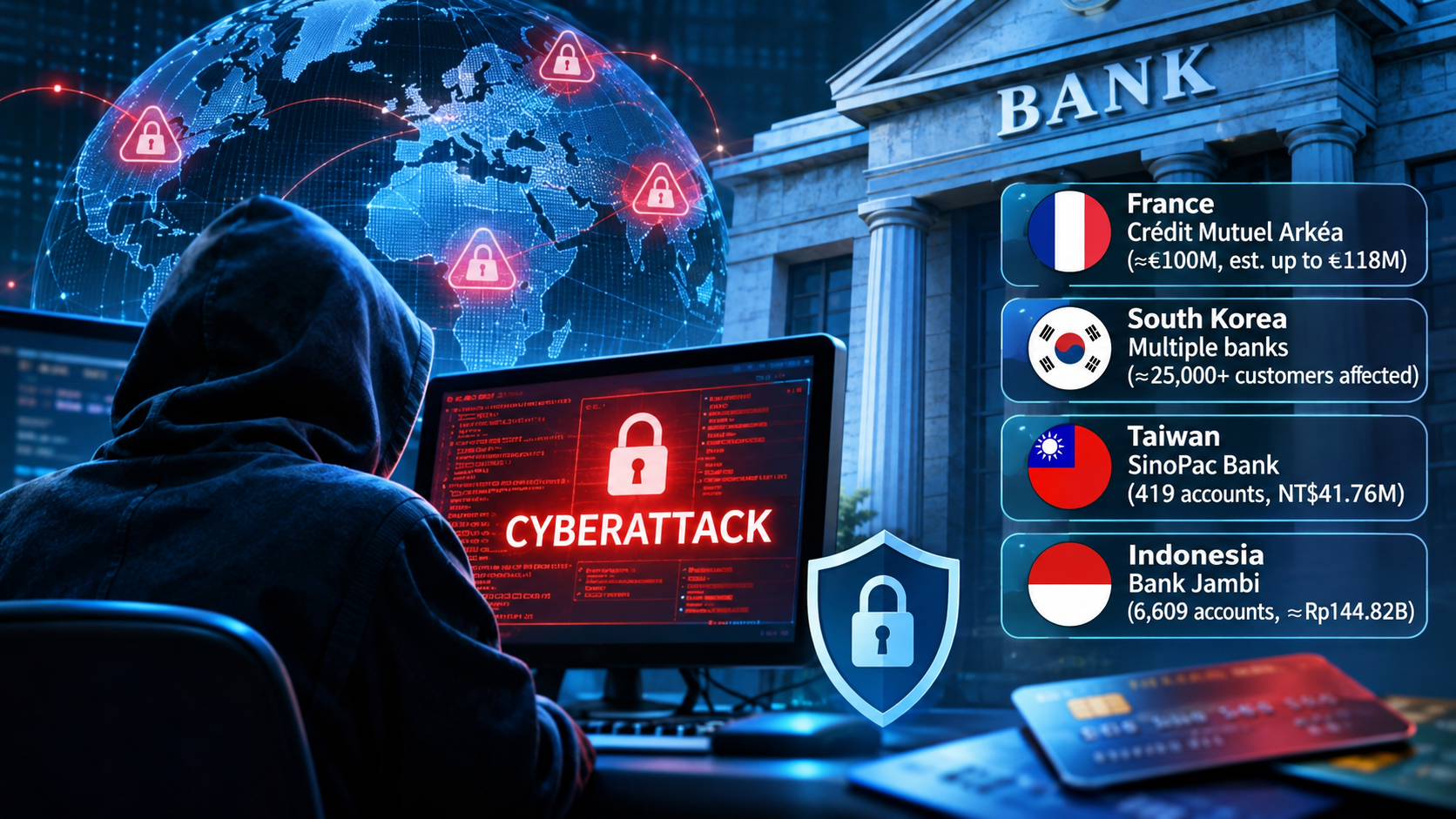
Several banking and financial institutions across different countries reported cyber incidents in 2026, highlighting the growing risks faced by the global banking sector. The incidents involved unauthorized transactions, cyberattacks, security vulnerabilities and the misuse of third-party systems.
France: Crédit Mutuel Arkéa Cyber Incident
In early November 2026, France-based Crédit Mutuel Arkéa reported a major cyber incident involving unauthorized transfers. Initial reports estimated the financial impact at around €100 million, while some reports placed the potential amount as high as €118 million. However, the bank has not confirmed a final figure and has stated that the exact amount remains subject to investigation.
According to the bank, the incident involved a third-party service provider. Customer assets were not directly affected, although some transactions were temporarily delayed or suspended as a precaution. French authorities have also begun an investigation into the incident.
South Korea: Multiple Banks Face Security Breaches
Several South Korean financial institutions also reported cybersecurity incidents in 2026. Reports indicated that approximately 25,000 customers of Shinhan Bank and around 40,000 customers of Yegaram Savings Bank were affected by security-related incidents.
Authorities and financial institutions launched emergency security reviews following the incidents. Reports also raised concerns about the possible use of AI-assisted tools in some cyber activities. Investigations were ongoing to determine the full scope of the incidents and whether customer information had been compromised.
Taiwan: Unauthorized Transactions Affect Hundreds of Accounts
In Taiwan, SinoPac Bank reported 427 unauthorized transactions involving 419 customer accounts. The total amount involved was approximately NT$41.76 million.
The incident was linked to security settings associated with a software supplier. The bank said it would reimburse affected customers, while investigations continued into how the unauthorized transactions occurred. There was no confirmed evidence that customer data had been leaked in connection with the incident.
Indonesia: Bank Jambi Cybercrime Case
In Indonesia, authorities investigated a cybercrime case involving Bank Jambi. According to police, 6,609 customer accounts were linked to transactions involving approximately Rp144.82 billion.
The investigation indicated that funds were moved through different channels, including cryptocurrency-related transactions. Authorities arrested several individuals as part of the investigation, which remained ongoing.
Growing Cybersecurity Risks in the Banking Sector
These incidents are part of a wider pattern of cybersecurity threats affecting financial institutions around the world. Banks are increasingly targeted through vulnerabilities in software, third-party service providers, phishing, malware, ransomware and other sophisticated cyber techniques.
Japan, Nigeria and other countries have also reported banking-related cyber incidents and ransomware attacks in recent years, demonstrating that cybersecurity risks are not limited to a particular region.
Bangladesh Bank Cyber Heist
One of the most notable banking cyberattacks occurred in 2016, when hackers targeted Bangladesh Bank's systems and successfully transferred approximately $81 million from the institution's account at the Federal Reserve Bank of New York.
The incident became one of the most widely discussed examples of how cybercriminals can exploit weaknesses in financial systems and international payment networks.
Customer Funds and Data Security
The impact of banking cyber incidents can vary significantly from one case to another. Some incidents involve unauthorized transactions, while others may focus on data exposure, system disruption or attacks through third-party service providers.
Financial institutions generally use multiple security measures, including transaction monitoring, fraud detection, authentication systems and cybersecurity controls, to protect customer accounts. However, continued investment in security and rapid response remains important as cyber threats become increasingly sophisticated.