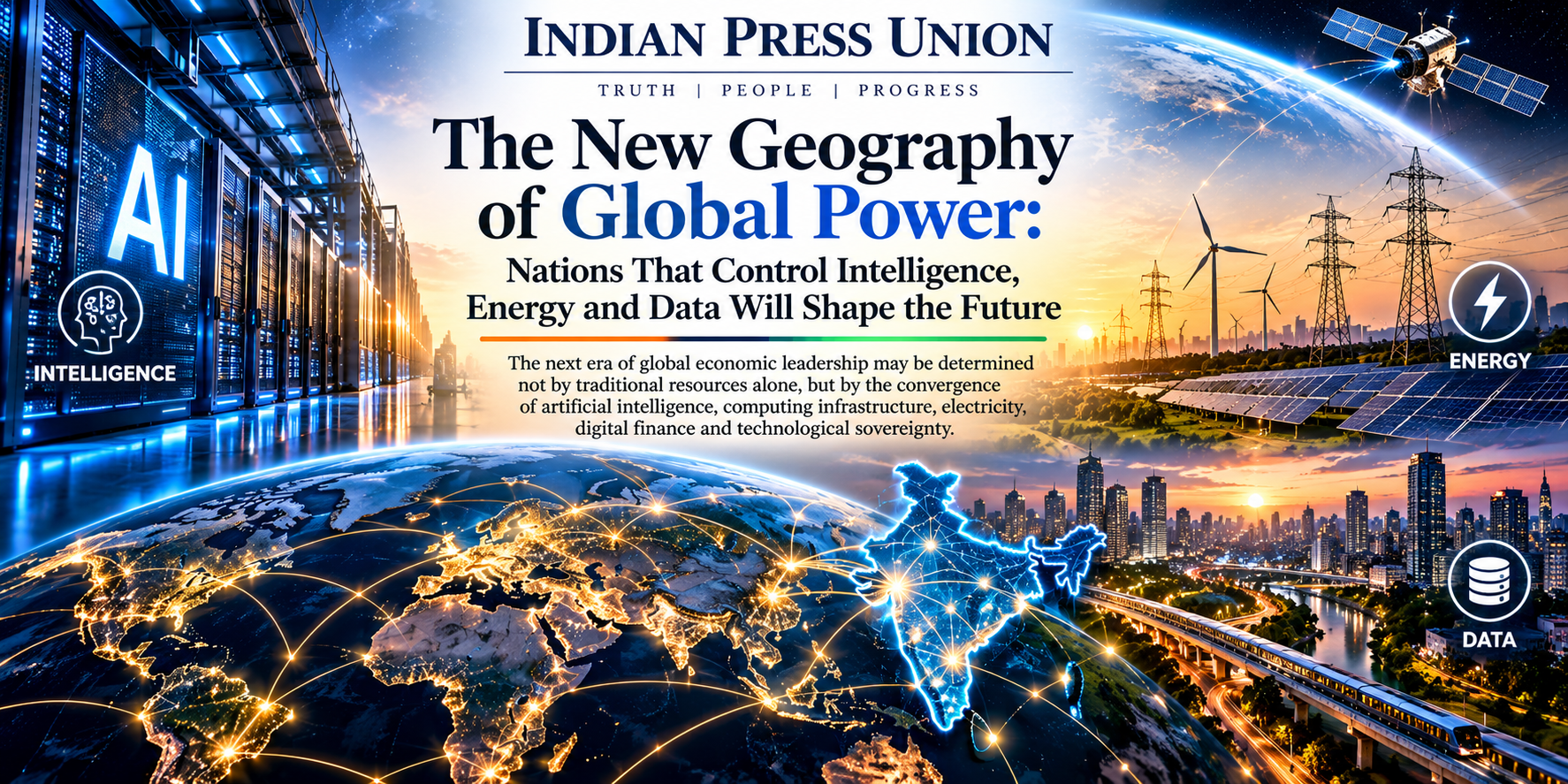
The New Geography of Global Power: Nations That Control Intelligence, Energy and Data Will Shape the Future
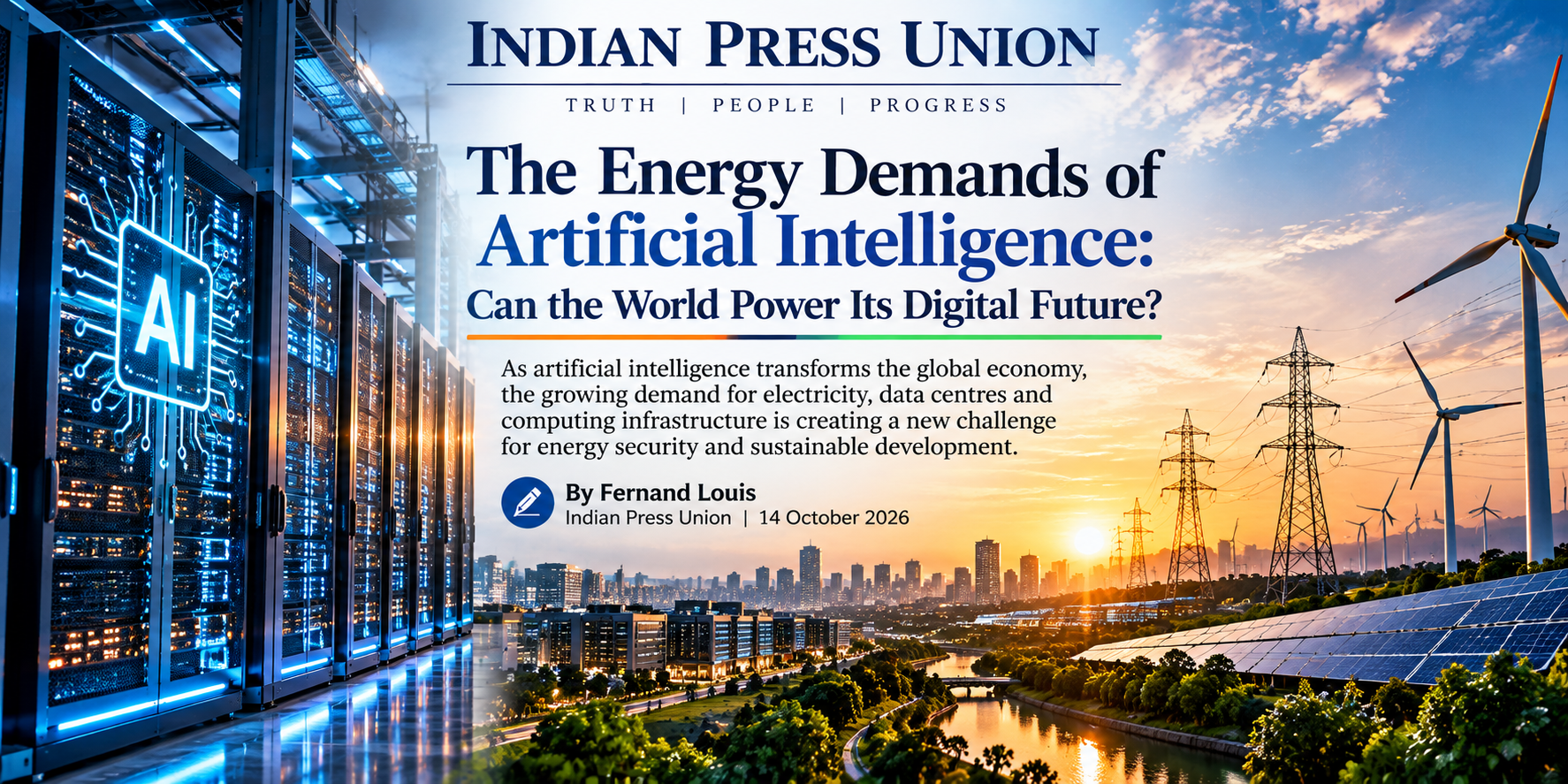
*The twenty-first century is witnessing a profound transformation in economic power. Artificial intelligence, electricity, computing infrastructure and digital financial systems are becoming the foundations of national competitiveness.*
**By Fernand Louis**
For more than a century, global economic influence was largely associated with industrial capacity, natural resources, military strength and access to international trade.
Oil powered industrial expansion. Manufacturing created employment and wealth. Financial institutions facilitated international commerce.
But a new economic architecture is emerging.
The next generation of global power will increasingly depend on three interconnected capabilities: **the ability to generate intelligence, the capacity to power that intelligence and the infrastructure required to control and protect information.**
Artificial intelligence, energy and data are no longer independent sectors. Together, they are becoming strategic foundations of modern economies.
### Intelligence Is Becoming Economic Infrastructure
Artificial intelligence is rapidly evolving from a specialised technology into a general-purpose economic capability.
It can accelerate scientific discovery, optimise manufacturing, improve healthcare, strengthen financial services and support public administration.
However, countries do not automatically gain economic independence simply by adopting AI applications.
The most valuable capabilities may lie deeper within the technological ecosystem: advanced computing infrastructure, semiconductor design, research institutions, high-quality datasets and skilled human capital.
A nation that depends entirely on external providers for these essential capabilities may face technological and commercial vulnerabilities.
This does not mean every country must manufacture every semiconductor or develop every AI model.
Rather, nations need sufficient domestic expertise, diversified partnerships and reliable access to essential technologies.
### Energy: The Hidden Foundation of Artificial Intelligence
Every advanced AI system depends on physical computing infrastructure.
Behind sophisticated algorithms are data centres requiring electricity, cooling equipment, high-performance processors and dependable telecommunications networks.
The International Energy Agency estimates that global data centre electricity consumption could reach approximately 950 terawatt-hours by 2030, roughly double its estimated 2025 level.
The implications extend beyond technology companies.
Electricity infrastructure must expand alongside computing demand. Governments must consider grid capacity, renewable energy availability, water resources and the financial consequences of major infrastructure investments.
Energy security is therefore becoming inseparable from digital economic security.
A nation cannot build a resilient digital economy without a reliable and sustainable electricity system.
### Data: The Strategic Resource of the Digital Century
Data has become a critical input for economic planning, technological development and public service delivery.
Financial transactions, industrial production, transportation networks, healthcare systems and agricultural markets generate enormous quantities of information.
When governed responsibly, these datasets can support better decisions and more efficient services.
Yet data also raises complex questions concerning privacy, ownership, cybersecurity, cross-border access and national security.
The objective should not be indiscriminate data collection or absolute isolation.
It should be to establish trustworthy systems that protect individual rights while enabling legitimate innovation, research and economic activity.
Digital sovereignty must be balanced with international cooperation and the free flow of information under appropriate safeguards.
### The Emerging Infrastructure Divide
The global digital economy is expanding, but its benefits are not distributed equally.
UN Trade and Development has warned that investment in digital infrastructure and services remains concentrated in a relatively small number of economies.
Countries lacking affordable electricity, reliable connectivity, technical expertise and investment capital risk falling further behind.
This creates a new dimension of global inequality.
In the industrial era, nations competed to establish factories, ports and transportation corridors.
In the emerging digital era, competitiveness increasingly depends on access to computing power, advanced research, secure networks and specialised skills.
The digital divide is no longer simply about access to the internet. It is also about the capacity to create and capture economic value from technology.
### India's Opportunity to Build an Integrated Economic Strategy
India possesses several important advantages, including a large technology workforce, an established digital payments ecosystem, a growing innovation community and substantial domestic demand.
The Government of India's IndiaAI Mission, approved in March 2024 with an outlay of approximately ₹10,371.92 crore, represents an effort to strengthen computing access, indigenous AI development, skills and responsible innovation.
However, the next stage requires integration across multiple sectors.
India could benefit from a coordinated national approach connecting artificial intelligence, energy infrastructure, semiconductor capabilities, cybersecurity, digital finance and industrial research.
Such a framework should encourage collaboration between government, universities, startups, established industries and international technology partners.
Equally important, investments must generate measurable benefits through employment, productivity, entrepreneurship and improved public services.
### Beyond GDP: Measuring Real Technological Progress
The economic success of artificial intelligence cannot be measured solely through investment announcements, computing capacity or the number of data centres constructed.
A more meaningful assessment must examine how technology affects ordinary citizens.
Does it improve agricultural productivity?
Does it help small businesses access finance?
Does it reduce administrative delays?
Does it create skilled employment?
Does it improve healthcare, education and public infrastructure?
These questions should guide national technology strategies.
Technological capability is valuable, but its ultimate economic purpose is to improve productivity, resilience and human well-being.
### A New Definition of National Strength
The coming decades may produce a fundamental change in how nations understand economic security.
Military strength, manufacturing capacity and natural resources will remain important. But they will increasingly interact with computational capability, energy resilience and digital infrastructure.
No nation can achieve complete independence across every technological supply chain.
The more practical objective is strategic resilience: building domestic capabilities where essential, diversifying critical dependencies and maintaining trusted international partnerships.
The countries that navigate this transformation successfully will be those that combine technological innovation with responsible governance, reliable infrastructure and broad-based economic opportunity.
**The future will not belong simply to nations that possess the most data, generate the most electricity or operate the largest artificial intelligence systems. It will belong to societies that can transform these capabilities into sustainable prosperity.**
The next geography of global power is being shaped today.
For India and the wider world, the challenge is not merely to participate in the technological revolution, but to ensure that its benefits strengthen economies, institutions and the lives of citizens.
---
**Fernand Louis**
*Author | Technology Researcher | Solution Architect*
*The views expressed are those of the author.*