AI and the Future of Indian Jobs: Is Artificial Intelligence Coming for Your Career?
AI and the Future of Indian Jobs: How Artificial Intelligence Could Change Careers
Artificial intelligence (AI) is changing how businesses operate, from software development and customer support to banking, administration and content creation. For India, where millions of young people enter the workforce each year, this transformation raises an important question: will AI reduce employment opportunities, create new careers, or do both?
The outcome will depend on how quickly businesses adopt AI, which tasks can be automated, and how effectively workers adapt to changing job requirements.
How AI Is Changing the Workplace
Businesses are increasingly using AI tools to summarise documents, analyse information, assist with coding, respond to routine customer queries and automate repetitive administrative tasks. These tools can help employees complete certain activities more efficiently.
However, increased efficiency can also lead companies to redesign roles, change hiring requirements or reduce the number of workers needed for particular tasks. The effects will vary across industries and organisations.
Which Jobs Could Face Greater Pressure?
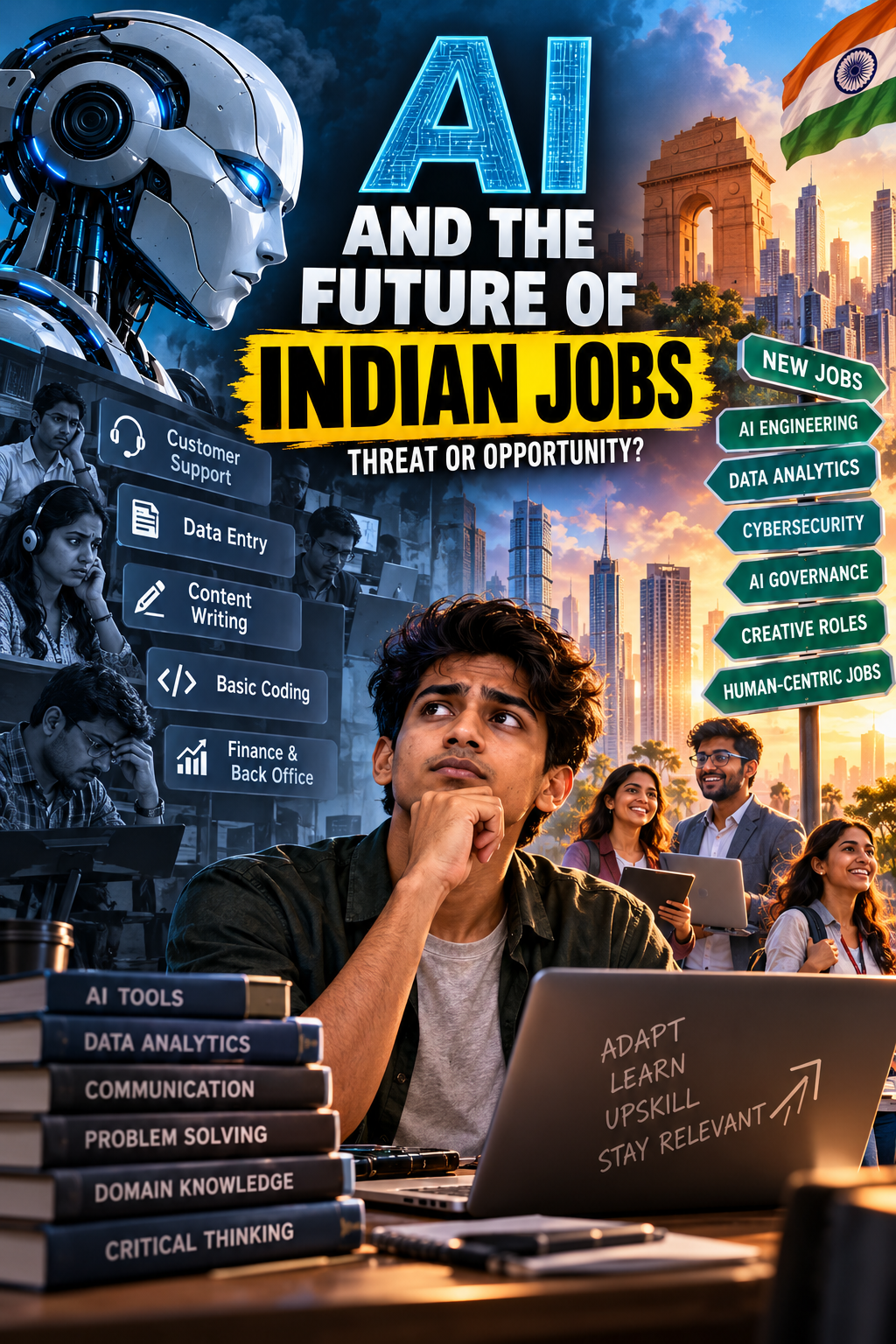
Roles involving repetitive, predictable and digitally processed tasks may face greater exposure to automation. These include some customer support operations, data entry, routine document processing, basic content production and entry-level programming tasks.
For example, chatbots can handle some standard customer enquiries, while automated systems can extract information from invoices and organise records. AI coding assistants can also help developers write and test routine code.
Nevertheless, these technologies do not automatically eliminate entire professions. Complex complaints, original reporting, software security, financial accountability and tasks requiring human judgment may continue to require skilled professionals. In many workplaces, AI is more likely to change employees’ responsibilities than replace every aspect of their jobs.
Why Entry-Level Employment Matters
India’s information technology and business services sectors have provided employment opportunities for many graduates. If businesses automate some routine entry-level tasks, fresh graduates could face greater competition for positions that previously helped them gain professional experience.
The impact will differ across sectors and locations. Technology and business services centres may experience changes in software development, customer operations and back-office work. Manufacturing and logistics businesses may use AI and robotics for planning, inspection and inventory management.
These are areas to monitor, rather than evidence that workers in particular cities or industries will inevitably lose their jobs.
Can AI Create New Career Opportunities?
AI adoption may increase demand for skills in data analytics, cybersecurity, AI implementation, machine learning, technology compliance and automation. AI-assisted work may also create opportunities in education, research, design and business services.
However, new roles may require different qualifications and experience from the jobs being transformed. Workers cannot always move directly from an automated role into a specialised technology position. Accessible training and practical work experience will therefore be important.
Skills That Can Help Workers Adapt
Students and professionals can prepare by learning how AI tools apply to their chosen fields. They should also understand the limitations of these systems and verify outputs rather than accepting generated information without checking it.
- Develop digital skills: Learn tools and software relevant to your profession.
- Strengthen core knowledge: Build communication, critical thinking, problem-solving and subject expertise.
- Practise verification: Check AI-generated information for errors, bias and missing context.
- Build practical experience: Complete projects that demonstrate the ability to solve real problems.
- Continue learning: Update skills as workplace tools and expectations change.
Workers do not necessarily need to become programmers. The most useful skills will depend on their occupations, career goals and the technologies used in their industries.
The Role of Employers, Educational Institutions and Government
Preparing for workplace changes is not solely an individual responsibility. Employers can provide training, communicate changes to staff and explore opportunities to redesign roles. Educational institutions can help students apply their knowledge, evaluate AI-generated information and develop practical skills.
Government agencies and industry bodies can support accessible digital-skills programmes, employment services and partnerships between training providers and businesses. Reliable data on hiring, wages and working conditions will also be important for understanding the actual effects of AI on employment.
Conclusion
Artificial intelligence is likely to change the way many Indians work, but the scale and pace of that change remain uncertain. Some routine tasks may be automated, existing jobs may evolve, and new opportunities may emerge.
Rather than assuming that every profession will disappear or that AI will benefit everyone equally, workers and organisations should focus on preparation, practical training and responsible technology use. India’s ability to support people through this transition will help determine whether AI becomes a source of wider opportunity or creates additional employment challenges.
Note: Industry-wide employment forecasts and claims about job creation or displacement should be supported by credible, current research before publication.