
Are Robots Finally Replacing Humans? Housewives Are Training Them!
Are Indian Workers Training AI Robots That Could One Day Replace Them?
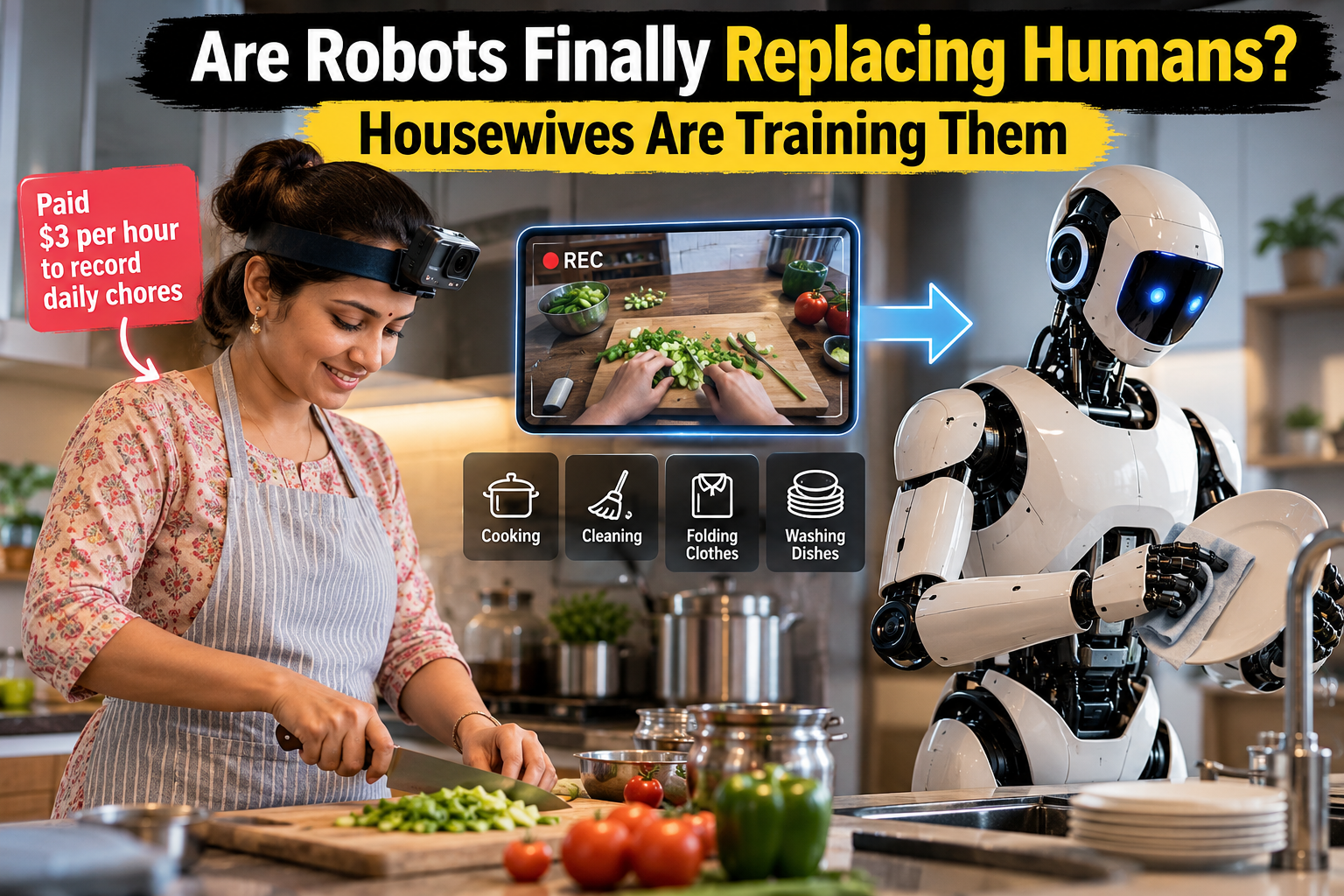
Imagine earning money by doing everyday household chores while wearing a smartphone mounted on your head. It may sound unusual, but this is already happening in India, where workers are recording routine activities to help train artificial intelligence-powered robots.
Reports by AFP, published by NDTV, and The Indian Express describe how Indian homemakers and factory workers record activities such as cooking, cutting vegetables, washing dishes, folding clothes and handling materials. According to The Indian Express, some workers collecting household-task videos for AI training are paid between ₹250 and ₹350 per hour, depending on the task and the quality and length of the recording. An ABC News report also described gig workers in other countries earning between US$3 and US$10 per hour for similar work.
But why would a robot need to watch someone fold clothes or wash dishes?
The answer lies in the difference between knowing how to perform a task and carrying it out reliably in the physical world.
AI systems may generate text or answer questions, but household robots must learn to handle different objects, adjust their movements, recognise unfamiliar surroundings and respond to unexpected situations. First-person video recordings, often called egocentric data, can help researchers train robots to understand how people perform everyday activities.
An Opportunity for Income—or a Threat to Future Jobs?
One interesting aspect of this development is that people recording their daily work could be helping develop technology capable of performing some of those same tasks in the future.
A worker may earn money by demonstrating how to cook, clean or fold clothes. In the years ahead, robots trained using such data could potentially automate parts of those activities. This raises an important question: are workers gaining a new source of income, or could they be contributing to technology that eventually reduces demand for some forms of human labour?
The outcome is not predetermined. Robots still face significant challenges when operating reliably in unpredictable environments such as homes and kitchens. While automation may reduce the need for certain repetitive tasks, it could also create new roles in robotics, data collection, maintenance and technology support.
Privacy, Consent and Fair Compensation
There are other concerns worth considering. Who owns the recordings collected from workers? Do contributors understand how their videos will be used, which companies may receive the data and how long it will be stored?
These questions matter because recordings made inside homes or workplaces may capture sensitive information. Workers should receive clear explanations of the purpose of data collection, the applicable privacy protections and the terms of compensation before participating.
Fair payment and transparent working conditions are equally important. As this type of work expands, companies and data-collection platforms will need to address concerns about payment delays, rejected submissions, withdrawal fees and workers' ability to understand or challenge the terms under which they contribute.
When Everyday Activities Become AI Training Data
For years, discussions about artificial intelligence and employment have focused heavily on software development, office work and other computer-based jobs. The collection of physical-action data shows how the effects of AI development are also reaching kitchens, factories and other everyday environments.
Ordinary people are becoming contributors to the development of machines that may eventually perform tasks beyond the digital world. Their actions provide data that is difficult to obtain from text and images alone.
However, the growth of this work does not mean that robots will soon be able to manage every household task independently. Demonstrating a single action is different from performing it safely and reliably across different environments over extended periods.
Perhaps the central question is not simply whether robots will replace people. It is whether workers will receive fair compensation, meaningful protections and a reasonable share of the opportunities created by the technologies they help develop.
What do you think? Are these workers earning from the future of robotics, or could they be helping train their own replacements?
Sources
- NDTV / AFP — How Indians Are Training AI Robots to Take On Household Jobs in the Future, June 11, 2026.
- The Indian Express — Workers in India Are Training Robots That May Replace Them, May 20, 2026.
- ABC News — Egocentric Training's Gig Workers Are Helping Robots Learn How to Do Your Dishes, September 20, 2026.