BEFORE THE DRUMS OF DURGA PUJA, THERE IS MAHALAYA: THE DAWN THAT DEFINES BENGAL
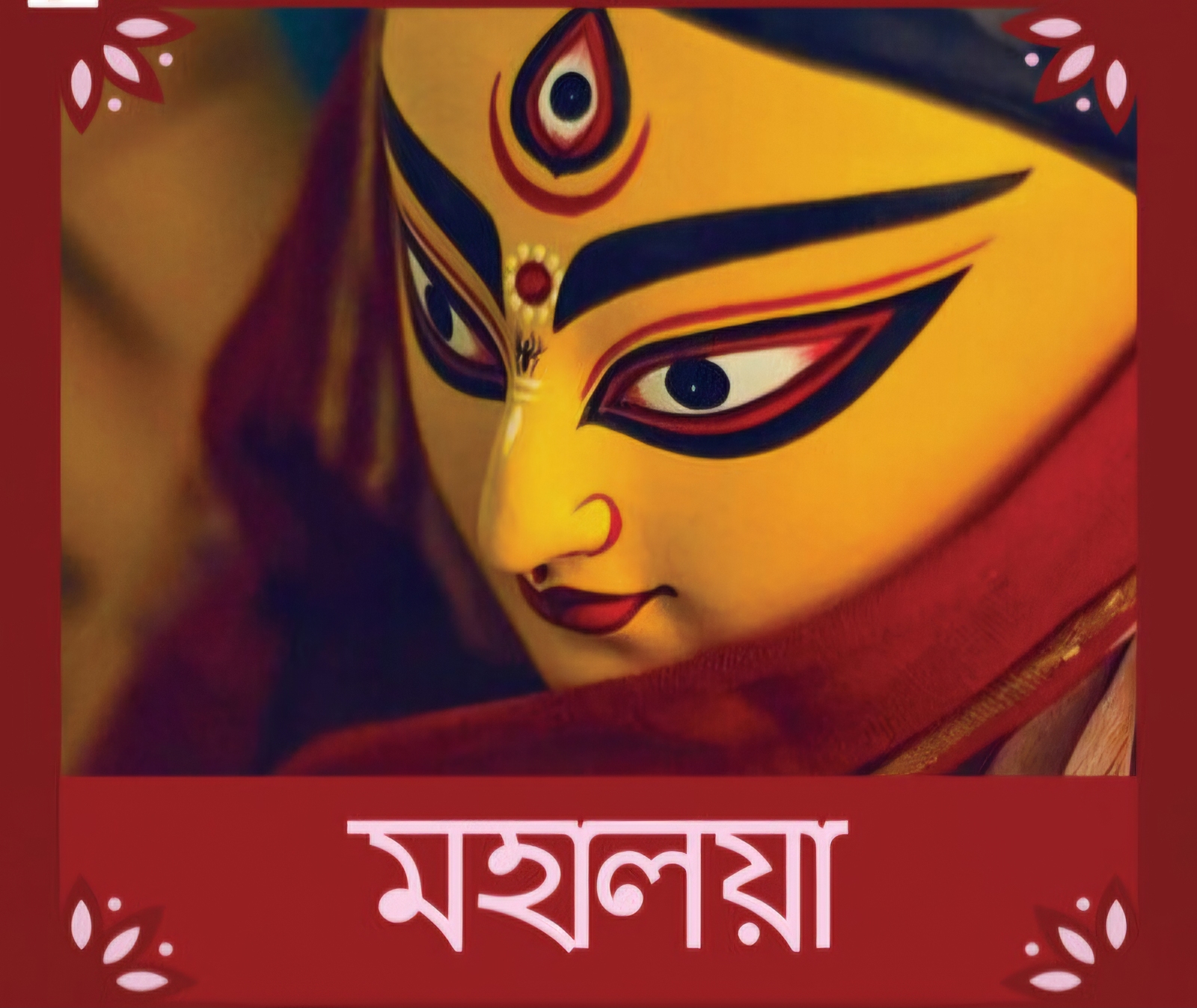
Mahalaya 2026: Bengal’s Traditions, Ancestral Rituals and Mahishasuramardini
From ancestral remembrance and ancient mythology to an iconic radio broadcast, Mahalaya offers a window into Bengal’s rich traditions of faith, music and cultural identity.
Before Kolkata lights up for Durga Puja, before the beats of the dhak fill the streets and elaborately crafted idols draw visitors, Bengal welcomes the festive season with a quieter ritual. In the hours before sunrise, many households tune in to sacred recitations, while devotees gather along riverbanks to remember their ancestors.
In 2026, Mahalaya falls on October 10. It marks the conclusion of Pitru Paksha, traditionally dedicated to ancestral remembrance, and the beginning of the period associated with the worship of Goddess Durga in Bengal.
For Bengalis, Mahalaya is more than a date on the religious calendar. It brings together mythology, music, family memories and anticipation for Durga Puja. Its significance also offers a glimpse into how regional traditions preserve history and create a sense of belonging across generations.
Remembering Ancestors, Welcoming the Goddess
Mahalaya occupies a distinctive place in the Hindu ritual calendar because it connects remembrance of the departed with the anticipation of divine renewal.
During Pitru Paksha, many Hindus perform rituals to honour deceased family members. One such observance is tarpan, in which water is offered alongside prayers and mantras. On Mahalaya, devotees traditionally gather at rivers and other bodies of water to pay homage to their ancestors. In Kolkata, the banks of the Hooghly are important locations for these early-morning observances.
Practices vary between families and communities, but the underlying sentiment is gratitude towards those who came before and recognition of the generations that shaped family life.
The conclusion of Pitru Paksha also signals the approaching worship of Goddess Durga in Bengal. This transition from ancestral remembrance to festive anticipation gives Mahalaya its distinctive emotional character.
The Mythology Behind Mahalaya
The spiritual significance of Mahalaya is closely associated with the story of Goddess Durga’s victory over Mahishasura, the buffalo demon who threatens the cosmic order.
According to the Devi Mahatmya, also known as the Durga Saptashati and associated with the Markandeya Purana, the gods unite their powers to manifest Durga. Armed with divine weapons, she battles Mahishasura and defeats him, restoring balance and order.
The story is widely understood as a representation of the triumph of good over evil and the power of the divine feminine.
In Bengal, Durga is also imagined as a daughter returning to her parental home. According to Bengali tradition, Uma, or Durga, visits the earth with her children before returning to her celestial abode. This intimate portrayal adds a human dimension to the Goddess, embodying both cosmic power and the tenderness of a daughter’s homecoming.
Mahalaya marks the threshold of this anticipated arrival, making the days before Durga Puja an important part of the celebration.
The Voice That Became a Tradition
For millions of Bengalis, Mahalaya is inseparable from Mahishasuramardini, the celebrated dawn radio programme associated with All India Radio. Its origins date to 1931, and it became established under the name Mahishasuramardini in later years.
The programme was created through the contributions of writer and broadcaster Bani Kumar, composer Pankaj Kumar Mullick and narrator Birendra Krishna Bhadra. It combines sacred recitation, devotional music and dramatic narration. Bhadra’s delivery of the Chandi Path became its defining feature, bringing ancient verses to life for generations of listeners.
In 1976, All India Radio introduced an alternative presentation featuring actor Uttam Kumar. The change received a negative response from many listeners, and Bhadra’s familiar rendition returned in 1977.
The episode demonstrated how deeply the broadcast had become connected with the Mahalaya experience. Its voice, music and timing were integral to the ritual for many Bengali households.
Today, digital platforms allow younger generations and Bengali communities living far from home to continue the tradition. Although technology has changed, listening to the programme at dawn remains an enduring cultural practice.
When the Goddess Opens Her Eyes
Mahalaya also holds significance in Bengal’s artistic landscape, particularly in Kumartuli, Kolkata’s historic neighbourhood of idol-makers.
For weeks, artisans work with clay, straw and bamboo to create idols of Durga and accompanying figures. Their work reflects a combination of craftsmanship, inherited knowledge and religious devotion.
One tradition associated with Mahalaya is Chokkhu Daan, the symbolic painting of the Goddess’s eyes. This act represents the completion of a significant stage in the creation of the idol and is often associated with the awakening of the image.
Customs and timing vary among artisans and communities, so the eyes are not universally painted on Mahalaya itself. Nevertheless, the association has become an important part of the occasion’s cultural imagery.
The tradition illustrates how Bengal’s festivals are connected with artistic heritage. Sculpture, painting, music, architecture and design all contribute to Durga Puja, transforming devotional observance into a major celebration of creativity.
Beyond Religion: A Living Cultural Identity
Mahalaya’s enduring appeal also lies in its place within Bengali family life. For many, it evokes childhood mornings spent listening to Bhadra’s voice alongside parents and grandparents. The quiet before sunrise, a cup of tea and the first hints of autumn become intertwined with memories of the approaching festival.
These associations can remain meaningful even for people who do not observe every religious ritual. Cultural traditions survive not only through formal worship but also through shared experiences, family stories and a sense of continuity.
Mahalaya brings together Sanskrit scripture, Bengali narration, devotional compositions and dramatic storytelling. It demonstrates how inherited traditions can adapt to modern media while retaining their emotional significance.
It also connects generations. Parents introduce children to the broadcast, artisans pass down their skills, and Bengali communities recreate familiar observances in cities across India and around the world.
An Invitation to Discover Bengal
For people outside Bengal, Mahalaya offers a different way to experience Durga Puja. Rather than beginning with illuminated streets and crowded celebrations, it begins with listening, reflection and storytelling.
People can explore the tradition by listening to Mahishasuramardini, reading translations of the Devi Mahatmya or attending cultural events organised by Bengali associations. Such engagement offers an opportunity to understand the history and meaning behind one of India’s recognisable festival traditions.
Mahalaya also shares themes with other Indian traditions that honour ancestors and celebrate divine feminine power. These connections reveal broader cultural threads while preserving the distinctive customs of Bengal.
The Dawn Before the Celebration
Mahalaya may lack the spectacle of Durga Puja’s grand installations and illuminated streets, but its power lies in something more intimate: a familiar voice emerging from the darkness, devotees remembering their ancestors and artisans preparing the clay Goddess for worship.
On October 10, 2026, these traditions once again connect mythology with modernity, private memories with collective identity, and ancestral remembrance with the promise of celebration.
For those unfamiliar with Bengal, Mahalaya is an invitation to discover the stories, sounds and emotions that give Durga Puja its deeper meaning. For those who grew up with it, it is a return to something unmistakably familiar.
Before the dhak begins to thunder and the celebrations take over the streets, Bengal listens. In that listening, a tradition spanning generations finds its voice again.