Census Duty Takes Teachers Out of Classrooms, Schools Fear Academic Setback
Census Duty Takes Teachers Out of Classrooms, Schools Fear Academic Setback
Kolkata, July 20
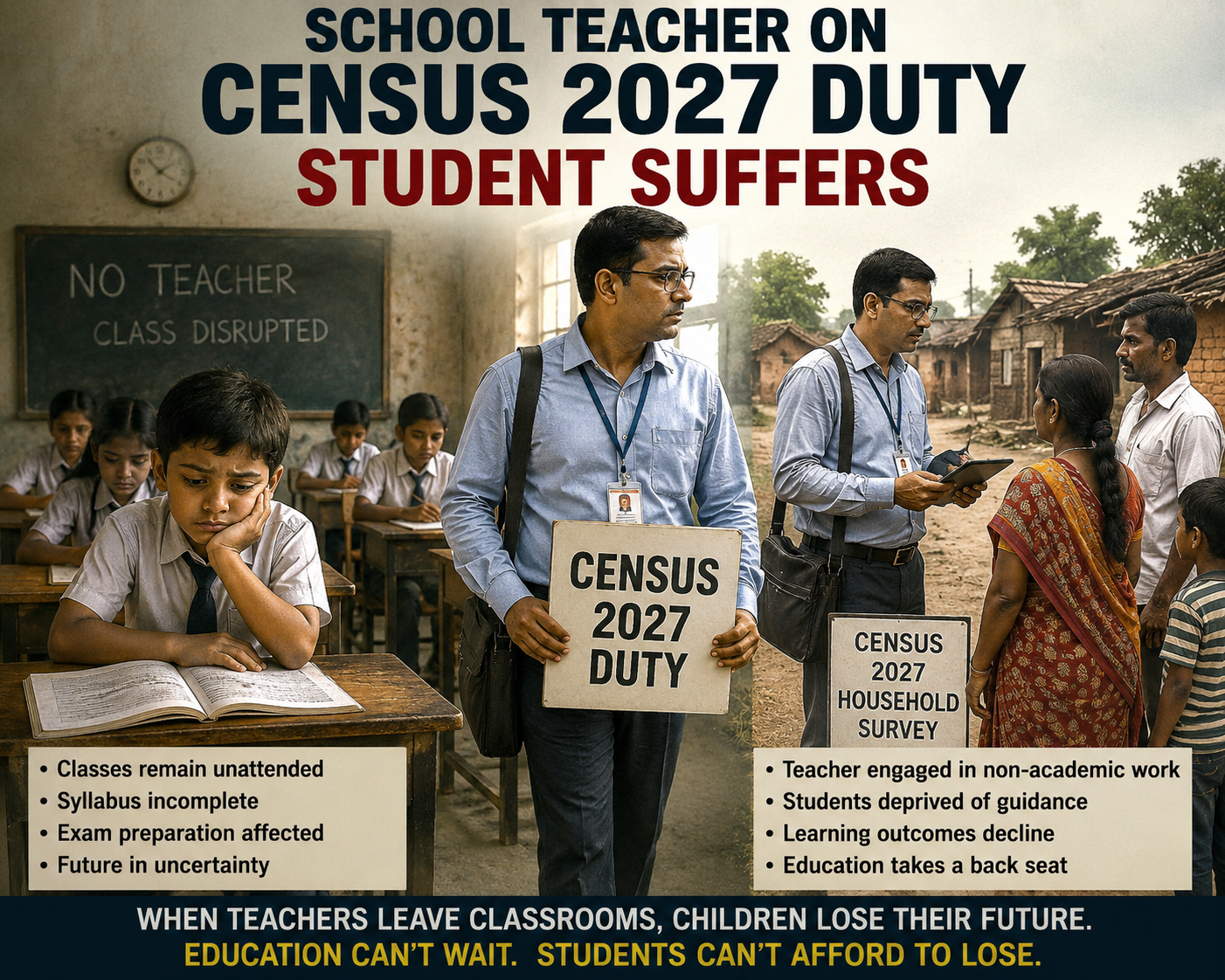
The deployment of a large number of primary and secondary school teachers for the ongoing Census exercise has raised concerns across West Bengal's education sector, with school authorities warning that the absence of teachers from classrooms could affect teaching, examination work and academic progress.
Assistant teachers from government and government-aided schools have been appointed as Supervisors and Rural Enumerators for the Census. The assignment involves training programmes, household surveys, field verification and data collection, requiring teachers to remain engaged in official duties beyond their regular school responsibilities.
The timing has become a major concern for educational institutions. Schools are currently occupied with the evaluation of Second Summative Examination answer scripts and the online entry of marks. Headmasters fear that delays in these processes could affect the publication of results and disrupt subsequent academic planning.
The impact is particularly visible in rural schools, many of which are already grappling with teacher shortages. With several teachers assigned to Census work, the remaining staff are being forced to shoulder additional teaching and administrative responsibilities. School authorities say this could hamper syllabus completion, remedial classes and continuous academic assessment.
Educationists have pointed out that teachers are routinely engaged in various government assignments, including elections, surveys and welfare programmes. However, they argue that the growing dependence on teaching personnel for non-academic duties is affecting the core function of schools.
"The Census is a national priority, but uninterrupted classroom teaching is equally important," said an educationist. "A balance must be struck so that students do not bear the cost of administrative requirements."
Parents have also expressed concern over the loss of valuable instructional time, particularly for students preparing for board examinations and scholarship tests. Many fear that prolonged teacher absence may weaken academic support during a critical phase of the school year.
Stakeholders have urged the authorities to explore alternative arrangements, such as engaging temporary personnel or scheduling major Census-related activities during school vacations. They contend that such measures would help ensure the smooth conduct of the Census while safeguarding educational interests.
As Census operations gather momentum across the state, schools are attempting to manage both academic and administrative responsibilities. The challenge before policymakers is clear: ensuring that a vital national exercise does not come at the expense of classroom learning and student achievement.