Delhi-NCR Chokes Under Toxic Smog After Diwali; AQI Reaches Severe Levels in Several Areas
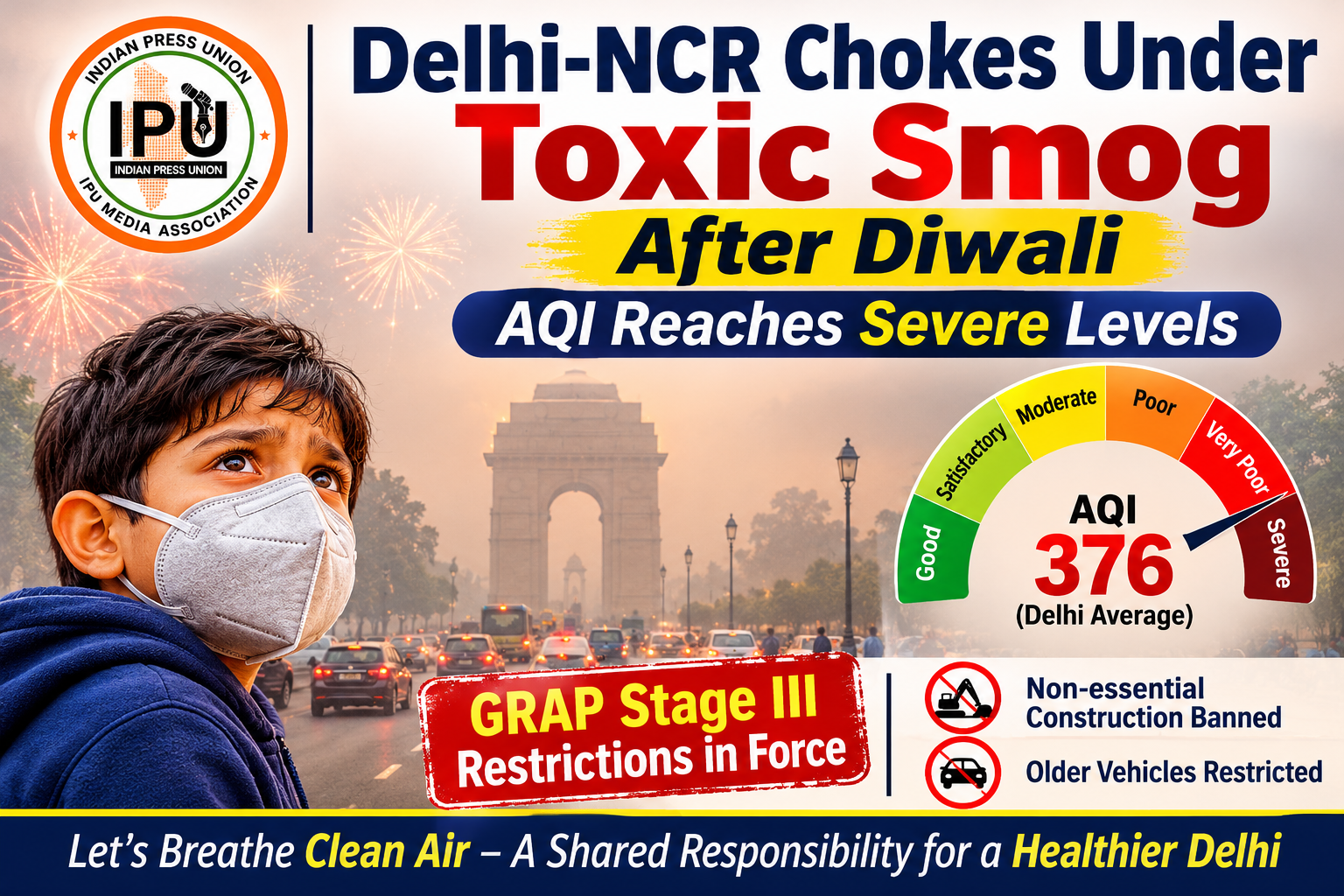
Delhi-NCR experienced poor air quality after Diwali, with several areas recording AQI levels in the severe category and dense smog reported across parts of the region.
According to Central Pollution Control Board (CPCB) data, Delhi's average Air Quality Index (AQI) stood at 376 on Diwali, November 8, in the 'Very Poor' category. On the morning of November 9, the citywide AQI was recorded at 366 at around 6:15 AM. Several monitoring stations, however, reported readings above 400, placing them in the 'Severe' category.
Sonia Vihar recorded an AQI of 449, followed by Burari Crossing at 445 and Vivek Vihar at 441. Other locations, including Jahangirpuri, Rohini, Bawana and ITO, also reported high pollution levels. Dense smog and reduced visibility were reported in several parts of the capital.
GRAP Stage III: Pollution-Control Measures
The Commission for Air Quality Management (CAQM) had invoked Stage III of the Graded Response Action Plan (GRAP) across Delhi-NCR on November 6, 2026, ahead of Diwali.
The decision followed a rise in Delhi's AQI to 382, along with forecasts indicating a possibility of further deterioration in air quality.
The measures under Stage III include:
- Suspension of non-essential construction and demolition activities.
- Restrictions on BS-III petrol and BS-IV diesel light motor vehicles in Delhi and designated high-vehicle-density NCR districts, including Ghaziabad and Gautam Buddh Nagar.
- Increased monitoring of industrial emissions, road dust and other pollution sources.
- Additional pollution-control measures by local authorities and implementing agencies.
These measures are aimed at limiting further deterioration in air quality and reducing exposure to pollutants.
Public Health Concerns
High levels of air pollution can have public-health implications. Prolonged exposure to particulate matter, including PM2.5 and PM10, can worsen respiratory and cardiovascular conditions. Children, older people and individuals with existing respiratory conditions may be more vulnerable to the effects of poor air quality.
Air pollution in Delhi-NCR is influenced by multiple factors, including vehicle emissions, industrial activity, construction and road dust, agricultural burning and weather conditions. Low wind speeds and limited atmospheric dispersion can also contribute to the accumulation of pollutants near the ground.
Air Quality and Festival Celebrations
The deterioration in air quality around Diwali has renewed attention on the environmental impact of festival-related activities. Measures such as reduced-emission celebrations and greater awareness of local pollution-control rules are among the approaches discussed in efforts to limit short-term pollution spikes.
At the same time, improving air quality requires measures beyond the festival period. Public transport, cleaner industrial practices, effective dust control, waste management, enforcement of pollution norms and coordination among NCR authorities are important components of long-term pollution management.
Need for Long-Term Measures
Delhi-NCR's recurring air pollution episodes require coordinated action from government agencies, municipal authorities, industries, residential communities and citizens.
Emergency measures such as GRAP restrictions can be implemented during periods of high pollution, while sustained improvement depends on year-round planning, monitoring, enforcement and pollution-control measures.
The CPCB and other relevant authorities continue to monitor air quality across Delhi-NCR, with further updates expected as conditions change.
Sources: Central Pollution Control Board (CPCB) and Commission for Air Quality Management (CAQM).