Delhi records AQI of 376 on Diwali, third-highest festival reading since 2018
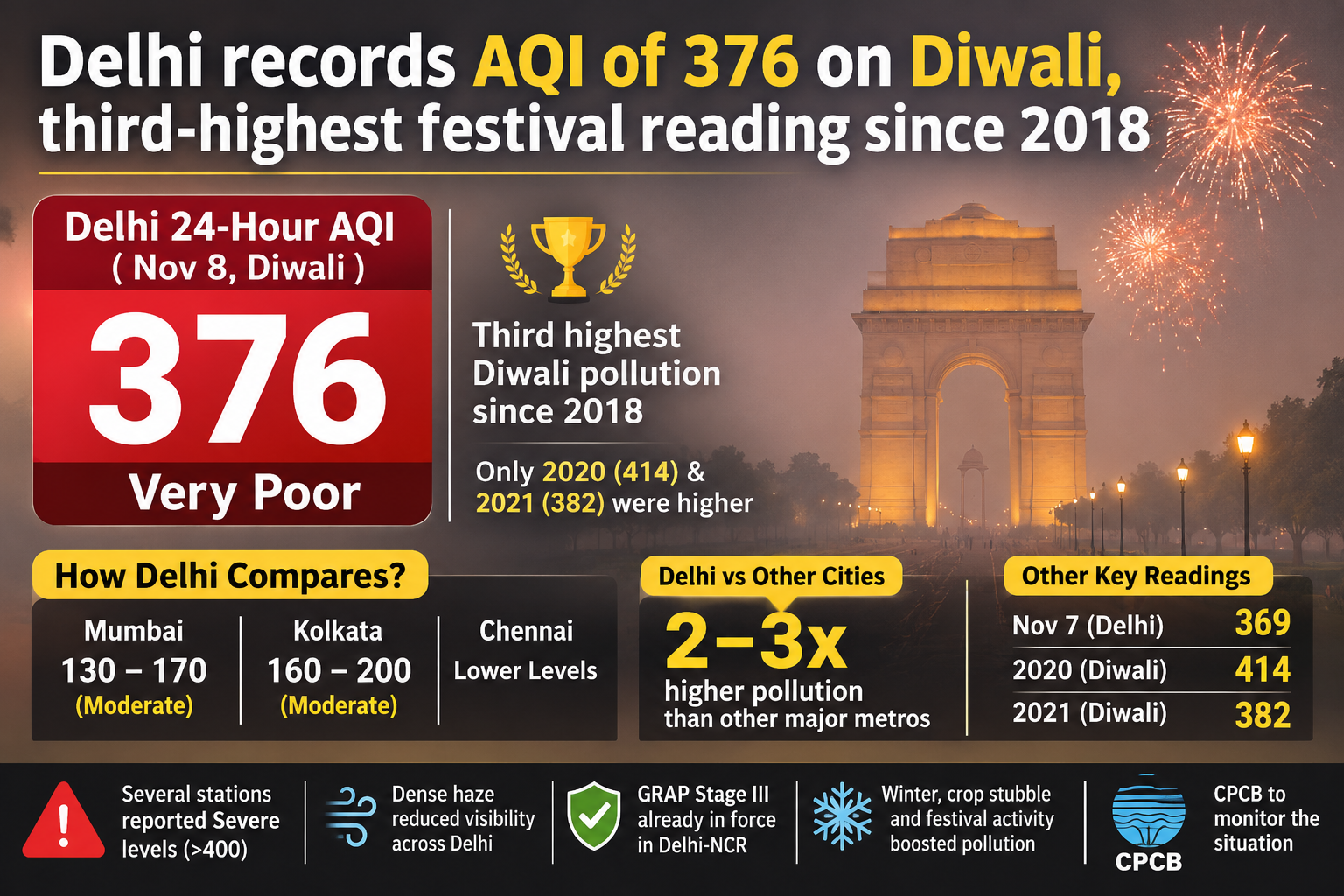
Delhi’s air quality remained in the “very poor” category on Diwali day, November 8, with a 24-hour average Air Quality Index (AQI) of 376, according to data from the Central Pollution Control Board (CPCB).
The reading placed the national capital’s festival-day air quality among the highest recorded on Diwali since 2018. Only 2020, with an AQI of 414, and 2021, with 382, recorded higher 24-hour averages on Diwali itself. The previous day’s average on November 7 stood at 369.
Several monitoring stations reported AQI levels in the severe category, above 400, during the morning hours. Punjabi Bagh recorded around 449–450, RK Puram around 448–449, Jahangirpuri about 450, while stations at IIT Delhi and Rohini recorded readings of around 445. A dense haze reduced visibility across several parts of the city.
Stage III of the Graded Response Action Plan (GRAP) had already been enforced across Delhi-NCR before the festival.
Comparison with other cities
Other major Indian metros recorded lower pollution levels around the same period. Mumbai’s AQI ranged between 130 and 170, within the moderate category, while Kolkata recorded readings between 160 and 200. Chennai reported lower levels during the same period. However, AQI figures from different cities should be interpreted according to the respective monitoring systems and measurement periods.
International air quality trackers use measurement scales that differ from the CPCB’s AQI system. Some such trackers ranked Delhi and Lahore among the major cities with high pollution levels in the days surrounding Diwali. On November 7, one international ranking reported Delhi with a US AQI of 581, while Lahore recorded 285. Rankings changed the following day, with Lahore at times recording a higher position on the same international scale. Beijing’s readings during the period remained in lower pollution categories on that scale.
Seasonal winter conditions can trap pollutants close to the ground in northern India. According to air-quality assessments, emissions from multiple sources, including agricultural burning in neighbouring states and festival-related activity, can contribute to elevated pollution levels during this period.
The CPCB continues to monitor air quality across the national capital, with further updates expected in the coming days.