History & Mystery Devi Chaudhurani in Jalpaiguri Devi Chaudhurani Temple in Jalpaiguri,
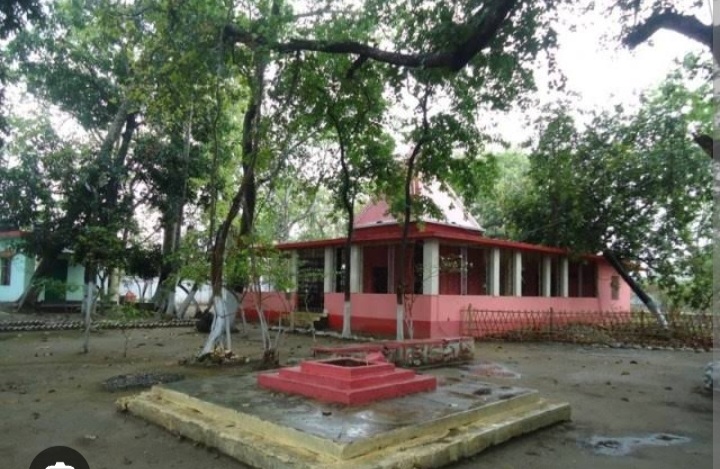
thestatesman.com Devi Chaudhurani in Jalpaiguri: Myth, History & Mystery Devi Chaudhurani in Jalpaiguri Devi Chaudhurani Temple in Jalpaiguri, West Bengal. (Photo: SNS) Subscribe to Notifications A few places in North Bengal beatifically captivate everyone with their eternal aura of myth, history, and mystery. The temples of Devi Chaudhurani and Bhavani Pathak are not apart from this class. To residents of Jalpaiguri, the characters of Bankim Chandra Chattopadhyay’s legendary novel ‘Devi Chaudhurani’ are not mere fictional figures; they rather consider them historical personalities who not only appeared in Bankim Chandra’s novel but also left their footsteps in the real world. In different areas of Jalpaiguri district, Devi Chaudhurani is still commemorated in the form of temple names like Devi Chaudhurani Kali Mandir near Goshala More near the Jalpaiguri town; Bhavani Pathak Temple at Shikarpur Tea Garden near Sanyasikata market; and Manthani Temple on the Belacoba-Randhamali road. According to myth, Devi Chaudhurani, who was previously known as Prafulla, was the queen of Manthana Estate of Rangpur district (presently in Bangladesh). When her husband abandoned her, she took shelter at the house of Bhavani Pathak, who was the leader of a gang of dacoits and the vanguard of the Sanyasi Movement in Rangpur. Subsequently, Devi Chaudhurani joined the gang and ensconced herself as the bandit queen of Baikunthapur. She was a generous and magnanimous landlady who used to donate money and wealth to the peasants. Legend has it that she used to travel in her bazra (large and luxurious boat) through the rivers of the Teesta and Karala, wandering from Rangpur to Baikunthapur (presently in Jalpaiguri district). Bankim Chandra Chattopadhyay scripted his legendary novel ‘Devi Chaudhurani,’ which was published in 1884, immortalizing the characters of Devi Chaudhurani and Bhavani Pathak in the soul of Bengali literature enthusiasts. If we now concentrate on historical shreds of evidence, we find that during the period from 1765 to 1801, an intrepid and benign landlady named Joydurga Devi Chaudhurani reigned the Manthana estate (presently in Rangpur District, Bangladesh) after the demise of her husband Narendra Narayan Roy Chaudhury without any legacy. Warren Hastings, the Governor-General of the East India Company, paid diligent effort to earn additional revenue from the peasants of Baikunthapur with the aid of the tyrant leaseholder Debi Singh. At this juncture, Joydurga Devi Chaudhurani emerged as the saviour of the peasants. Long ago, numerous places of Jalpaiguri district were part of Rangpur district in the British era prior to the formation of Jalpaiguri as a separate district in 1869. From the report of Lieutenant Brenan and WW Hunter’s ‘Statistical Accounts of Bengal-Rangpur’ (1876), it can be discerned that Joydurga Devi Chaudhurani was closely associated with Bhavani Pathak and Shivchandra Roy, the landlord of Itakumari, to make the peasants’ movement a remarkable success. EG Glazier’s ‘A Report on the District Rangpur’ (1876) also fortifies this piece of information. Devi Chaudhurani used to meander through the Teesta basin of Rangpur district and almost the entire basin of the Karala river in present Jalpaiguri district and rendered donations and distributions to the poor peasants inside the Baikunthapur forest. On her way to the Karala river, either to meet Bhavani Pathak or to make donations to the peasants, she first used to visit a temple to pray before the Goddess Kali. The temple is presently known as ‘Devi Chaudhurani Kali Mandir’ situated near Goshala More on the outskirts of Jalpaiguri town. At Shikarpur tea garden, another remembrance of Devi Chaudhurani exists in a pagoda-shaped temple called the Bhavani Pathak Mandir. However, the temple had been constructed by Darpadev Raikat (1728-1793), the landlord of Baikunthapur. The Shikarpur tea garden belonged to the dense forest of Baikunthapur during the period of Devi Chaudhurani’s reign. The people of Shikarpur call the temple ‘Sanyasi Babar Mandir’. The two wood-carved idols of Bhavani Pathak and Devi Chaudhurani are worshipped in that temple. Apart from these images, two wooden idols of monks, a sitting tiger, two maidens, and a barkandaz (Devi’s army) are seen holding an indigenously made gun. The inner wall is painted with the scenery of the forest on one side, and a floating bazra (large boat) on the wavy, rippled water of the river Teesta on the other. But unfortunately, the Bhavani Pathak Temple, which had been carrying the mythical and historical inheritance of Baikunthapur, was gutted in a fire in October 2018. However, the government has assured a quick renovation process. Manthani is another place of Devi Chaudhurani memorial in Jalpaiguri, where a similar wooden image is found in a temple named Manthani situated on the Belacoba-Randhamali road under the Rajganj police station. in the Manthani village, the name of the goddess is Manthani. The village name Manthani perhaps came from the name of the estate Manthani, paying gratitude to Devi Chaudhurani. Bankim Chandra Chattopadhyay had visited and thoroughly surveyed the history, mementos, and memorials of Devi Chaudhurani existing in the places of Rangpur and Baikunthapur when he was appointed as the Deputy Magistrate of Jalpaiguri in 1882; subsequently, the novel ‘Devi Chaudhurani’ came into being in the year 1884. Finally, we may conclude that Joydurga Devi Chaudhurani of Manthana estate (1765-1801) is the unanimously accepted frontrunner of the Rangpur peasants’ insurgency and the central character of the novel ‘Devi Chaudhurani’. Bankim Chandra Chattopadhyay crafted the much-celebrated novel with an adroit mélange of reality and imagination. The legend of Devi Chaudhurani is more than 200 years old, but her ubiquitous presence is still tangible in the entire Baikunthapur area. She is still alive in the souls of the people in Jalpaiguri in the thrill of her gut-churning joust with the British, her unstinted support to the peasants, and the sublime beauty of her magnificent aura that still reverberates in the stony silence of the temples where myth and veracity cohere with their unusual coexistence.