The Map Game: What Triggered China's Latest Provocation Over Ladakh?
India–China Tensions Over Ladakh: What Lies Behind the Dispute Over Place Names?
By Dr. Dheeraj Rangarajan
Opinion | October 2026
The India–China boundary dispute has drawn renewed attention following Beijing's objection to India's decision to standardise the names of 28 geographical features in Ladakh. The development has brought cartography, territorial claims and the wider relationship between the two countries back into focus.
Why the place names have become contentious
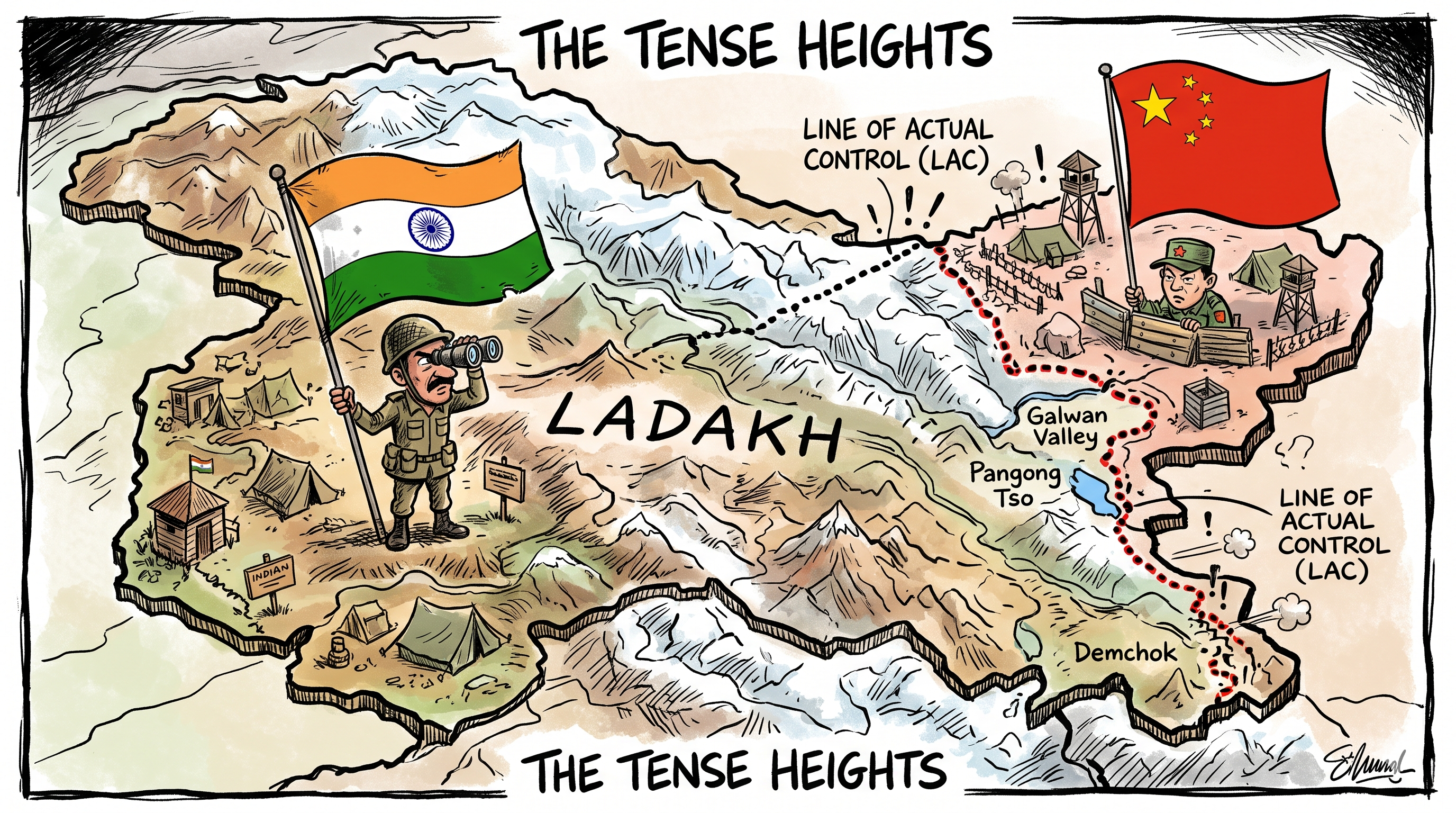
On October 2, 2026, the Government of India announced that, in consultation with the Union Territory administration, it had identified 28 places and geographical features in Ladakh by standard names for inclusion on the official Survey of India map. The list includes peaks, mountains, glaciers, passes, land areas, a valley, a river, a lake and another water body.
On October 13, Chinese Foreign Ministry spokesperson Mao Ning objected to the move, saying Beijing did not recognise the Union Territory of Ladakh and describing India's naming exercise as invalid. India's Ministry of External Affairs rejected China's position, reiterating that Ladakh is an integral part of India. These statements reflect the continuing disagreement between the two governments over territorial claims and the status of the region.
Maps, names and territorial claims
Geographical names and official maps can carry political significance in areas where borders remain disputed. India and China have previously exchanged objections over the naming of places in sensitive border regions. Beijing has issued standardised names for locations in Arunachal Pradesh, which India administers and considers an integral part of its territory. China claims parts of the region and refers to it as “South Tibet”. India has rejected those claims.
However, assigning a name to a geographical feature does not, by itself, resolve an international boundary dispute. The significance of such measures must be understood alongside each country's official position, the history of the boundary negotiations and developments on the ground.
A wider regional context
India and China have a long-running boundary dispute, with military tensions escalating in eastern Ladakh in 2020. Although both sides have pursued diplomatic and military-level engagement, the boundary question remains unresolved. Developments in Ladakh therefore need to be assessed in the context of border management, bilateral negotiations and regional security.
China also has territorial and maritime disputes with other neighbours, including India, Bhutan, the Philippines, Vietnam and Japan. These disputes differ in their historical backgrounds, legal arguments and diplomatic circumstances, and each requires consideration of the relevant evidence and the positions of the parties involved.
What comes next?
India's decision to standardise the 28 geographical names establishes an official reference for identifying those features on its maps. China's objection demonstrates that the measure has become part of the broader diplomatic disagreement between the two countries.
The longer-term implications will depend on how both governments manage their territorial differences, maintain stability along the border and pursue dialogue. Clear official communication and sustained diplomatic engagement will remain important in preventing disagreements over maps and names from adding to tensions on the ground.