India’s Festivals: The Divine Blessing and Economic Backbone of a Nation From Faith to Finance: How India’s Year-Round Celebrations Fuel Trade, Empower Millions and Keep the Spirit of the Nation Alive
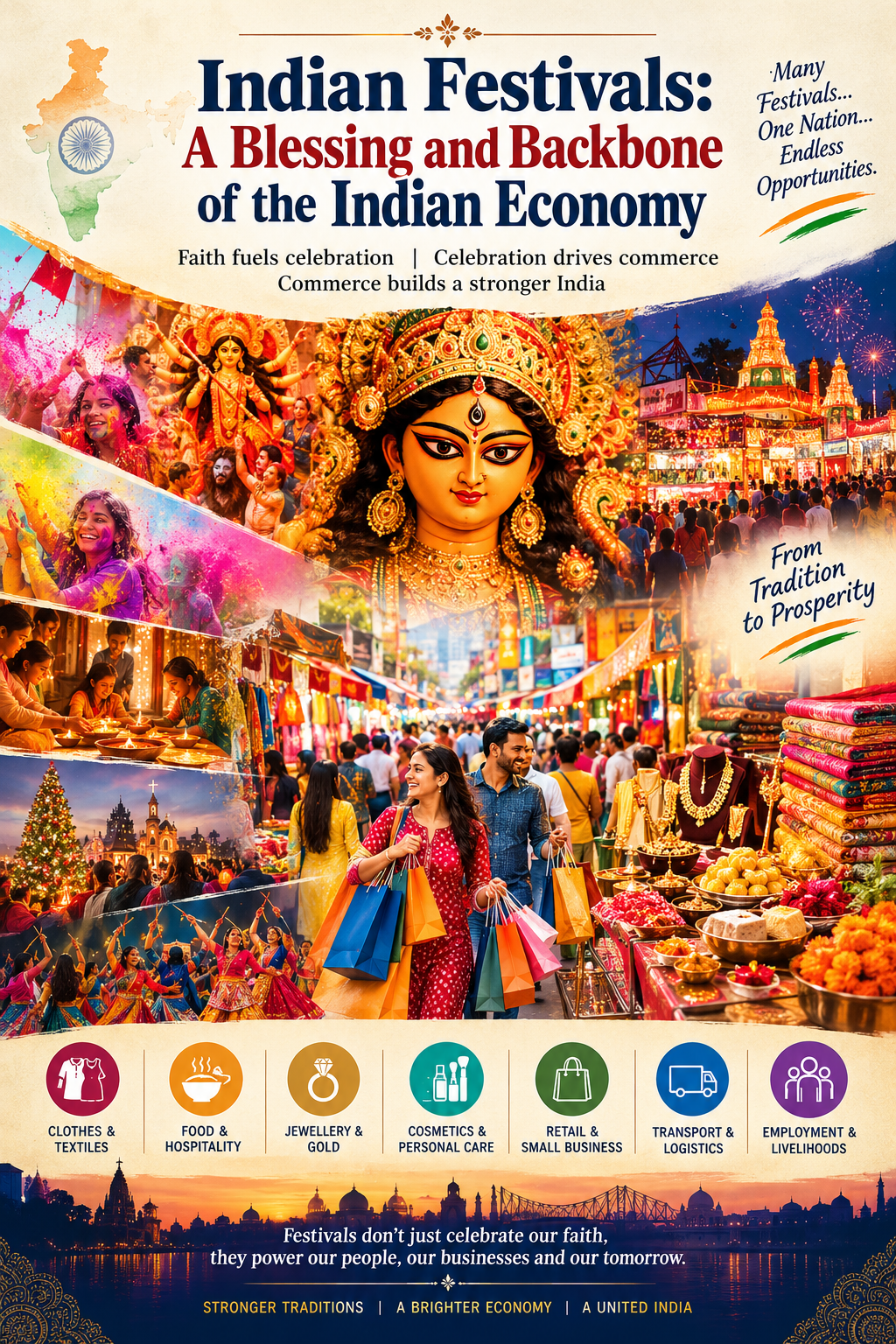
India’s Festivals: The Divine Blessing and Economic Backbone of a Nation
From Faith to Finance: How India’s Year-Round Celebrations Fuel Trade, Empower Millions and Keep the Spirit of the Nation Alive
CULTURE | ECONOMY | SOCIETY
By - Sanjeev K Gupta
Well, it has rightly been said that India is the land of gods and goddesses. Perhaps nowhere else in the world does the calendar so seamlessly blend faith, culture, tradition and commerce. With festivals spread across all twelve months of the year, India offers a remarkable example of how centuries-old religious and cultural traditions have evolved into a powerful economic cycle.
At first glance, a festival may appear to be a simple celebration of faith. But beneath the colours, rituals, music and festivities lies a vast economic network that sustains millions of livelihoods, from street vendors and artisans to textile merchants, jewellers, transport operators, food businesses and modern retail chains.
India’s festivals are not merely occasions for celebration; they are among the country's most enduring engines of consumption, commerce and community life.
A Festival for Every Season, an Opportunity for Every Business
From Makar Sankranti and Holi to Eid, Raksha Bandhan, Janmashtami, Ganesh Chaturthi, Navratri, Durga Puja, Diwali, Christmas and countless regional celebrations, the Indian festival calendar creates recurring waves of economic activity throughout the year.
Millions of people visit markets to purchase new clothes, food, cosmetics, jewellery, gifts, household goods and decorative items. Sweet shops, restaurants, flower sellers, potters, idol makers, tailors, transporters and small manufacturers all experience opportunities to increase their sales.
For a large retailer, the festive season may represent a significant share of annual revenue. For a small shopkeeper, it may determine whether the year ends with a profit. For a craftsman or an idol maker, it may provide income that sustains an entire family.
The beauty of this system lies in its reach. Unlike economic activity concentrated in a handful of industrial centres, festivals stimulate demand across cities, towns, villages and rural markets. Money circulates through thousands of small transactions, creating a chain of income and employment that extends far beyond the original purchase.
In this sense, the Indian festival economy is a remarkable example of a tradition-driven consumption cycle—one that renews itself with every approaching celebration.
Faith, Social Expectations and the Psychology of Spending
There is another dimension to India's festive economy: the powerful influence of social customs and religious beliefs on consumer behaviour.
In many Indian households, purchasing new clothes, preparing special meals, exchanging gifts or buying gold and silver is closely associated with auspicious occasions. These practices often continue even when household budgets are under pressure.
The desire to participate in a celebration can be particularly strong among families with limited financial resources. Social expectations and community traditions sometimes encourage spending beyond what a household can comfortably afford.
This is where the economic strength of festivals also presents a social contradiction. On one hand, festive spending generates business, supports employment and sustains traditional occupations. On the other, excessive expenditure and social pressure can create financial strain for vulnerable households.
The real strength of India's festival economy, therefore, should not be measured by spending alone. It should also be measured by how effectively the resulting economic activity improves livelihoods, supports artisans and encourages responsible consumption.
The Numbers Behind the Celebration
The scale of India's festive marketplace is reflected in estimates published by the Confederation of All India Traders (CAIT).
According to widely reported CAIT festive-season business estimates, trade during the 2023 festive period was approximately ₹3.75 lakh crore, while the corresponding estimate for 2024 was around ₹4.25 lakh crore.
These figures suggest a substantial increase in reported festive-season business activity. However, they should be understood as estimates of commercial activity, not as a direct measure of additional GDP or the entire Indian festival economy.
The actual scale of festival-related transactions may be larger because informal businesses, cash transactions and small-scale regional markets are not always fully captured in organised reporting. At the same time, the precise size of any unreported activity cannot be established without comprehensive data.
Even with these qualifications, the available estimates demonstrate the enormous commercial importance of India's festive calendar.
The festival economy connects manufacturing, wholesale trade, retail sales, logistics, hospitality, entertainment and financial services. Demand for garments supports textile producers; jewellery purchases support goldsmiths and retailers; food consumption benefits farmers, distributors and restaurants; and the movement of people stimulates transport and tourism.
A single celebration can therefore activate multiple layers of the economy simultaneously.
Durga Puja: Bengal's Cultural Pride and Economic Powerhouse
Few celebrations illustrate the relationship between culture and commerce as vividly as Durga Puja.
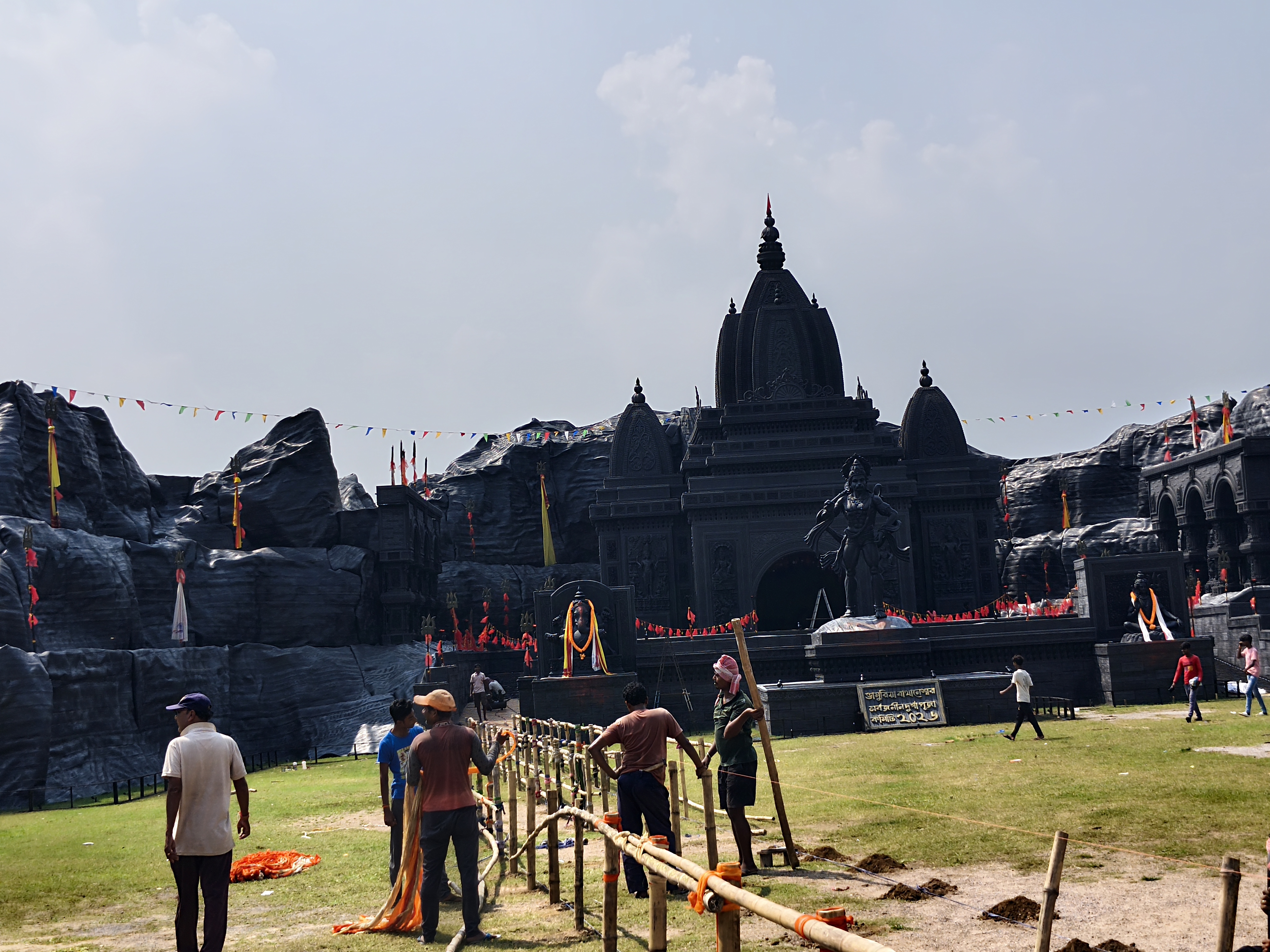
For Bengal, Durga Puja is much more than a religious festival. It is a celebration of identity, creativity, craftsmanship and collective emotion. Months before the arrival of the goddess, artisans begin creating idols, decorators design elaborate pandals, tailors prepare new garments, and businesses plan their festive campaigns.
During the celebrations, markets, restaurants, hotels, transport services and shopping districts experience intense activity. Temporary employment opportunities emerge in event management, lighting, sound production, security, hospitality and logistics.
The economic impact extends well beyond Kolkata. District towns and smaller communities also participate in the celebrations, supporting local businesses and traditional occupations.
Durga Puja has increasingly attracted attention beyond Bengal, with celebrations and cultural programmes organised in other parts of India and by Indian communities abroad. Its growing visibility demonstrates how regional traditions can become wider cultural attractions.
The festival also illustrates the relationship between heritage and innovation. Traditional idol-making and ritual practices coexist with sophisticated lighting, digital promotion, themed installations, corporate sponsorship and large-scale event management.
This combination allows a centuries-old cultural tradition to participate in the modern economy without losing its distinctive identity.
From Community Pandals to Corporate Celebrations
The changing face of Indian festivals is another reason for their growing commercial reach.
In earlier generations, many celebrations were organised primarily through families, neighbourhoods, religious institutions and local communities. Today, corporate sponsorship, branded events, professional event management and digital advertising have created additional avenues for participation.
Garba nights, large-scale Navratri events, community dinners, corporate celebrations, music programmes and family entertainment venues have