Reverse Migration: A Myth, a Fad, or a Glimpse into the Future?
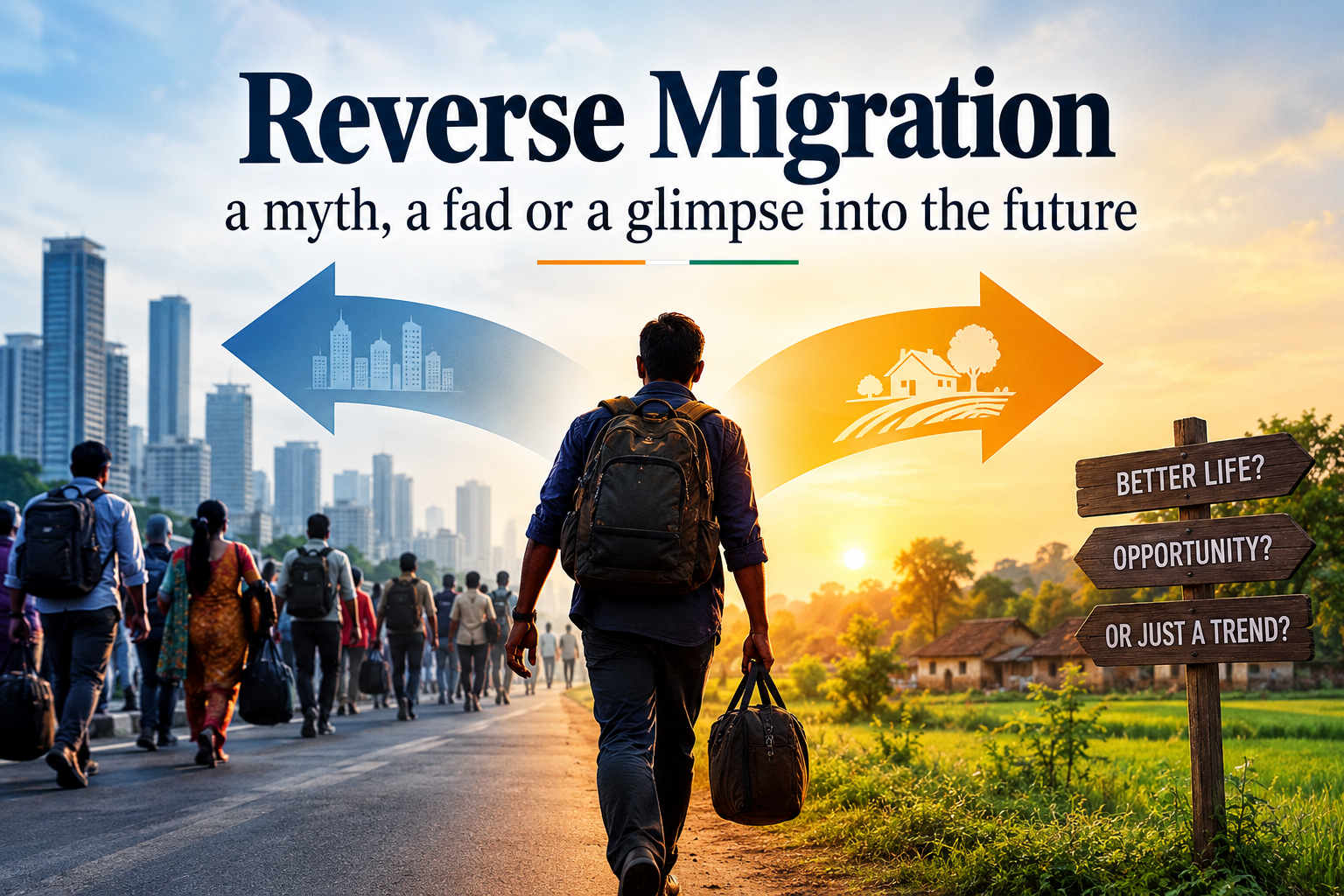
Reverse Migration: A Myth, a Fad, or a Glimpse into the Future?
By Sanjeev K. Gupta
The rising property prices in the mountains of Uttarakhand have raised an interesting question: why does real estate in some remote locations command such high prices? One possible explanation is that people are increasingly viewing the mountains not merely as holiday destinations, but also as places where they can consider rebuilding their lives.
Rising property prices, expanding apartment complexes, shrinking public spaces and growing economic pressures have prompted some people to reconsider their urban lifestyles. For some, the demands of contemporary life have created a desire for greater peace, personal freedom and a closer connection with nature.
The COVID-19 pandemic, the growing influence of social media, advances in artificial intelligence, automation and rapid digitalisation are changing the way people work and interact. While these developments offer convenience and efficiency, they also raise questions about the future of human interaction and community life.
Social media has made it easier to access information about the lives of friends, acquaintances and strangers across the world. However, constant exposure to carefully curated images of other people's wealth, success and lifestyles can encourage comparison and create unrealistic expectations. For some individuals, this may contribute to a desire for a simpler and less competitive way of living.
The rise of remote work has made such a transition more practical. Professionals who were once required to live near corporate offices can now explore alternatives beyond major metropolitan centres. For some, the appeal lies not simply in working from anywhere, but in choosing a lifestyle that better reflects their personal priorities.
Some people are exploring smaller communities where residents grow their own food, share resources and exchange goods and services. Their aim is not necessarily to reject modern technology, but to reduce their dependence on a lifestyle centred on high expenditure and continuous consumption.
For these individuals, the conventional corporate path—long working hours, mortgage repayments, professional competition and pressure to demonstrate success—may no longer represent the only definition of achievement.
A long-term mortgage, a prestigious job title, an expensive foreign degree or an affluent lifestyle may be important goals for some people. Others are increasingly questioning the trade-offs these milestones can involve, particularly in terms of time, freedom and personal well-being.
Concerns about stress, anxiety and work-related burnout have also contributed to discussions about alternative lifestyles. For some, the answer may lie in changing their work arrangements, reducing expenses or reconsidering their professional priorities rather than continually pursuing higher earnings and career advancement.
Artificial intelligence, automation, robotics and remote-working opportunities could influence this transition further. If technology reduces the demand for certain types of work, the relationship between employment, income and urban living may change. However, the scale and pace of these changes remain uncertain.
This raises an important possibility: more people may consider living in villages and smaller communities in India, particularly if they can maintain a reliable source of income while enjoying a lower cost of living.
Until recently, the farmhouse lifestyle was often associated with wealthy individuals seeking weekend retreats from urban congestion. Today, the idea of moving away from major cities may appeal to a wider range of people. For some, the goal is no longer a temporary escape, but a permanent change in lifestyle.
For Generation Z and younger adults, this idea may hold particular appeal. They are entering a world where traditional career paths are evolving, housing affordability remains a concern in many cities, and technological developments are reshaping employment opportunities.
AI-driven automation, robotics and advanced machinery are changing the nature of both white-collar and blue-collar work. Although these technologies may also create new opportunities, their long-term effects on jobs, wages and economic security remain uncertain.
If stable employment becomes harder to secure in some sectors, younger generations may reconsider long-term debt and lifestyles that depend on conventional employment. Some may instead prioritise lower living costs, self-sufficiency, flexible work arrangements and greater control over their time.
Such a shift could also raise questions for governments and policymakers. If consumption patterns and employment arrangements change, how might governments sustain tax revenues and public services? How would economies built around urban consumption, property ownership and continuous growth adapt to changing priorities?
These questions have no simple answers. Reverse migration does not necessarily mean that everyone will leave cities or that rural life will suit every individual. Villages and remote communities face their own challenges, including limited healthcare, infrastructure gaps, unreliable connectivity and fewer educational and employment opportunities. A sustainable transition would require careful planning, investment and access to essential services.
Nevertheless, the possibility deserves attention. What appears to be a lifestyle trend in some places could develop into a broader social and economic movement, depending on employment opportunities, infrastructure and people's changing priorities.
The future may be more complex than either the advocates of urbanisation or the supporters of rural living anticipate. Technological progress could create new forms of flexibility, but it could also bring economic uncertainty and changes in social relationships. In this context, reverse migration offers one possible alternative: a lifestyle that places greater emphasis on time, community and well-being rather than material accumulation alone.
Perhaps the key question is not whether reverse migration is a myth or a fad, but whether cities, economies and social institutions can adapt to people seeking alternatives to conventional ideas of success.
If the trend gathers momentum, it could encourage a more balanced relationship with nature, work, technology and community life.
In an age of rapid advances in artificial intelligence, one possibility is that increasing technological sophistication may encourage some people to seek a simpler way of living.
Reverse migration may not be an escape from the future. For some, it could be a glimpse of what the future may hold.