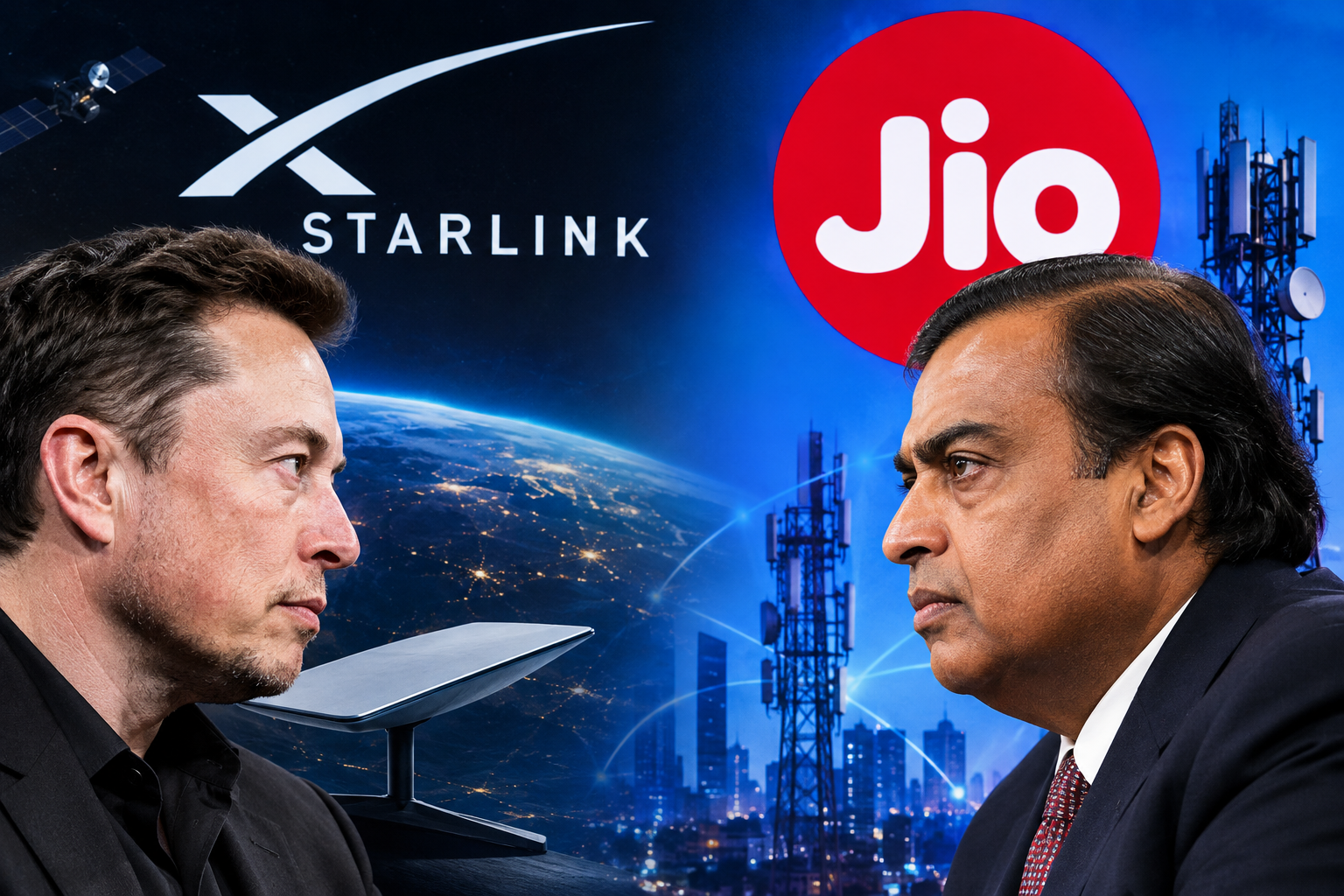
Star-link’s India Entry: Regulatory Delays or a Battle for Technological Dominance?
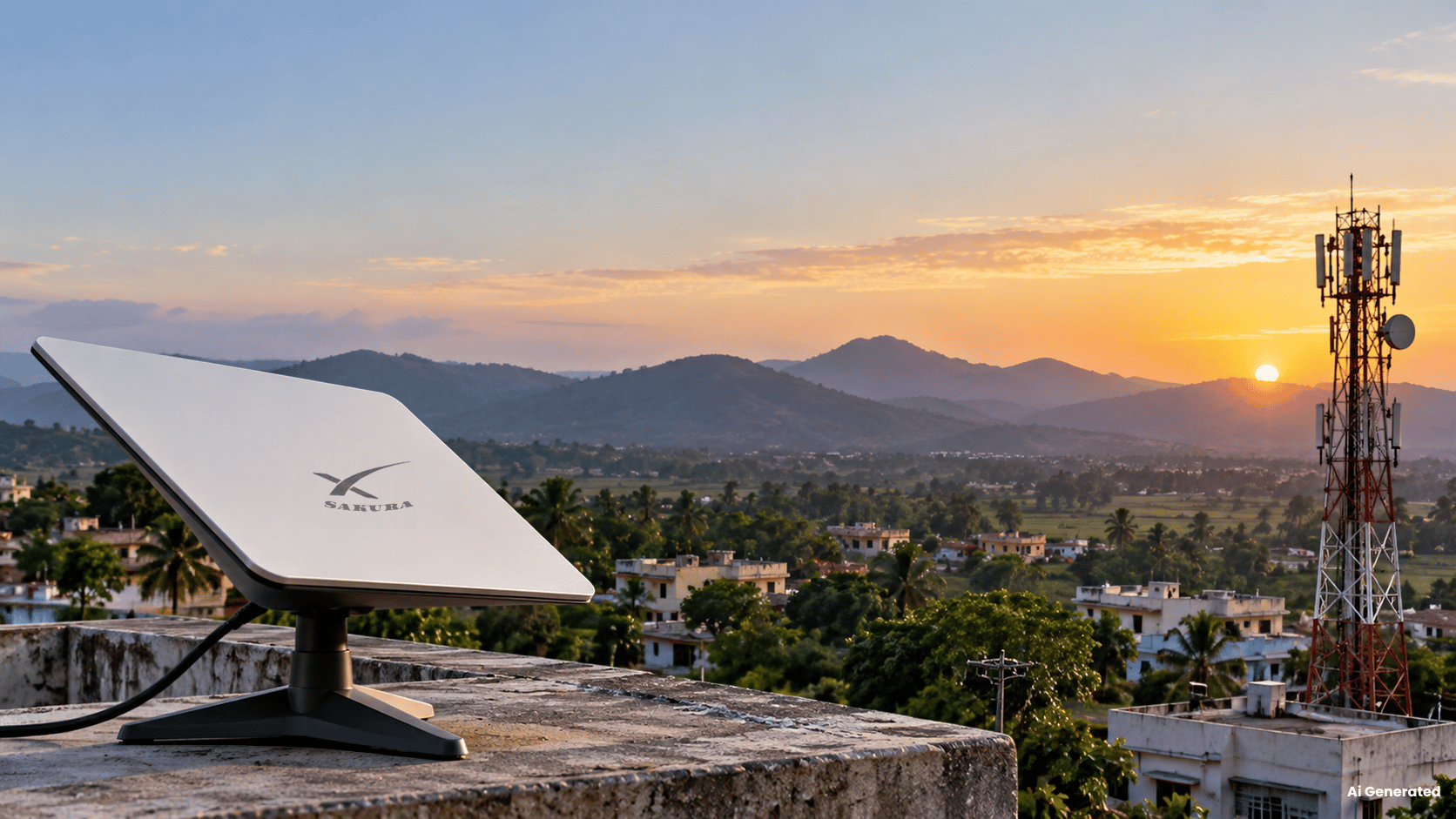
India’s preparations for the commercial launch of Elon Musk’s Star-link satellite internet service have sparked debate over regulatory delays, domestic telecom interests and technological self-reliance. The central question is whether the process reflects legitimate regulatory requirements, procedural bottlenecks or competing commercial interests.
Answering that question requires evidence rather than speculation.
Star-link’s Global Technological Advantage
Starl-ink, operated by SpaceX, has established a substantial lead in the low Earth orbit (LEO) satellite internet market. Its advantages include a large satellite constellation, reusable rocket technology, ground infrastructure, user terminals and extensive operational experience.
According to ISRO’s Indian Space Situational Assessment Report 2025, 10,749 Starlink satellites had been launched by the end of 2025, of which 9,396 remained in orbit.
Replicating a comparable network would require substantial investment in satellite manufacturing, launch capacity, network management and customer equipment.
However, Star-link is not the only player. Eutelsat OneWeb already operates in the satellite connectivity market, while Amazon Leo is developing a competing network.
Why Can’t India Replicate Starlink Quickly?
India has demonstrated considerable space capabilities through launch vehicles such as PSLV and LVM3, as well as experience in satellite manufacturing and communications.
But launching satellites and operating a commercial satellite internet network are different challenges. A competitive system requires a large constellation, ground infrastructure, reliable user terminals, spectrum coordination, cybersecurity and sustained investment.
India can strengthen its domestic capabilities through research, manufacturing, partnerships and long-term investment. However, matching Star-link’s operational scale within a few months would be unrealistic.
What Is Holding Up Star-link’s Entry into India?
Starlink received a Global Mobile Personal Communications by Satellite (GMPCS) licence in India in 2025 and subsequently obtained an IN-SPACe authorisation for its initial satellite constellation. These approvals, however, do not automatically authorise commercial operations.
The remaining applicable requirements include security clearances, spectrum-related procedures and compliance with telecommunications regulations.
The government’s stated regulatory responsibilities include national security and spectrum management. To assess the reasons for any delay, the relevant questions are which approvals remain outstanding, how consistently rules are applied to competing operators and whether the process follows clear timelines.
Are Commercial Interests Behind the Delay?
The controversy has also involved allegations concerning the influence of powerful Indian business groups.
Elon Musk’s public comments on X reportedly questioned whether competing commercial interests were affecting Starlink’s entry into India. These allegations have drawn attention because the market includes established domestic telecom groups and international satellite operators.
However, claims that particular business leaders or political interests deliberately obstructed Starlink’s entry should not be presented as established facts without independently verifiable evidence.
Transparency about pending approvals, regulatory decisions and processing timelines would help establish whether the delay results from ordinary compliance requirements or other factors.
Can Jio’s Success Be Compared with Starlink?
Reliance Jio transformed India’s telecommunications market after its entry in 2016, intensifying price competition and expanding mobile data usage.
Starlink operates differently. Jio’s conventional mobile services rely on terrestrial infrastructure and supporting fibre connectivity, whereas Starlink uses low Earth orbit satellites and specialised user terminals.
The technologies may compete in some markets while complementing each other in others. Fibre and mobile broadband can offer attractive capacity and pricing in urban areas, while satellite connectivity can serve remote villages, mountainous regions and locations where terrestrial infrastructure is difficult to deploy.
Whether satellite internet is the better option depends on coverage, equipment costs, pricing and network performance.
Foreign competition does not automatically disadvantage domestic companies, just as restricting competition does not guarantee domestic technological leadership.
Where Could Satellite Internet Benefit India?
Satellite connectivity has potential applications across several sectors:
Aviation: In-flight internet services for passengers.
Tourism: Connectivity for remote resorts and adventure destinations.
Education and healthcare: Digital learning and remote consultations in underserved areas.
Disaster management: Alternative communications when terrestrial networks fail.
Industry: Connectivity for mining, maritime operations, energy projects and remote infrastructure.
The commercial value of these applications will depend on affordability, coverage and performance relative to available alternatives.
Why Regulatory Transparency Matters
National security, cybersecurity and lawful interception requirements are essential for satellite communications. Equally, unnecessarily prolonged approvals can delay investment, innovation and consumer access.
A transparent regulatory framework should provide clear eligibility criteria, reasonable processing timelines, consistent standards for comparable operators and appropriate information about pending requirements. India should also encourage domestic research, satellite manufacturing and indigenous equipment development.
This approach would support national security while creating a more predictable environment for technology providers and investors.
Conclusion: Preparing India to Compete
India’s ambition to become a leading space power requires sustained investment in domestic research, manufacturing and innovation. International technology providers can also expand connectivity options and encourage competition.
Star-link’s commercial entry should be assessed against legal requirements, national security, spectrum management, market competition and consumer interests—not unverified allegations about political or commercial motives.
India’s challenge is not simply whether it can delay a foreign company’s entry. It is whether the country can develop competitive domestic technology, maintain transparent regulation and deliver affordable, reliable connectivity to underserved regions.
Technological self-reliance does not require eliminating competition. It requires building the capability to compete, innovate and deliver services at prices consumers can afford.