THE BENGAL TIGAR LIFE HISTORY
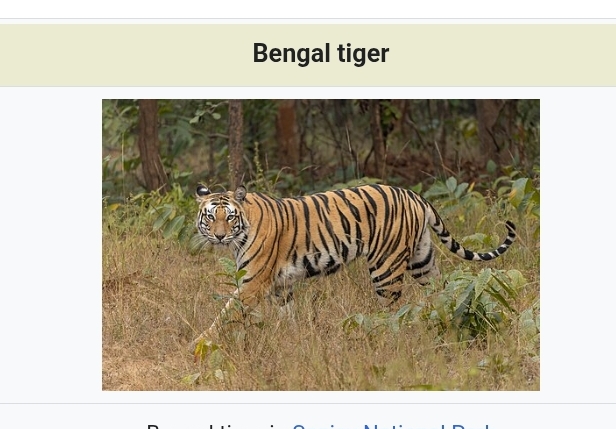
The Bengal tiger (Panthera tigris tigris) is the nominated tiger subspecies native to the Indian subcontinent, primarily found in India, Bangladesh, Nepal, Bhutan, and southwestern China. **Taxonomy and Physical Characteristics** * **Scientific Name:** *Panthera tigris tigris* • * Coat **Coat & Color:** Yellowish-orange coat with dark brown or black stripes. White, golden, and pseudo-melanistic color variants also exist. * **Size and Weight:** * Adult males weigh 167–261 kg (up to 280 kg) and measure up to 3 meters long. * Adult females weigh 110–180 kg (smaller individuals in the Sundarbans weigh around 75–80 kg). * **Life Expectancy:** Around 10 to 15 years in the wild, though some can survive up to 20 years. **Distribution and Habitat** * **Geographic Range:** India, Bangladesh, Nepal, Bhutan, and southwestern China. India holds the vast majority (about 75%) of the global population. * **Habitats:** Tropical rainforests, subtropical forests, wet and dry deciduous forests, mangroves (such as the Sundarbans), and grasslands. * **Historical Presence:** Thought to have inhabited the Indian subcontinent since the Late Pleistocene, roughly 12,000 to 16,500 years ago. **Ecology and Behavior** * **Social Structure:** Solitary and territorial apex predators. * **Diet:** Carnivores hunting large ungulates including chital, sambar, gaur, nilgai, barasingha, and wild pig, occasionally preying on sloth bears, leopards, or elephant calves. **Cultural and Historical Significance** * **National Symbol:** It is the national animal of both India and Bangladesh. * **Mythology & History:** Depicted in ancient artifacts such as the Indus Valley Pashupati seal and associated with Hindu deities like Shiva and Durga. **Conservation Status** * **Threats:** Endangered due to poaching (for illegal wildlife trade), habitat loss, fragmentation, and human-tiger conflict. * **Population:** Estimated globally around 3,100 to 3,800+ wild individuals, with the largest numbers residing in Indian tiger reserves.