Traffic Rules Are Not Optional: A Wake-Up Call to India's Drivers and Governments
By a Daily Commuter from Hyderabad, Telangana
I spend nearly three hours every day travelling between home and office in Hyderabad. During these daily journeys, I frequently witness road behaviour that raises a fundamental question: Do we truly understand the purpose of traffic rules, or do we follow them only when traffic police officers are present?
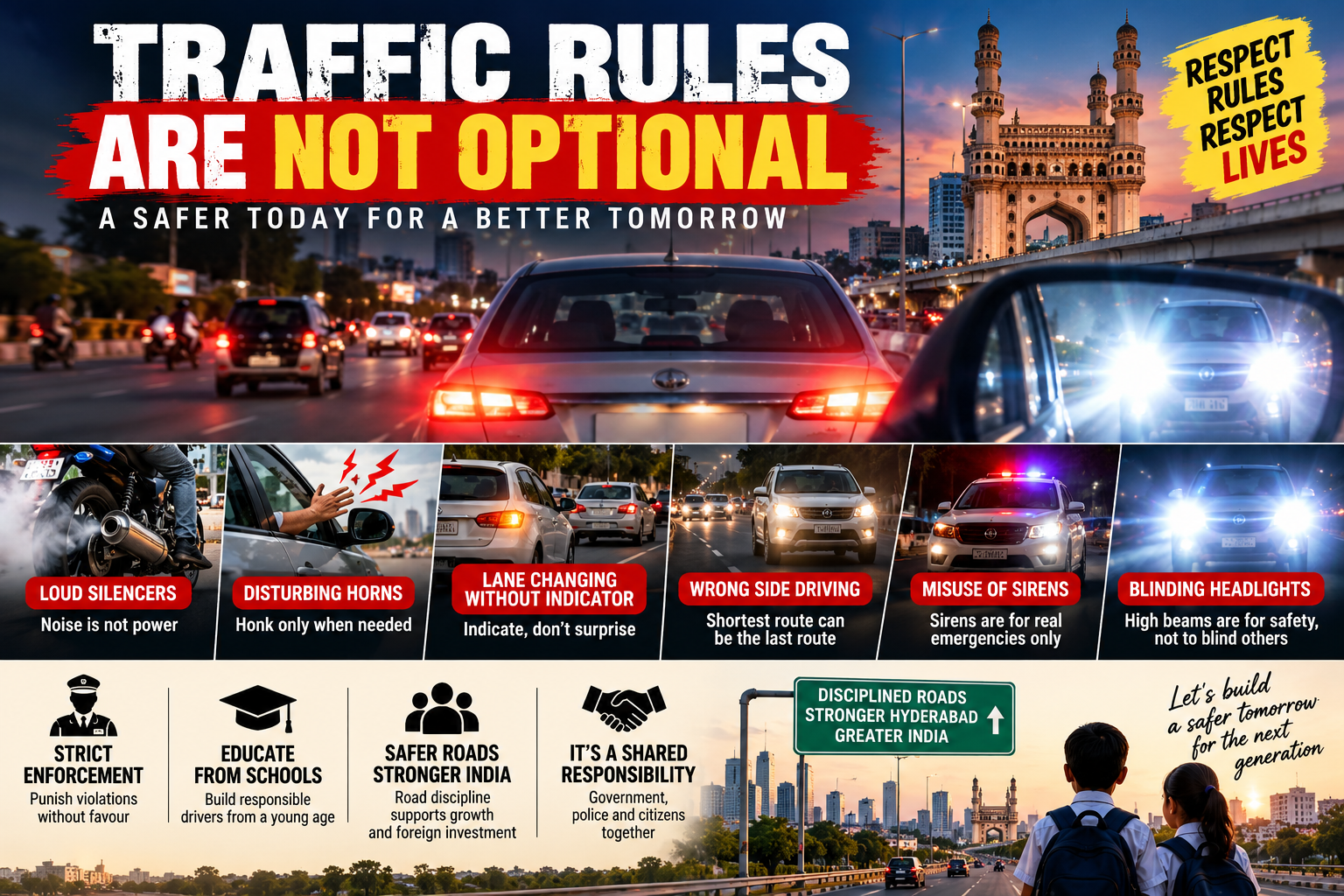
Loud modified bike silencers, excessive honking, sudden lane changes without indicators, wrong-side driving, unauthorised sirens and blinding headlights have become familiar sights on our roads.
These are not merely irritating habits. They are dangerous behaviours that put innocent lives at risk.
Our Roads Are Shared Public Spaces
Some bikers modify their silencers to create excessive noise. Some drivers honk continuously, as though making more noise will clear the traffic. Others change lanes without signalling, forcing nearby motorists to brake suddenly.
Wrong-side driving is another serious concern. Some people choose the shortest route even when it means driving directly towards oncoming traffic. Others drive aggressively, seemingly believing that reaching their destination a few minutes earlier is more important than the safety of everyone around them.
No one has the right to put other people's lives at risk. Public roads belong to everyone, and using an expensive car or a powerful motorcycle does not give anyone the authority to disregard traffic rules.
The Dangerous Misuse of Headlights
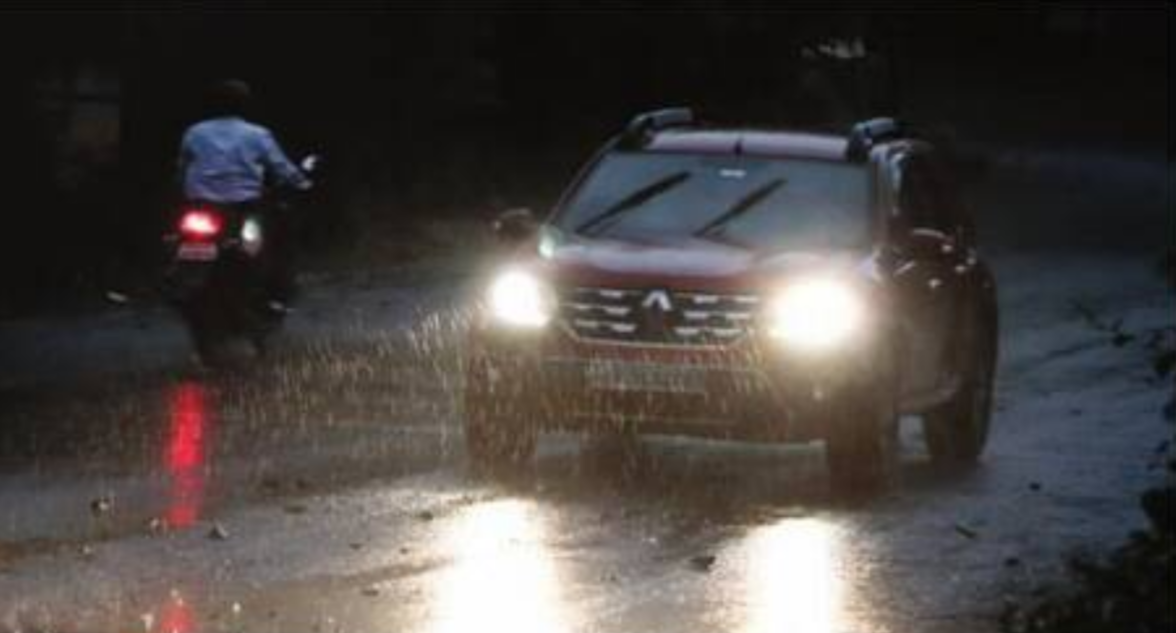
The misuse of high-intensity headlights and high beams deserves immediate attention, particularly when drivers repeatedly flash their lights to force vehicles ahead to move aside.
There is a clear difference between using headlights responsibly to communicate a genuine warning and repeatedly flashing them to intimidate another driver.
Intense light reflected through rear-view and side mirrors can temporarily impair a driver's vision and concentration. This is particularly dangerous on highways, where even a brief distraction can have serious consequences.
The problem is not simply the brightness of a headlight. Its alignment and manner of use are equally important.
Traffic and transport authorities should strengthen inspections of illegal lighting modifications and improperly aimed headlights. Appropriate action should be taken against drivers who repeatedly endanger others through the misuse of high beams.
Headlights are meant to help drivers see the road, not to blind those travelling ahead of them.
Sirens Are Not a Shortcut Through Traffic
Another concerning practice is the use of police-style sirens by vehicles without an apparent legitimate emergency purpose.
Authorised emergency vehicles may need sirens to respond quickly to critical situations. However, unauthorised use of sirens or devices that imitate emergency vehicles can confuse road users, create panic and undermine the work of genuine emergency services.
The authorities should strengthen enforcement against unauthorised sirens and investigate their improper use. No individual should demand priority on public roads without lawful authority.
Education Matters, but Enforcement Is Equally Important
Awareness campaigns are essential, but they cannot solve the problem on their own. Many motorists understand that wrong-side driving is dangerous, red lights must be obeyed and indicators are necessary. Yet some continue to violate these rules because they believe they can escape penalties.
This is where consistent enforcement becomes essential.
Where practical, traffic cameras should be used to detect wrong-side driving, signal violations and other offences that can be identified electronically. Repeat offenders should face appropriate consequences under the law.
Illegal vehicle modifications, including modified silencers and unauthorised lighting equipment, should also be addressed through lawful inspections and targeted enforcement drives.
Traffic violations that endanger lives must not be treated as minor inconveniences. Enforcement should be consistent, transparent and impartial.
A traffic rule without meaningful enforcement risks becoming nothing more than a rule on paper.
Teach Traffic Discipline in Schools and Colleges
Improving road safety also requires us to look beyond today's drivers. Traffic education should become a regular part of school and college curricula rather than being limited to occasional awareness programmes.
Children should learn about road signs, pedestrian crossings, traffic signals, lane discipline and responsible road behaviour from an early age.
Colleges can organise road-safety sessions, demonstrations and practical awareness programmes. Driving schools should focus not only on helping learners pass driving tests but also on developing responsible attitudes towards road use.
Parents have an equally important role. When children repeatedly see adults jumping traffic signals, driving on the wrong side or using mobile phones while driving, they may begin to consider such behaviour normal.
We need a generation that respects traffic rules because it understands their importance, not merely because it fears a fine.
Road Discipline Is Also Part of India's Development
India continues to invest in highways, expressways, urban infrastructure and modern transport systems. However, infrastructure alone cannot create a developed country. Responsible citizens who respect public systems are equally important.
Consider an international investor visiting Hyderabad and witnessing vehicles moving against traffic, ignoring lane markings and creating unnecessary noise. One such experience does not define an entire country, but the way a city maintains public order, enforces regulations and protects shared spaces contributes to its overall image.
Good road discipline reflects respect for the law, public infrastructure and human safety.
If we want our cities to become leading destinations for investment, business and tourism, responsible road behaviour must form part of that progress.
An Appeal to the Telangana and Central Governments
I urge the Telangana government, the Telangana Transport Department, Hyderabad Traffic Police and the Union Ministry of Road Transport and Highways to give road discipline the seriousness it deserves.
We need more than awareness posters and occasional enforcement drives. We need sustained action against dangerous driving, illegal vehicle modifications, unauthorised sirens, improperly used headlights and habitual traffic violations.
We also need traffic education from school onwards, accessible channels for reporting violations and fair enforcement against repeat offenders.
Most importantly, we need a culture in which people understand that following traffic rules is a responsibility, not a personal choice.
This is not an accusation against every driver. Millions of people follow traffic rules and drive carefully every day. They deserve safe roads just as much as everyone else.
I am raising this concern because I repeatedly witness dangerous behaviour during my daily commute, and I believe we must stop accepting it as normal.
A few minutes saved by breaking a traffic rule are never worth risking another person's life.
Let schools teach responsibility, let the police enforce the law impartially, and let governments build systems that encourage road discipline.
A developed India needs not only better roads but also more responsible road users.
Change must begin with every citizen, while the responsibility to enforce the law rests with the authorities.
It is time for citizens and governments to act together for safer roads.
References
- Ministry of Road Transport and Highways — Road Accidents in India 2023, official national road-accident statistics.
- Hyderabad Traffic Police — Road rules and applicable traffic penalties.
- Ministry of Road Transport and Highways — Motor Vehicles (Driving) Regulations, 2017, covering road conduct and relevant driving practices.