When Trust Erodes: The Psychology of Student Movements
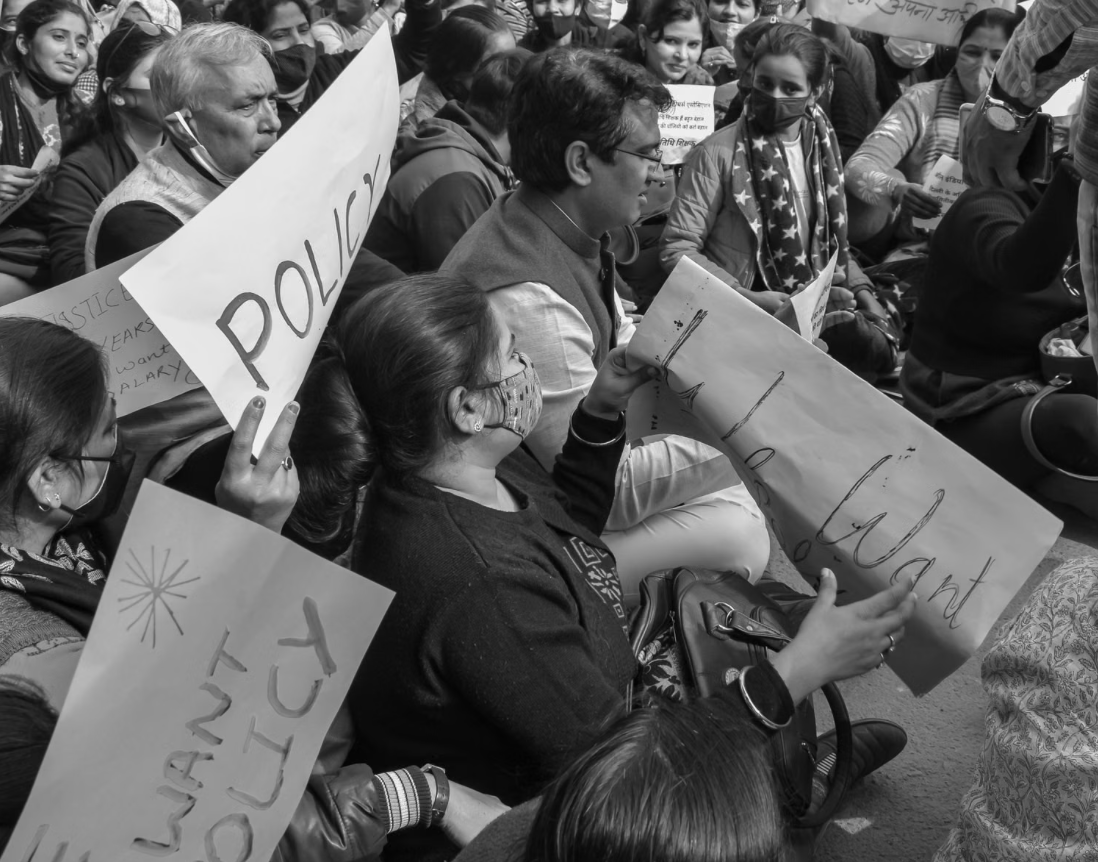
The recent NEET-related protests have sparked nationwide discussions about examinations, fairness, and institutional accountability. Public debate has largely focused on legal, administrative, and political dimensions of the issue. Equally important, however, is another perspective—understanding the psychology that shapes how groups respond when trust in an institution is perceived to have weakened.
Trust is one of society's most valuable yet invisible resources. Every day, individuals make decisions based on the assumption that schools will educate fairly, examinations will be conducted impartially, courts will deliver justice, and public institutions will function with integrity. Much of social order depends not merely on rules but on confidence that those rules are applied consistently.
For students preparing for highly competitive examinations such as NEET, this trust carries extraordinary significance. Months or even years of preparation represent far more than academic effort. They embody personal aspirations, family expectations, financial investment, and emotional resilience. Consequently, when questions arise about the credibility of an examination process, many students experience more than disappointment. They experience uncertainty about whether the system itself remains dependable.
Psychological research has long demonstrated that perceptions of fairness strongly influence public reactions. People are generally more willing to accept difficult outcomes when they believe the process leading to those outcomes was transparent and impartial. Conversely, even favourable outcomes may fail to restore confidence if procedural fairness is questioned. In many situations, trust in the process becomes as important as the outcome itself.
Another important factor is collective identity. Students preparing for the same examination often share similar routines, pressures, and ambitions. They participate in common online communities, coaching networks, and peer groups. When concerns emerge, these shared experiences create a powerful sense of solidarity. Individuals who might otherwise remain silent begin to recognise that thousands of others are experiencing similar emotions and uncertainties.
This shared identity frequently transforms individual frustration into collective action. Demonstrations, petitions, and public campaigns become not merely expressions of dissatisfaction but also mechanisms through which people seek reassurance that they are not facing uncertainty alone. Participation becomes both a social and psychological response.
Social media further accelerates this process. Information travels rapidly, but so do emotions. Messages expressing concern, anxiety, or outrage often receive greater attention because they resonate with others experiencing similar feelings. As more individuals engage with these discussions, perceptions of collective concern become increasingly visible, encouraging additional participation. This does not automatically imply that every claim circulating online is accurate; rather, it illustrates how digital platforms amplify shared emotional experiences.
Importantly, recognising these psychological mechanisms should never be mistaken for dismissing genuine concerns. Understanding why people organise, protest, or seek accountability is not equivalent to questioning the legitimacy of their experiences. Psychology helps explain patterns of human behaviour; it does not determine whether a particular grievance is justified. Those questions belong to legal institutions, policymakers, and evidence-based investigations.
The broader lesson extends beyond a single examination. Every institution—whether educational, governmental, or judicial—depends upon public confidence. Once trust begins to erode, rebuilding it is rarely achieved through reassurance alone. Transparency, consistent communication, accountability, and demonstrably fair processes become essential to restoring credibility.
The recent student movements therefore offer a reminder that institutions are sustained not only by regulations and procedures but also by public belief in their integrity. Trust cannot be demanded; it must be earned and continually reinforced.
As India continues to strengthen its educational institutions, understanding the psychology of trust may become just as important as improving administrative systems. When people believe that institutions are fair, confidence grows. When that belief weakens, collective action often follows—not simply because people are emotional, but because trust remains one of the strongest foundations of any functioning society.