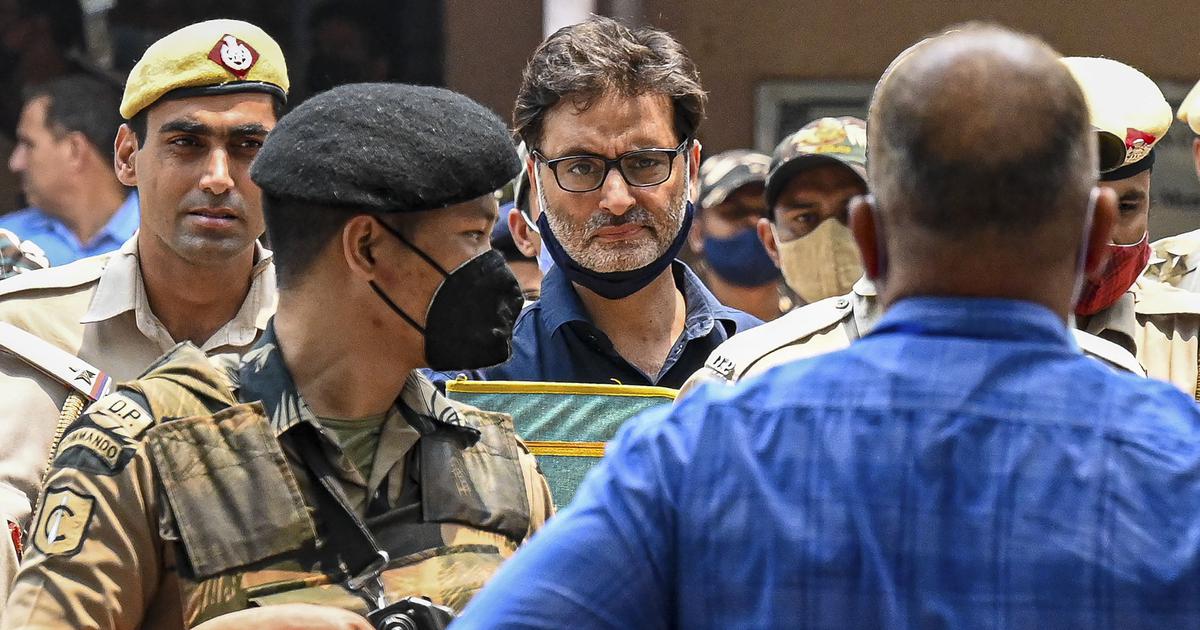
The National Investigation Agency (NIA) made startling allegations in the Delhi High Court on Wednesday, asserting that separatist leader Yasin Malik maintained direct connections with high-ranking officials in Pakistan, including the Prime Minister and President. According to the NIA, Malik leveraged these relationships to advocate for the secession of Jammu and Kashmir from India.
This revelation came as the NIA sought to elevate Malik’s punishment from a life sentence to the death penalty in connection with a terror funding case. The bench, consisting of Justices Navin Chawla and Ravinder Dudeja, has scheduled the next hearing for July 21. During the proceedings, Malik, who appeared virtually from Tihar Jail, was informed that he would receive a copy of the agency’s detailed response through prison authorities.
In May 2022, Malik was sentenced to life imprisonment by a trial court after being found guilty of multiple offenses under the Unlawful Activities Prevention Act (UAPA) and the Indian Penal Code (IPC). The charges stemmed from his alleged collaboration with various separatist leaders and well-known terrorist organizations, where he was accused of raising funds from both domestic and international sources to further his separatist agenda.
Malik, a prominent figure in the Kashmiri separatist movement, has been a controversial personality for nearly three decades. His contributions to the separatist narrative have frequently brought him into the crosshairs of Indian law enforcement agencies. In response to the NIA’s request for the death penalty, Malik previously argued that his long-standing involvement in the movement should be considered in light of a broader historical context, emphasizing his commitment to the cause over the years.
As this case unfolds, it highlights the ongoing complexities surrounding the Jammu and Kashmir issue, which remains a flashpoint in India-Pakistan relations. The situation has drawn the attention of not only the Indian legal system but also international observers who monitor the regional tensions. The next hearing in this case is likely to attract considerable media coverage, given the high stakes involved and the implications for Kashmir’s future.