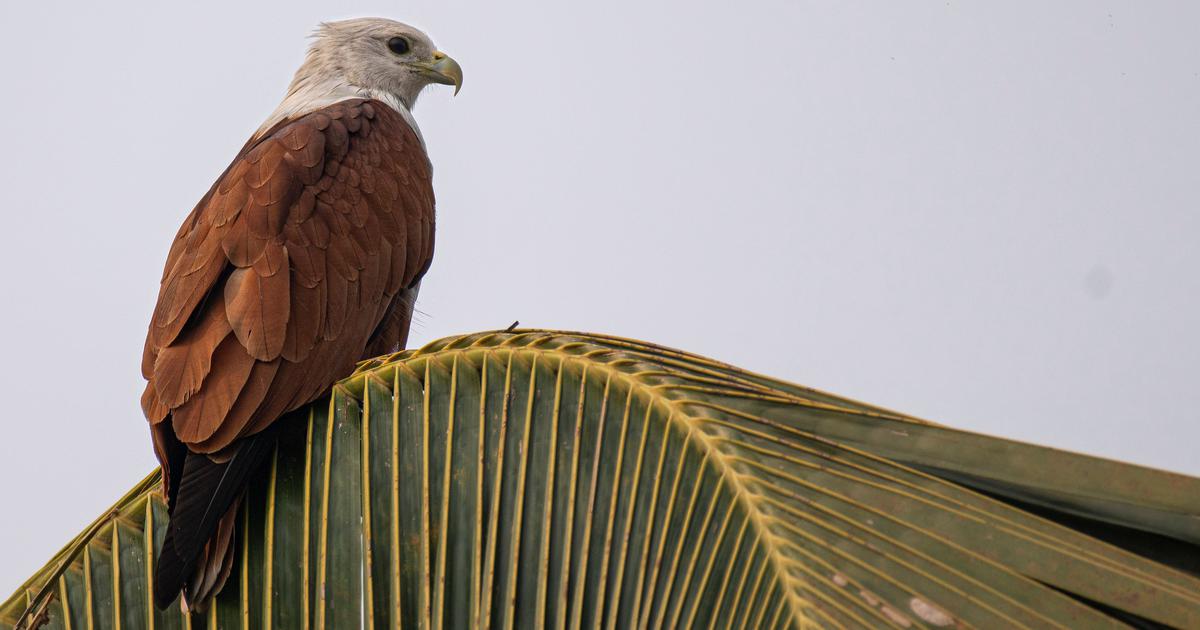
In a fascinating intersection of nature and urbanization, researchers in Kerala are uncovering how artificial lighting is reshaping the behaviors of local wildlife. Polycarp Joseph, a dedicated ornithologist and district head for the Kerala State Annual Heronry Survey, has been visiting the Shaktikulangara and Vaddy fishing harbours in Kollam since 2019 to monitor bird populations, particularly the little egret. However, recent observations have revealed a surprising shift in the hunting habits of the brahminy kite, a bird typically known for its daytime foraging activities.
During his nighttime visits, Joseph has noted the striking impact of light pollution on these raptors. On a notable occasion on February 5, 2024, he documented three brahminy kites soaring above the Vaddy fishing harbour under the glow of numerous LED lights. While these birds are usually diurnal, he observed them circling and diving to catch fish, indicating that the bright artificial lights may be altering their natural hunting rhythms.
The Vaddy harbour, akin to a “floodlit stadium” during the night, features an array of lights illuminating both the auction yard and the fishing boats. These lights not only enhance visibility for human activities but seem to inadvertently signal the presence of prey to the kites, leading them to extend their hunting hours into the night. Joseph expressed that if these kites were seen during twilight, one might easily assume they were returning from a day’s hunt. However, the nocturnal behavior observed raises questions about how light pollution is influencing wildlife.
This phenomenon is indicative of broader environmental changes that occur as urban areas expand and technological advancements introduce new forms of light and sound pollution. Joseph’s findings are part of a significant citizen-science initiative aimed at understanding avian populations in Kerala, where the delicate balance between urban development and wildlife preservation remains a vital concern.
As Kerala grapples with rapid changes in its coastal regions, understanding the implications of artificial lighting on local fauna becomes increasingly essential. Joseph’s research not only sheds light on the brahminy kite’s adaptation but also serves as a call to action for environmentalists and policy-makers to consider wildlife impacts when planning urban infrastructures. By acknowledging and addressing these changes, we can strive for a more harmonious coexistence between nature and human activities.