In a dramatic turn of events, seven Members of Parliament from the Aam Aadmi Party (AAP) have declared their decision to align with the ruling Bharatiya Janata Party (BJP), leading to a significant upheaval within the ranks of the AAP’s Rajya Sabha contingent. This development has not only raised eyebrows but also sparked a wave of criticism, particularly from party leaders who feel betrayed by their colleagues’ decision.
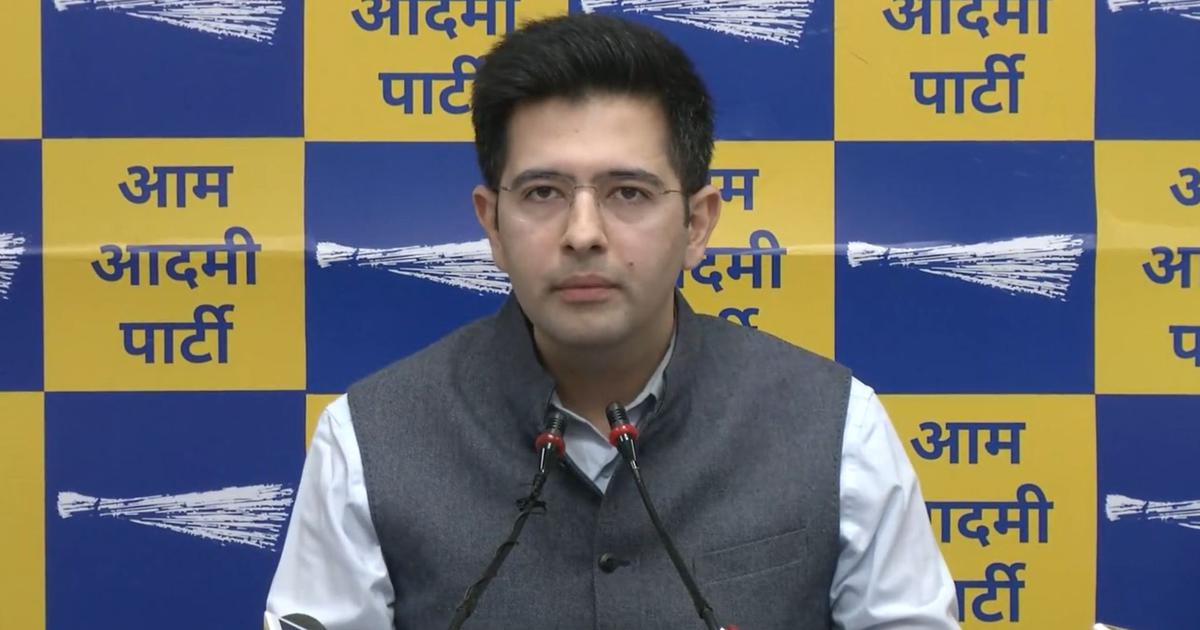
During a press conference, AAP Rajya Sabha MP Raghav Chadha confirmed that a faction of the party is merging with the BJP, affirming that more than two-thirds of the party’s representation in the Upper House is backing this shift. Alongside him were fellow AAP MPs Sandeep Pathak and Ashok Mittal, who voiced their support for this controversial realignment. The AAP, which initially boasted a strength of ten members in the Rajya Sabha, is now left with a diminished presence, while it retains just three MPs in the Lok Sabha.
This political maneuver has drawn sharp rebuke from AAP leader Sanjay Singh, who accused the defecting MPs of betraying not just the party but also the electorate, especially in Punjab, where the party enjoys significant support. Singh’s sentiments resonate with many in the party, who view this as a betrayal of the principles and promises that the AAP was founded upon. The fallout from this division is likely to have repercussions on the party’s standing, especially in light of upcoming elections.
In parallel to this political drama, the Supreme Court has been alerted to serious concerns regarding the electoral process in West Bengal. Reports indicate that 65 election duty officers have been erroneously removed from the state’s voter lists during a special revision of the electoral rolls. The court learned that these officers, whose Electors’ Photo Identity Card numbers were originally included in their duty orders, now find themselves excluded from the rolls. This situation raises questions about the integrity of the electoral process and the potential disenfranchisement of voters.
As these events unfold, the AAP faces a critical moment in its journey, grappling not only with internal strife but also with broader challenges related to governance and electoral integrity. Political analysts suggest that the party must now work to regain the trust of its supporters while addressing the concerns raised by the Supreme Court ruling. Meanwhile, the BJP, riding on this new acquisition of AAP MPs, will likely seek to strengthen its position in Parliament, further complicating the dynamics of Indian politics.