Sharp Fall in Himalayan Snow Cover Raises Fears Over Future Water Supply New Delhi | April 27, 2026
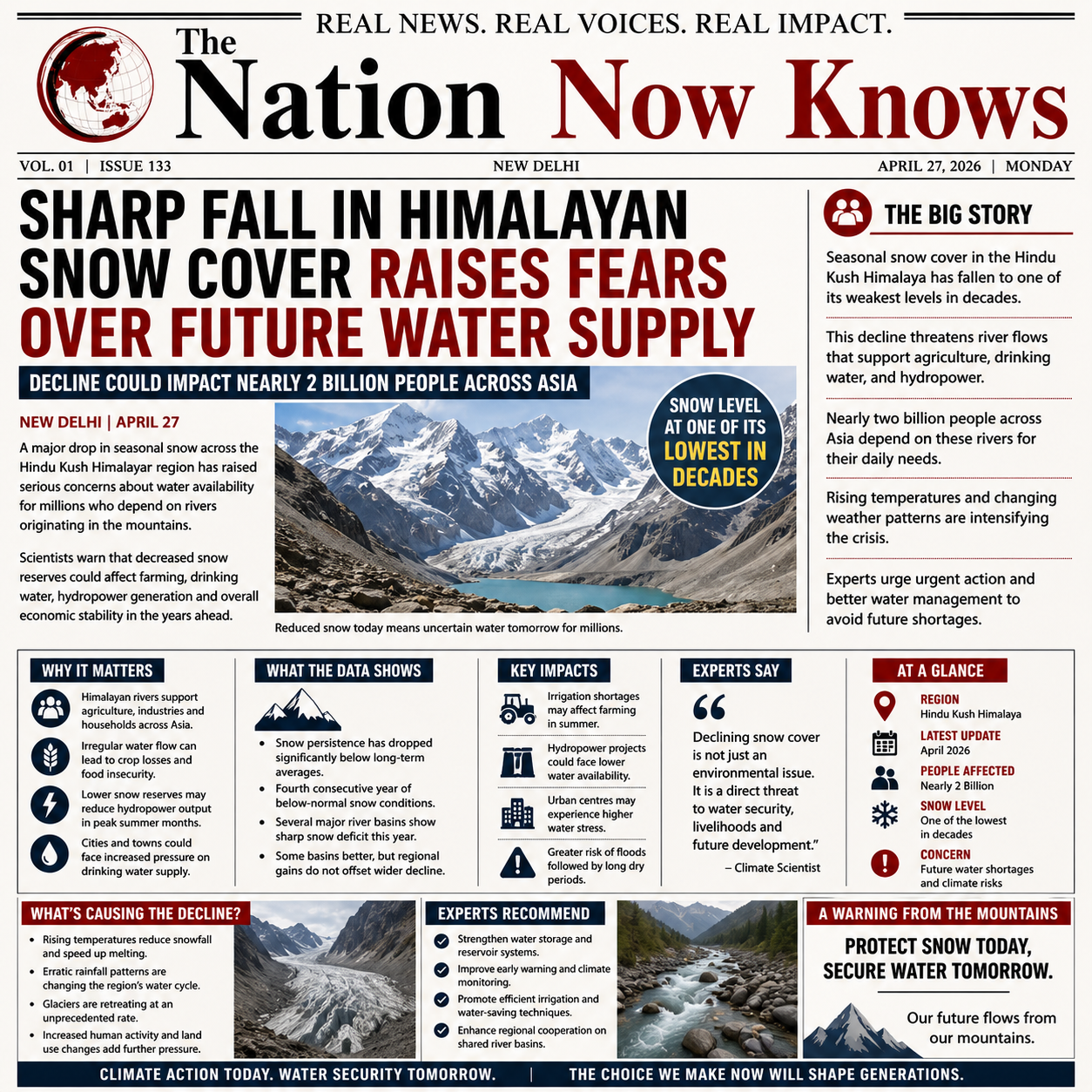
A significant decline in snow accumulation across the Himalayan region has sparked fresh concerns about water availability for millions of people who depend on rivers flowing from the mountains.
Recent climate observations suggest that seasonal snow cover across parts of the Hindu Kush Himalayan belt has dropped to one of its weakest levels in decades. Scientists say this trend could have serious consequences for countries that rely on meltwater for agriculture, electricity generation, and daily consumption.
Snow in the Himalayas acts as a natural reservoir, storing water during winter and releasing it gradually in warmer months. This slow melting process helps maintain river flow during summer, especially when rainfall is low. When snow levels fall sharply, rivers can experience irregular flow patterns,causing short-term flooding followed by long dry spells.
Several major river systems that originate in the Himalayan region support densely populated areas across South and East Asia. Any disruption in these water cycles can directly affect crop production, groundwater recharge, urban water supply, and hydropower projects.
Experts believe rising temperatures, changing precipitation patterns, and faster glacier melt are contributing to the decline. In some areas, snowfall is increasingly being replaced by rain, reducing long-term snow storage in the mountains.
The warning is especially important as many parts of Asia already face growing water stress due to rising populations and expanding urban centres. Lower snow reserves could intensify competition for water during peak summer months.
Environmental specialists are calling for stronger water management strategies, including better storage systems, improved forecasting, efficient irrigation methods, and regional cooperation on shared rivers.
The latest findings serve as a reminder that the effects of climate change are not limited to extreme weather events alone.
Changes in distant mountain ecosystems can eventually shape food security, economic stability, and everyday life far downstream.