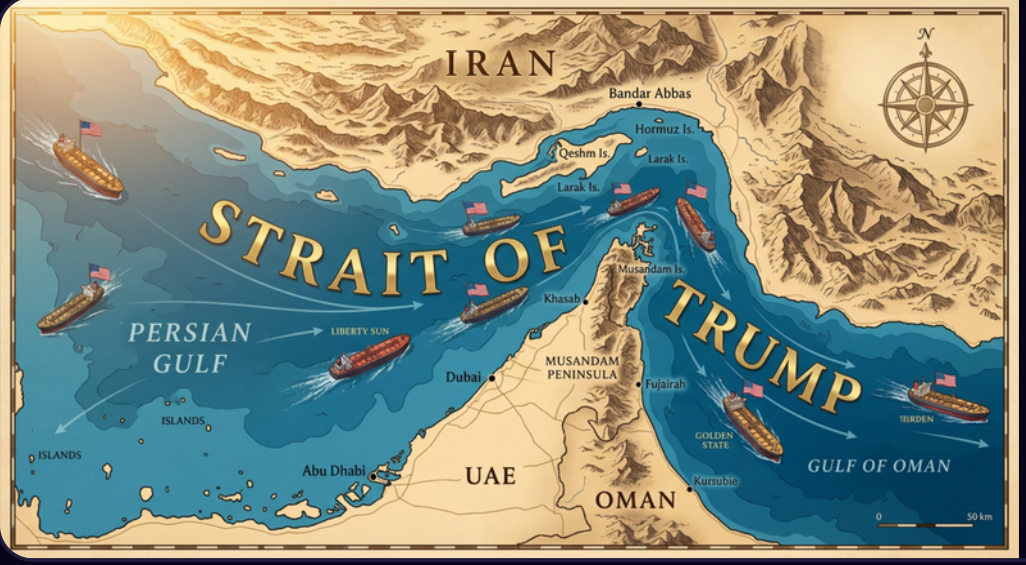
As of early May 2026, rising tensions between the United States and Iran have led to significant disruptions in the Strait of Hormuz, a key global shipping route for oil and gas.
Recent Developments
Reports indicate that commercial shipping through the strait has slowed considerably, with several companies suspending operations due to security concerns. While the waterway has not been officially closed, industry observers describe the situation as severely restricted.
Iran’s Islamic Revolutionary Guard Corps is reported to have increased its monitoring of maritime traffic and introduced additional conditions for vessels transiting the region. These reportedly include restrictions related to cargo type and destination, though no universally recognized formal blockade has been घोषित.
Meanwhile, the U.S. Treasury’s Office of Foreign Assets Control (OFAC) has warned shipping firms against engaging in transactions that could violate sanctions regulations, including payments related to transit through Iranian-controlled waters.
In a limited development, a tanker carrying liquefied petroleum gas reportedly completed a transit through the strait, indicating that some movement continues despite elevated risks.
Rising Military Activity
Naval presence in the Persian Gulf has increased, with both U.S. and Iranian forces maintaining heightened readiness. Analysts suggest that the risk of miscalculation has grown, although no direct large-scale confrontation has been officially confirmed.
Impact on Trade and Shipping
Shipping disruptions have begun to affect global supply chains. Some operators are reportedly rerouting vessels via longer routes, including around the Cape of Good Hope, which increases transit time and costs.
Freight rates and insurance premiums, particularly war-risk coverage, have risen in response to the situation. Regional trade hubs are also monitoring potential economic impacts.
Energy Market Concerns
The Strait of Hormuz handles a significant share of global oil and liquefied natural gas shipments. Reduced activity has contributed to volatility in energy markets, with prices showing upward pressure amid supply concerns.
Countries dependent on energy imports from the Gulf region are assessing alternative supply options and contingency measures.
Conclusion
The situation in the Strait of Hormuz remains fluid, with geopolitical tensions continuing to influence global trade and energy markets. Officials and analysts are closely monitoring developments as efforts to stabilize the region continue.