The proposed infrastructure development project on Great Nicobar Island has triggered a debate between economic growth priorities and environmental concerns. The project includes plans for a transshipment port, airport, township, and power infrastructure, and is being positioned as strategically and economically significant.
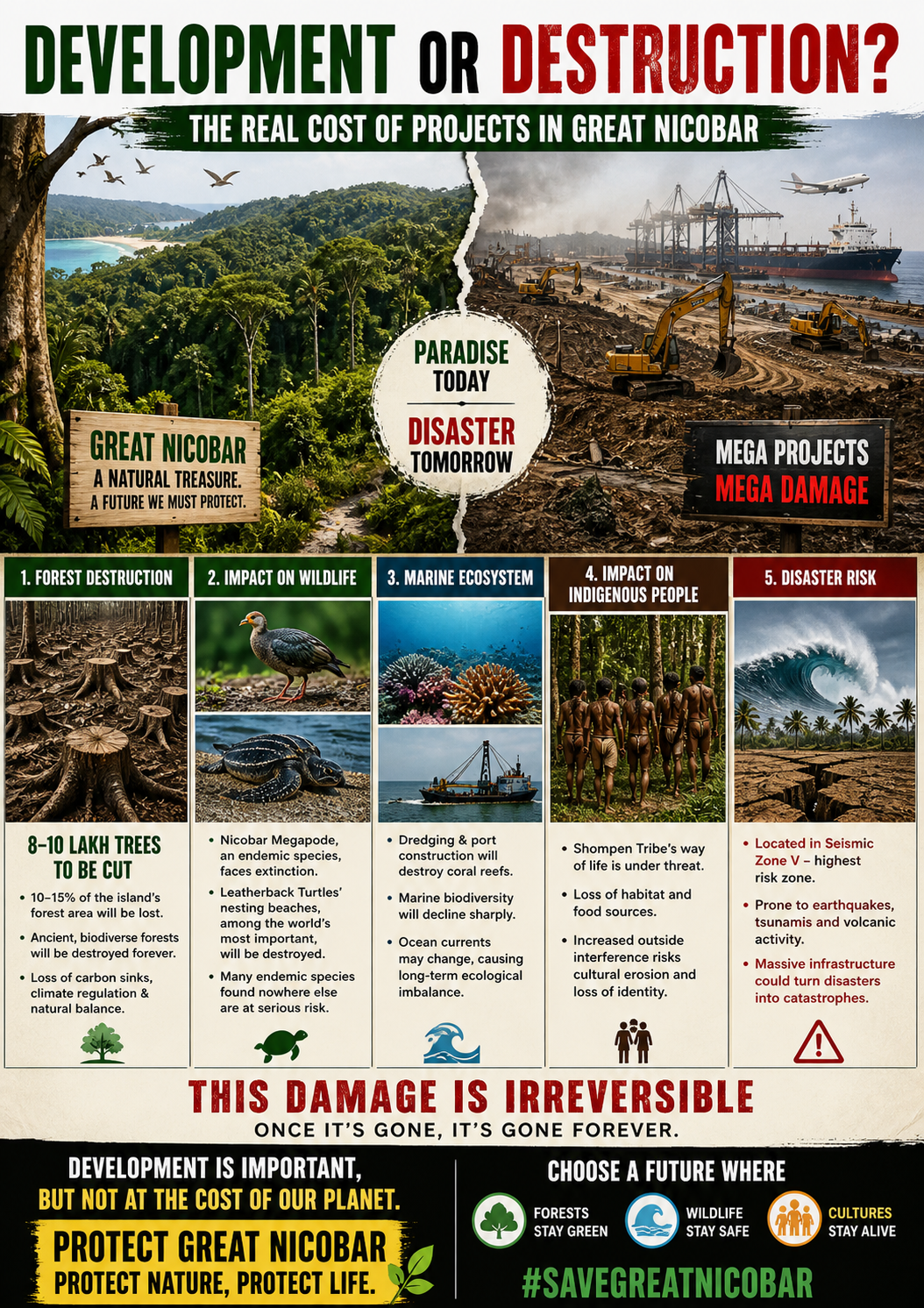
However, environmental experts and activists have raised concerns regarding its potential ecological impact. According to various reports, the project could involve large-scale tree clearance, which may affect the island’s biodiversity and natural ecosystem. Scientists note that such forests play a role in climate regulation and support several endemic species.
Concerns have also been expressed about wildlife, including the Nicobar megapode and nesting sites of the leatherback sea turtle. Environmental groups warn that habitat disruption could pose risks to these species, though official assessments state that mitigation measures will be implemented.
Marine ecosystems are another area of focus, with experts highlighting that activities such as dredging and port construction may impact coral reefs and coastal stability. At the same time, authorities maintain that environmental safeguards are part of the planning process.
The project has also drawn attention due to its proximity to indigenous communities, including the Shompen tribe. Some groups have called for careful evaluation of potential social and cultural impacts.
Government representatives have emphasized the strategic importance of the project, particularly in strengthening India’s position in the Indian Ocean region and boosting economic development.
As discussions continue, the Great Nicobar project remains at the center of a broader conversation about balancing infrastructure growth with environmental sustainability.