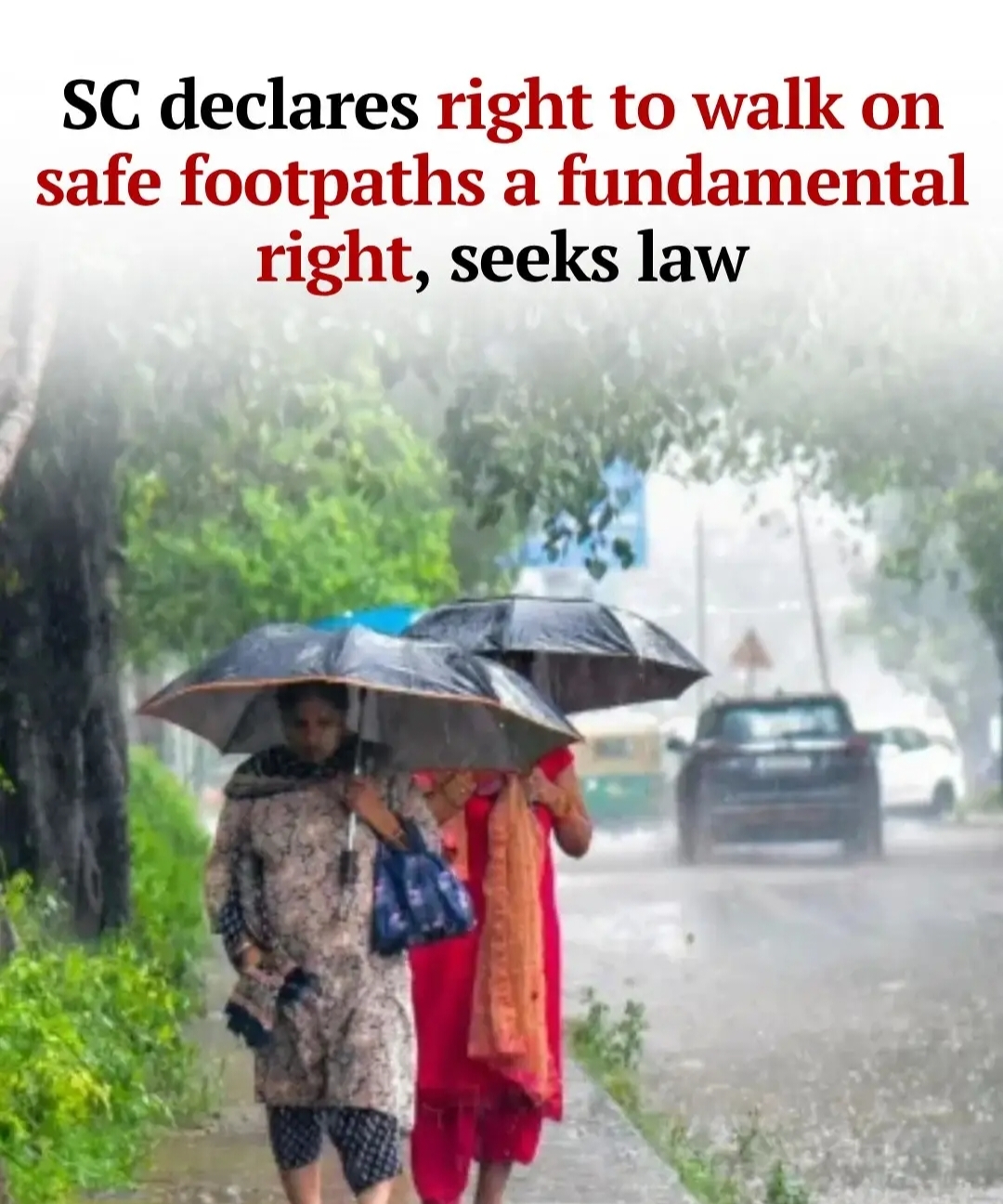
New Delhi: In a significant ruling, the Supreme Court has emphasized the importance of safe, accessible, and obstruction-free footpaths for ensuring citizens’ dignity, mobility, and access to public spaces and services.
The Court observed that municipal bodies, urban planning authorities, and state governments have a responsibility to develop and maintain pedestrian infrastructure that is safe and usable for all citizens, particularly children, senior citizens, and persons with disabilities.
The judgment highlighted the need for accessibility-focused infrastructure, including ramps, tactile paving, level walking surfaces, proper drainage systems, and safe pedestrian crossings. The Court also stressed the importance of addressing encroachments and illegal parking that obstruct footpaths and create safety hazards for pedestrians.
Further, the Court noted that urban planning should give greater priority to pedestrian needs and integrate footpaths with public transport systems, street lighting, and other civic infrastructure to improve overall accessibility and safety.
Urban development experts believe that well-designed and accessible footpaths contribute not only to road safety but also to public health, environmental sustainability, and social inclusion. Improved pedestrian infrastructure can particularly benefit lower-income groups who rely heavily on walking for daily mobility.
The ruling is being viewed as an important step toward improving urban infrastructure and pedestrian safety across the country. Effective implementation, however, will require coordinated efforts from local authorities, policymakers, and community stakeholders.